katewritesandreads

katewritesandreads

Tuesday, 20 January 2015

Two nations divided …


English and American English. ‘Two nations divided by a common language’ is a saying attributed variously to Oscar Wilde, George Bernard Shaw and Winston Churchill and is spot-on whoever said it.

I think it’s a shame that American publishers apparently insist on Amercanising books published in the UK for their home market, thus changing pavement to sidewalk, petrol to gas and so on. Part of the pleasure for me when reading a book set in America (or Canada or Australia come to that) is learning the different words they use – it’s never difficult from the context to work out the meaning and it keeps you right there in the story, in the place.

The other week (there is a train of thought here) I was given a present by Amazon – yes, you read that right. For some reason I was invited to choose a free e-book from a choice of six.

I’d heard of Nora Roberts ('America's favorite author' according to the New York Times) but had never read any of her 200+ books – she writes one every 45 days apparently, romance under her own name and futuristic police procedurals under the name JD Robb. Over three hundred million of her books are in print.


So, hoping that some of her magic dust would settle on me, I chose The Next Always, the first novel in her Inn at BoonsBoro trilogy.

It isn’t the most riveting read I have to say (I’m 80% through). I like the rather old-fashioned beginning – a potted history of the two-hundred-year-old inn. The romance between Clare and Beckett – she a young Iraq-war-widowed mother of three, he a local businessman/master-of-all-trades who’s loved her from afar since they were 15 – is a satisfying one. But the rest of the story is taken up mostly by the restoration of the ‘inn at BoonsBoro’. While I usually love descriptions of houses in books, the endless conversations here about plumbing, electrics, carpentry, colour of tiles, carpets etc etc become very tedious.

It’s probably not representative of Nora Roberts’ books (I will give her the benefit of the doubt and read another one, although not the rest of this trilogy) as I found out from an interview with her that she actually lives in a small town called Boonsboro in rural Maryland – where she has been renovating an old inn …

So I guess the writerly advice I would take from that is that no experience is wasted – even if the end result in this instance does read like an interior design guide with a steamy romance thrown in.

As for the Americanisms – I’ll forgive, even if I don’t like, gotten, since I heard last week on a Michael Rosen radio programme that it is an ancient past participle of the verb to get, and not as I had ignorantly thought a modern aberration (dove instead of dived is another one). But not coworker pleeeease – what are hyphens for?

Pants instead of trousers is always good for a schoolgirl giggle. I like grocery store instead of supermarket. Snuck instead of sneaked is kinda cute. Faucet seems to have nothing to do with tap –  a google tells me, it too is Middle English, from Old French fausset, cask stopper.

But there were two words that stopped me in my tracks in this book: acclimate instead of acclimatise, and assist used as a noun – ‘do you need an assist?’.

Do you think they’ll catch on this side of the Pond?

Sunday, 11 January 2015

A thought, a recipe, a household hint … (1)


I have a small collection of housewifery and Woman’s Hour books published from around the 20s to the 60s, fun to dip into and useful as a social history reference.


The Housewife’s Book (no date printed but probably 20s/30s) has an excellent suggestion: ‘It is worth while sitting to wash up … ’


 and no wonder the housewife in that era appreciated a sit-down as she apparently spent the rest of her day on such tasks as ‘Washing leather gloves’, ‘Cleaning and pressing men’s suits’ and ‘Preparing the sick room’.


The Household Guide (30s) advises how to ‘Be lovely at 50’. Suggestions include ‘Put a posy in your button-hole and you will lose ten years off your age’; ‘Take trouble with your hats. Veils are kindly to the older woman’; and if you’re worried about your weight try ‘slimming baths, reducing soap, vinegar to pat in and an oxygen cream.’

Some more unlikely slimming advice was given twenty years later in The Book of Woman’s Hour 1953 when a male contributor apparently lost weight by substituting bacon and fried bread for his breakfast porridge.

In the same book we learn that ‘the vast majority of the blouses sold in this country are quite dreadful … wishy-washy, skimpy, meaningless.’ Let’s hope that modern blouses are very meaningful.

The BBC Woman’s Hour Book, published in 1957, has an article on ‘Starting a Tea-Shop’ – still a hugely popular thing to do judging by the number of (we now call them) cafes round where I live. I doubt though if any 21st-century waitress had this problem: ‘I dropped a chocolate bun slap on to an old lady’s hat one afternoon. Her hat was so heavily decorated with bits and pieces that the bun was quite lost in it all … '

Other chapters include: ‘How to be a successful spinster’ by ‘A Psychiatrist’; ‘Emigrating to Canada’; ‘Bringing up Children in Australia;’ while ‘Flying to the Moon’ prophesied that ‘I doubt whether men will land on the Moon much before the year 2,000.’

Hindsight is a wonderful thing in the space travel department – as well as in the departments of slimming and spinsters.

I have five volumes (1930s) by ‘Aunt Kate’ (whoever she was) – The Household Guide pictured above, her Household Annual and Enquire Within which are mostly recipes, while Aunt Kate’s Household Companion and Aunt Kate’s Day-by-Day Book each contain ‘a thought, a recipe, a household hint, for every day of the year’.


So for you, dear reader, on 11 January, here are (in brief):

A thought
When you lose something and you say ‘Of course it was in the last drawer I looked in – things always are!’ aren’t you guilty of remembering the bothersome times and not the occasions when you put your hand on something straightaway?

A recipe
Cream of barley soup – sounds very nice with its ‘1 gill of milk’; let me know if you’d like it.

A household hint
The ideal thing, of course, is always to be neatly and carefully dressed even when quite alone in your own house, and to have always one room where it is possible to receive unexpected visitors …

Time to take off the onesie then.

Thursday, 1 January 2015

Seven in December


I read seven books in December.

 Well, more or less.

I finished Empress Dowager Cixi by Jung Chang, started in November.

Feeling like a spot of murder and mayhem I read:

Telling Tales by Ann Cleeves. (Christian Aid sale purchase back in May.) One of her brilliant ‘Vera’ novels.

Not in the Flesh by Ruth Rendell. And this is one of RR’s brilliant Wexford novels – my favourite fictional detective.

Then I moved on to espionage:


A Colder War by Charles Cumming, spy novel, a good but not-as-good follow-up to A Foreign Country.


The Spanish Game by Charles Cumming, a satisfying follow-up to A Spy by Nature.

Being a spy sounds very exciting, but a non-existent sense of direction (among other shortcomings) would hamper me were I ever to find myself dodging pursuers. However, I conjure up the thrill of the chase by imagining when on a train, or on the Edinburgh tram, that the 'ticket inspector' coming slowly down the carriage is actually an imposter on the look-out for me. The real inspector is lying trussed up in the guard's van (or tram equivalent). I compose my face. I can only hope that its calm exterior gives no indication of the hammering heart within. I make eye-contact and smile … I’ve got away with it so far.


As is custom in our house, on Christmas Eve I read to my, now 22-year-old, daughter, The Night Before Christmas – two editions, one the traditional version:


and one with the same words but where the characters are mice:


Love them both.


Said daughter gave me a lovely little book published by Galley Beggar Press (‘a new range celebrating the best in classic short fiction’). It’s a Mr Mulliner story called Honeysuckle Cottage by PG Wodehouse. A writer of hard-boiled detective stories inherits the eponymous cottage from his aunt, a romantic novelist a la Barbara Cartland, and to his dismay finds that his writing is being influenced by his surroundings.


And I’ve been dipping into all month and just finished This is the Story of a Happy Marriage, a collection of journalism by the novelist Ann Patchett (winner of the Orange Prize for Bel Canto). Her subjects are far-ranging – from the relationship between her dog and her grandmother; to going through, and passing, all the tests to join the Los Angeles Police Department; to opening a bookshop in Nashville because there weren't any left ('The Bookstore Strikes Back'). But my favourite piece is called The Getaway Car: A Practical Memoir about Writing and Life which is just that. (I see that it’s available on Kindle as an individual entity for £1.81; highly recommended to all writers).

Her main advice, illustrated by her own experience, is to practise, practise (although being American she says practice, practice). So, if I was to break my resolution not to make any New Year resolutions, that is what I would resolve to do.

Happy 2015.

Saturday, 20 December 2014

Six in November


I read six books in November.


Here’s Looking at You by Mhairi McFarlane (on Kindle). I read and enjoyed Mhairi McFarlane’s first book You Had Me At Hello but didn’t believe at all in the relationship at the core of this one. Very disappointing. (Incidentally, have you noticed that on Amazon reviews lots of people spell that word ‘dissapointed’?) Maybe you have to be the age/mindset of the characters (30-something adolescents) to appreciate it. Or maybe it suffers from quickly-written-follow-up-to-successful-first-novel syndrome. I'll probably give her the benefit of the doubt and try her third one.


The House We Grew Up in by Lisa Jewell. I’ve been a big Lisa Jewell fan ever since her first book Ralph’s Party – didn’t think this was her best although I wouldn’t say I was ‘dissapointed’ with it. Have you seen those TV programmes about people who hoard – the extreme cases who end up hardly able to move for stacks of newspapers and other stuff most would call rubbish? The mother in this story is one of those hoarders and her husband and each of her offspring have to find their own way of dealing with it, as children and then as adults.

Martha’s Ark by Charlotte Moore. A pleasure to reread this, published in 1996 (now o/p) and described by the Sunday Telegraph as ‘Like Jane Austen, Charlotte Moore directs a sharp and sympathetic gaze.’ Charlotte Moore seems to have concentrated on non-fiction in recent years; I’ve just googled her and see she’s written the story of her family home which sounds fascinating: 

Something Beginning With by Sarah Salway (on Kindle) With quirky alphabetical headings, this is Verity’s account of her relationships with her friend Sally and her married lover John. Original and observant, albeit with a rather abrupt ending.

Snow Angels, Secrets and Christmas Cake by Sue Watson (on Kindle)
What it says in the title. Frothy ‘Christmas read’.


Empress Dowager Cixi by Jung Chang – actually this 500-pager spilled over into December, a book group read. And a very colourful one it is, from the author of Wild Swans.

Cixi (pronounced See-shee, 1835-1908), the concubine who became an Empress, is the most important woman in Chinese history – credited, although not in China, for bringing that medieval empire into the modern age. She opened up links with the rest of the world and allowed railways and telegraph lines to be built. Just before she died she was paving the way for the country to be governed by a constitutional monarchy – and if she had lived a few years longer the history of China in the twentieth century might have been quite different. Not a saint, but a clever, fascinating woman.

In China (where this book is banned) Cixi is regarded in a different light. The author relates how present-day visitors to the Summer Palace are told by guides that extravagant Cixi redirected money that should have been spent on the Chinese navy to the restoration of the Palace, and that China lost a war again Japan as a result. This was exactly the experience my sister and I had in China four years ago – our guide pointed to a marble boat and told the story of the redirected funds; he did not say one word in Cixi’s favour. That was the first time I had even heard of Cixi so I was extremely interested to read a quite different account of her in this book.

Summer Palace 2010


Friday, 12 December 2014

Christmas Past


I'm delighted to have a Christmas story in The People’s Friend this week (December 13): Bicycles for Two.


It’s set in the 60s and the heading is:

Jilly and I were always getting in trouble for being late for school. Now we knew the answer to the problem!

The title gives away what the answer is – but it didn’t come about in quite the way that Isabel and Jilly hoped.

When I gave a talk to the lovely people at Ayr Writers’ Club last week on writing stories for women’s magazines I said that I hardly ever was inspired to begin with a character but with a setting or a situation. 

However, Bicycles for Two began not with a character exactly but with character sketches. It was from an exercise at a writing class whereby we had to imagine the contents of a handbag or briefcase and build up a character from that. Then we branched out into other character traits and, because it was nearly Christmas and I had fond memories of presents I used to get as a child, I imagined two characters setting about their Christmas shopping in different ways.

One liked buying things like bubble bath in bottles shaped like poodles, and soap that looked and smelled just like a lemon. The other, less frivolously, bought tapestry kits, and pencil cases with propelling pencils and pens with nibs. The character traits evolved into two people, Aunt Edie and Aunt Ann respectively, and then I put them away in my character file for putting into a story at a later date. 


When I reread the list of presents I could almost smell that lemon … but I remembered that what I really wanted the Christmas I was ten was a bicycle. 

Happily, I got one for my birthday the following year.


I hope your Christmas wishes come true even if they don't arrive on 25th December.

Monday, 17 November 2014

Five in October


I read five books in October.

Foreign Correspondence by Geraldine Brooks
As readers here will know, Geraldine Brooks is one of my favourite novelists (March and The Year of Wonders highly recommended). 


Foreign Correspondence is a memoir of her childhood in the 50s and 60s in Sydney before it was the multi-cultural city it is today. She dreamed of a life far away and so, to find out more about the world, acquired various pen friends from the United States, France and Israel. As these things tend to do, the pen-friendships petered out after a few years. She grew up to get her wish, becoming an award-winning foreign correspondent in the Middle East. Then she had the idea of tracing her former pen friends …

Murder Underground by Mavis Dorelia Hay
A classic whodunit first published in the 1930s and recently reissued by The British Library


Maximum Exposure by Jenny Harper
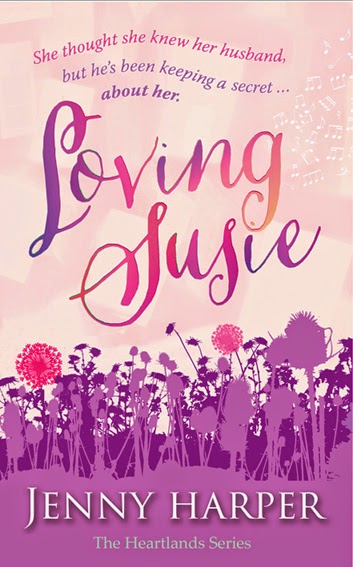
This is the third in the Heartlands series of novels – all set around the town of Hailesbank in East Lothian. It follows Feel the Wind and Fly and Loving Susie. Maximum Exposure’s heroine Daisy Irvine is a photographer with The Hailesbank Herald. I do like a story based around a newspaper.


The Trumpet of the Swan by E. B. White
E. B. White wrote very prolifically for the New Yorker but he is best known for his children’s novels Charlotte’s Web and Stuart Little. His third novel for children The Trumpet of the Swan is less well-known but equally good. A friend lent me this lovely copy but it’s available in various versions.


The Signature of all Things by Elizabeth Gilbert
Read for book group. Actually this spilled over into November – it’s a page-turner but there are 588 pages to turn. It begins with the birth of Alma Whittaker in Philadelphia in 1800, the daughter of Henry, former London vagrant, now a very rich botanical explorer and businessman. Alma wants nothing more than to learn her father’s business, and to make her own investigations into mosses as she figures out the part they play in evolution – until events lead to her sailing across the world to Tahiti and then to Holland. An enjoyable great sweep of a novel (although I did feel my red editorial pen twitching towards the end). 


I have never read Eat, Pray, Love by the same author, nor seen the film. The person suggesting this book for reading by the book group said it was nothing like EPL, a statement that will either encourage or deter you from reading it.

Wednesday, 29 October 2014

Interview with Jenny Harper


Jenny Harper is the author of The Heartlands Series, published by Accent Press – three titles to date set in and around the fictional small market town of Hailesbank near Edinburgh. The just-published Maximum Exposure follows Face the Wind and Fly and Loving Susie.


Maximum Exposure is described on the cover as ‘Page-turning and thoroughly entertaining. I loved it!’ by Katie Fforde.

from the blurb:
Livelihoods are at risk when a local newspaper begins to fail, but the future of one member of staff depends more on the choices she makes than the decisions of others…

Adorable but scatterbrained newspaper photographer Daisy Irvine becomes the key to the survival of The Hailesbank Herald when her boss drops dead right in front of her.


I asked Jenny some questions about Maximum Exposure, the series, and her writing process.

Jenny, Daisy is a delightful character – dizzy and scatterbrained in some ways but with real emotional depth. She follows your two perhaps more ‘grown-up’ heroines, Kate Courtenay, wind-farm engineer, in Face the Wind and Fly, and Susie Wallace, a member of the Scottish Parliament, in Loving Susie. Was Daisy inspired by anybody you know?

I have no idea where Daisy came from! No, she’s not based on anyone I know, she just grew in my mind. At one point, I did feel she lacked depth though. I needed to know more about why she was the way she was – and so her controlling father walked into the pages of the novel. It would be interesting to revisit Daisy in a year or two and see how life with Ben might change her. Now there’s a thought …

We see the story from Daisy’s viewpoint and from that of her childhood friend Ben. Did you know from the beginning that you wanted both of them to have a voice?

Yes. I find single viewpoint novels really difficult to write and admire anyone who can do it. I like to get inside at least two characters, and I also like to be able to move the action around more than is possible with a single point of view.

I know that you have been a journalist and also published non-fiction books. Have you ever worked on a newspaper?

Only as a freelance. I used to be a regular feature writer for many Scottish newspapers, particularly The Scotsman and The Sunday Times Ecosse (as it was when I wrote for it). But I ran a corporate communications agency for more than 20 years and we published magazines and newspapers for private and public sector organisations, from banks and oil companies to organisations such as Seafood and Historic Scotland.

The setting of the series is a small community. As far as I’m aware none of the characters so far cross over from one book to the next. Is that a possibility?

Yes. The next in the series again features new characters, but the one I’m working on at the moment (Number 5) takes one of the minor characters and develops her story. And now that I know Hailesbank, Forgie and Summerfield quite well, I’ll be picking up other characters in major or minor ways again too.

When will the next Heartlands title be available?

The People We Love is due out in ebook format on 26 February and paperback in August, and I believe it’s my best yet.

And how many do you envisage being in the series?

Who knows? It depends on many factors – if I continue to enjoy writing them, if my publisher wants more of them, if readers like them – and if it doesn’t all become too complicated! I have at least two more novels roughly planned, but I don’t know whether I’ll develop them or not. But I also have a hankering to revisit the first novel I ever tried to write, based loosely on my parents’ experiences during the war, in Scotland and in India. I didn’t have the technical experience to write back then, but maybe I do now.

Do you like the writing or the editing best?

It depends which stage of writing I’m at. I love it when everything starts to come together, and I love enriching what I have written, making it stronger and deeper. I am appalling in the early stages of a novel, I go down false avenues, prevaricate, change plot lines and fiddle with characters. It all takes a while to settle down in my head – but once I get to a certain point, it’s much easier and I really begin to enjoy it. I love editing – it was my professional discipline and I think I’m quite good at it.

You had a short story in the Romantic Novelists’ Association anthology Truly, Madly, Deeply. How do you like writing short stories compared with novels?

I’m a complete beginner at short stories. I went on a writing course to the gorgeous Chez Castillon tutored by Veronica Henry and she decided to spend a morning on short stories. I hadn’t expected it – but I’ve been so grateful ever since. By the way, I have another short story coming out on 1 November in an anthology called Let’s Hear It For the Boys It’s all for the charity Movember, in aid of men’s health, so please do click and buy! A great read for just 99p and a great cause.

Do you have a website or a blog?


 Thank you for answering my questions – I look forward to seeing more of the Heartlands community in The People We Love.

Thank you for hosting me!