katewritesandreads

katewritesandreads

Tuesday, 31 March 2015

Patchwork Pieces


I have yet to finish the patchwork quilt I began in 1975 (one day … ) but I am fascinated by patchwork that other people do and I like reading about it – in fact (all those wonderful patterns, their origins and their makers) and in fiction.


The fifth book I read in February was:
The Aloha Quilt (Elm Creek Quilts Novels)
Jennifer Chiaverini
A Christian Aid book sale purchase from last year.
There are umpteen other titles in this series. I’d read them to find out more about patchwork patterns but not for plot or characterisation. The story was so wrapped around the subject of patchwork that any action seemed like a token gesture, and the people were there principally to relay the history of/how to make Hawaiian patchwork – which sounded gorgeous, pity there were no pictures of it apart from the cover.
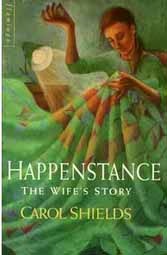


My favourite novel in which patchwork plays a part (in fact, one of my favourite novels ever) is (the late lamented) Carol Shield’s Happenstance which I’ve just finished re-reading. Its format is original – it’s in two parts, one from the wife’s point of view and one from the husband’s, each printed a different way up from the other; it doesn’t matter which one you read first but it’s fun if you re-read it to try it the other way round.

Brenda, wife of Jack and mother of two, is making a name for herself as a quilter and leaves her family in Philadelphia for a few days to attend a prestigious craft fair in Chicago, during which time she wins a prize, loses an expensive new raincoat and is almost unfaithful. Jack is left to hold the fort, the fort being complicated by the unexpected arrival of his oldest friend, by the near-suicide of a neighbour, by a crisis at work, and by a snowstorm.


Quaker patchwork featured in The Last Runaway by Tracy Chevalier. I heard Tracy talk about the book at the Edinburgh Book Festival – she said she took a patchwork class as part of her research and loved it so much she’s carried on doing it.


I’ve just spent a lovely weekend at the Scottish Association of Writers Annual Conference. Author Linda Gilliard was one of the guest speakers/adjudicators and I had the pleasure of sitting next to her one lunch-time. She is a hybrid author – partly traditionally published and partly (and successfully) self-published. I bought one of her books that I hadn’t read before called House of Silence.

Summed up as ‘Rebecca meets Cold Comfort Farm’ the blurb includes:
‘When Gwen discovers fragments of forgotten family letters sewn into an old patchwork quilt, she starts to piece together the jigsaw of the past … ’

Really looking forward to reading it.


I’d love to write a story involving patchwork – but I can only hope it won’t take as long to finish as my quilt; not sure I’ll be around in forty years time ...


Friday, 20 March 2015

Five in February


I read five books in February (must do better). Four of them are reviewed here; the fifth will be in a separate post.


The Emerald Comb by Kathleen McGurl

I knew of Kath McGurl through her magazine stories and her very useful blog:
(which she has now handed over to another womag writer Patsy Collins)

Read on Kindle (gorgeous 'cover' – it would seem covers are just as important for e-books as they are for print).

The Emerald Comb is Kathleen’s first full-length novel and an excellent one it is. 

Katie’s tracing her family tree has been just a hobby – but then she and her husband are able to buy a house that belonged to her family two hundred years ago, and she becomes almost obsessed with her researches further into the past. As the story moves between the 21st and 19th centuries the reader can piece together the family’s dark secrets. 

Quite often in a novel with a dual narrative one strand is more interesting than the other – not so here; each was equally compelling. I look forward to reading Kathleen’s The Pearl Locket.


The Alphabet Sisters by Monica McInerney


Three sisters, Anna, Bett and Carrie were childhood singing stars in their local area in rural Australia, managed by their Irish-born grandmother, Lola. But the grown-up sisters haven’t spoken since Carrie married Bett’s boyfriend. In an attempt to get the sisters to be friends again Lola arranges an extravagant party for her 80th birthday and demands that all the girls return home.

I liked the Australian background as it’s relatively unusual to read books set there, and I like reading books about sisters, but as the story turned darker towards the end it felt like too many ishoos were being addressed. Plus I couldn’t help wishing that Maeve Binchy had written it – it strived for her warmth but for me it didn’t get there.


At A Time Like This by Catherine Dunne

Four women, Claire, Maggie, Nora and Georgie, have known each other since university – or think they know each other. Narrated by spoilt Georgie who is about to not turn up for their twenty-five years celebratory get-together; we don’t find out the reason for her absence until very near the end. Well written although in rather a detached way. I didn’t know if we were supposed to cheer for Georgie or not. She was the unworthy sun around whom the others revolved and I’ve never liked the thought of that kind of relationship in real life.

She was unbelievably self-centred all her life culminating – *spoiler alert* – in abandoning (in a note-on-the-kitchen-table-kind of way) her own, albeit grown-up, daughters, as well as her nice husband, to live in Italy with Nora’s twenty-something son. You can see how that would sour the friendship … 


Entry Island by Peter May

This is the first Peter May I’ve read, and having done so I intend to read his earlier books set on the Isle of Lewis.

Entry Island is a real and remote island in the Gulf of St Laurence, 850 miles off Quebec on Canada’s east coast. When a detective is sent from Montreal to investigate a murder he is convinced he knows the victim’s wife – and prime suspect – although they have never met before.

In a dual narrative (my second one this month) we find out about another murder, in another country, in another century, and the twists and turns that have brought these two troubled people together. Loved it – great story and fabulously evoked setting.

Friday, 13 March 2015

The ties that bind


This story is published in Woman’s Weekly (17 March 2015).

I’ve mentioned in a previous post the creative writing class I go to on a Friday morning. Last year, for a term, we wrote on the theme of transport and one class member brought in a prompt of a black and white picture of a young man on a bicycle.

I decided, in the class, in the ten minutes we got to write something on it, that it was an old snap that had been unearthed by a woman and her brother when they were clearing their mother’s house. Because the brother looked like the young man and not like their father the woman wondered if their mother might have had an affair. 

When I came to develop it at home I decided to aim for 1800 words and send it to Woman’s Weekly as I knew they were short of stories that length – plus I didn’t think it was a storyline The People’s Friend would go for … .

I haven’t had a story in Woman’s Weekly for ages so I was delighted to get a quick and positive response to this one.

I love looking through old family photographs. (Reminder to self: use your own photos as prompts.)

I have lots of them. Fortunately, my mum had gone through her photographs and written on the back, but there is a limit to the information you can put on and how useful it’s going to be to future generations. For example, I can read ‘Aunt B, Nairn Beach’ and know who that is but unless I add ‘Kate’s maternal great-aunt Belle’ my children won’t have a clue. And their descendants – if they’re kind enough to have kept the photos – won’t know who ‘Kate’ is, never mind Aunt B.

There is a packet of photographs Mum had labelled ‘Canadian connections’. These had been sent back home to Scotland since the beginning of the twentieth century when a branch of the family emigrated.

One has been labelled by its sender: ‘This is my eldest sister with me’.


Not very helpful eighty years on. Luckily, I was recently put in touch with a current ‘Canadian connection’ who is interested in the family tree. I sent her a scan and she was able to identify the ladies.

The ties that bind.

Saturday, 28 February 2015

Swimming towards the jammy doughnuts


I post here about books I’ve read each month. There are other titles that I have on the go, that I pick up and put down and don't necessarily finish the month I started – books of short stories that can be dipped into and non-fiction books where there’s no narrative and I can read a chapter every so often without losing the thread.

Currently these are:


The Penguin Book of Contemporary Women’s Short Stories, selected and introduced by Susan Hill
Contemporary in 1995, that is. Authors include Maeve Binchy (a darker than usual story from her), Angela Carter, Daphne du Maurier, Janice Galloway, Sylvia Plath and Grace Paley. My favourite so far is by a writer I hadn’t heard of before, Judy Corbalis. Her story, The Bridesmaid, is a tale of childhood friendship and betrayal set in rural New Zealand.


Swimming in the Steno Pool: A Retro Guide to Making it in the Office by Lynn Peril
I bought this when I was in America, as you can tell from the ‘steno’. This is an eye-popping history of the secretary, from 150 years ago to the present day but mostly concentrating on the mid-twentieth century – think Mad Men, but ten times madder.

There were many secretarial schools as well as books and articles telling girls how they could be the ideal secretary, all emphasising in various ways that she should combine ‘the best features of an executive’s wife, his mother and his best friend – without any of their faults.’

A novel published in 1960 indicated that some bosses might have another role in mind:


Helen Gurley Brown, the first editor-in-chief of Cosmopolitan, does not come out of Swimming in the Steno Pool too well, looked at from a 21st-century perspective. In her book Sex and the Office (1964), she chided another author for advising secretaries to make themselves look ‘as inconspicuous as possible’; in HGB’s opinion ‘a bit of lace peeking out below a slender sheath skirt’ during dictation was ‘fascinating’. 

And when, almost thirty years of feminism later, a newspaper called her in 1991 to ask if there was any ‘sexual harassment’ in the offices of Cosmo, she replied, ‘I certainly hope so … the problem is that we don’t have enough men to go around for the harassing.’

She advocated throwing impromptu office parties and gave a recipe to make them go with a swing: ‘Simply mix a gallon of white wine with three or more bottles of vodka (an inexpensive brand will do), along with fruit punch and maraschino cherries.’

Can you sieve the maraschino cherries out of mine, please? Thanks. Hic.

But that’s New York for you. I temped over a summer in Glasgow, in the early 70s, and one assignment was in the typing pool of the South of Scotland Electricity Board. Disappointingly, punch was not served, at least not the week I was there; it would have livened up the days no end. Instead, and a welcome sight she was, there was a cheery lady who came round with a tea-trolley and jammy doughnuts.

Friday, 20 February 2015

Six in January


I read six books in January:


Die Hard by Lee Childs (from Christian Aid book sale 2014)
In which Jack Reacher, our action hero, takes on the world single-handed yet again and acts as jury, judge and executioner before disappearing into the sunset. And in which the author annoyingly ends too many paragraphs with – ‘right?’ But he’s sold over 300 million books and he does know how to make you keep turning the pages so what’s not to like, right?


‘The third book in a loose trilogy about landscape and the human heart.’ – following Mountains of the Mind and The Wild Places. 

Our ancient predecessors did not have motorways to drive on, nor trains or planes or motor boats on which to cross land and water. But the modern world, which has all those things, still has the tracks, holloways, drove-roads and sea paths used by our ancestors. 

I love Robert MacFarlane’s writing and it is very kind of him to do all this walking so that I don’t have to. Here he travels on foot through diverse places such as the Ickneild Way which runs from Norfolk to Wiltshire and was beloved of the poet Edward Thomas; he walks, unguided, beside the quicksands of Morecambe Bay; he travels ‘into’ the mountains of the Cairngorms, in the footsteps of Scottish writer Nan Shepherd; he puts his life at risk by walking in the hills above Ramallah in Palestine; he treads some of the old pilgrim trail in Santiago de Compostela. I would urge you to join him by reading this book.


Apple Tree Yard by Louise Doughty (from Christian Aid book sale 2014)
‘Apple Tree Yard is Louise Doughty's stunning psychological thriller about a respected female scientist and the single reckless decision that leads to her standing trial for murder.’ The official description is not a spoiler – we know right at the beginning that Dr Yvonne Carmichael is on trial for murder, but we don’t know whose until well into the book. I liked it that her lover (unnamed until near the end) was not particularly handsome – good looks could have detracted from the force of his personality which zinged off the page. One to keep you up to the wee small hours.


In the Shadow of the Hill by Helen Forbes (read on Kindle) 

Move over Rebus et al. Tartan noir has moved to Inverness and North Uist – to an engaging young policeman protagonist, the murder of an elderly woman and the most staggering plot twist I’ve come across since the one in Fingersmith. It’s hard to believe that this is Helen Forbes’ first novel – definitely one to watch.


The Next Always by Nora Roberts (read on Kindle)
I blogged about this book in my last post: Two nations divided ... 


The Detective’s Daughter by Lesley Thomson (read on Kindle)
I liked Stella who, after the death of her retired policeman father, resolves to finish one of his cases. It was inspired to have a character (Stella) who runs a cleaning agency and therefore gets legitimate access to people’s houses and their secrets. The case and its solution would make for a very satisfying read if I hadn’t felt I was paddling through treacle to get there. Hmm. My internal jury is out on this one.


Monday, 2 February 2015

Serial girl

In 2011 I had a serial published in The People's Friend:


which the magazine illustrated very nicely:

I blogged here about how I came to write it.

The story was subsequently also published in a large-print library edition:

which I am delighted to say more than 3000 people have borrowed to date. (Thank you very much if you were one of them. Or if you're the person who's borrowed it 3000 times.)

In 2014 my second serial was published:


and – library borrowers, are you listening? – it will be a large-print book later this year.

Serial number 3 is at the beginning of the pipeline.

Watch this space.


Tuesday, 20 January 2015

Two nations divided …


English and American English. ‘Two nations divided by a common language’ is a saying attributed variously to Oscar Wilde, George Bernard Shaw and Winston Churchill and is spot-on whoever said it.

I think it’s a shame that American publishers apparently insist on Amercanising books published in the UK for their home market, thus changing pavement to sidewalk, petrol to gas and so on. Part of the pleasure for me when reading a book set in America (or Canada or Australia come to that) is learning the different words they use – it’s never difficult from the context to work out the meaning and it keeps you right there in the story, in the place.

The other week (there is a train of thought here) I was given a present by Amazon – yes, you read that right. For some reason I was invited to choose a free e-book from a choice of six.

I’d heard of Nora Roberts ('America's favorite author' according to the New York Times) but had never read any of her 200+ books – she writes one every 45 days apparently, romance under her own name and futuristic police procedurals under the name JD Robb. Over three hundred million of her books are in print.


So, hoping that some of her magic dust would settle on me, I chose The Next Always, the first novel in her Inn at BoonsBoro trilogy.

It isn’t the most riveting read I have to say (I’m 80% through). I like the rather old-fashioned beginning – a potted history of the two-hundred-year-old inn. The romance between Clare and Beckett – she a young Iraq-war-widowed mother of three, he a local businessman/master-of-all-trades who’s loved her from afar since they were 15 – is a satisfying one. But the rest of the story is taken up mostly by the restoration of the ‘inn at BoonsBoro’. While I usually love descriptions of houses in books, the endless conversations here about plumbing, electrics, carpentry, colour of tiles, carpets etc etc become very tedious.

It’s probably not representative of Nora Roberts’ books (I will give her the benefit of the doubt and read another one, although not the rest of this trilogy) as I found out from an interview with her that she actually lives in a small town called Boonsboro in rural Maryland – where she has been renovating an old inn …

So I guess the writerly advice I would take from that is that no experience is wasted – even if the end result in this instance does read like an interior design guide with a steamy romance thrown in.

As for the Americanisms – I’ll forgive, even if I don’t like, gotten, since I heard last week on a Michael Rosen radio programme that it is an ancient past participle of the verb to get, and not as I had ignorantly thought a modern aberration (dove instead of dived is another one). But not coworker pleeeease – what are hyphens for?

Pants instead of trousers is always good for a schoolgirl giggle. I like grocery store instead of supermarket. Snuck instead of sneaked is kinda cute. Faucet seems to have nothing to do with tap –  a google tells me, it too is Middle English, from Old French fausset, cask stopper.

But there were two words that stopped me in my tracks in this book: acclimate instead of acclimatise, and assist used as a noun – ‘do you need an assist?’.

Do you think they’ll catch on this side of the Pond?