katewritesandreads

katewritesandreads
Showing posts with label Jojo Moyes. Show all posts

Tuesday, 2 June 2026

Eight in May

I read eight books in May.


West with Giraffes by Lynda Rutledge

This was recommended to me and I loved the premise, which is based on a true story. In 1938, two giraffes are on their way to San Diego Zoo in California. There’s a hurricane, the ship is tossed about, but miraculously the giraffes survive. (A hippo wasn’t so lucky.)

The giraffes’ story is a morale boost to Americans so soon after the Depression and with the threat of another war in Europe. So the twelve-day cross-country road trip to deliver the giraffes to the zoo is one eagerly followed by a myriad cast of characters, some with the best of intentions, some not.

I loved it and so did my book group – it’s a great yarn combined with brilliant writing, not something you often get. Apparently, a film is in the pipeline.


We All Live Here by Jojo Moyes

Lila has her hands full. Her husband has left her; she has two daughters; her mother has died and her stepfather, Bill, gradually moves in with her. To crown it all, her unreliable biological father, an actor past his famous heyday, makes a re-appearance. Oh, and she’s trying to have a love life.

Jojo Moyes’ books are always page-turners but this wasn’t one of my favourites. While I liked some of the characters, especially her two dads, I didn’t take to Lila herself. I wouldn’t take to anybody who has written a book detailing the breakdown of their marriage, since she is identifiable and there are children involved. It was a best-seller though (so what do I know?) so now her agent has encouraged her to embark on a follow-up, about the aforementioned love life. That doesn’t go so well.


Before I Met You by Lisa Jewell

Dual timeline, set in the 1920s and the 1990s (it's not one of LJ's psychological thrillers). In the later age, Betty moves from Guernsey to London to find the mysterious woman mentioned in her grandmother’s will. Her search will uncover Arlette’s glamorous life in Soho, a whirl of cocktail parties and smoky night-clubs. In researching Arlette’s tragic love story, Betty finds her own place in the city.

(And, no, the mysterious woman is not who you might immediately think she will be.)

Fabulous, loved it.


The Crow Trap by Ann Cleeves

The first Vera. Excellent. So I’ve read them all now, perversely finishing with the first.


The Locked Room by Elly Griffiths

I haven’t read any of Elly Griffiths’ (forensic archaeologist) Ruth Galloway books before. Quite enjoyed it, especially the Norfolk setting. It’s probably not typical as it’s set in 2020. It does bring that strange time to life, with its restrictions on movement (not that they prevent the characters from doing whatever they want) and uncertainty.


The recent Christian Aid book sale presented the opportunity to buy these three vintage books for children. How could I refuse?

Enjoyed them all.


The Lark in the Morn Elfrida Vipont.


The Lark on the Wing by Elfrida Vipont


Lillipilly Hill by Eleanor Spence


Monday, 19 August 2024

Six in July

I read six books in July.


All this Richness by Barbara Pym and her readers …

… and one of those readers I’m thrilled to say is me! This is an anthology of short stories, three of which are by Barbara P herself and the remaining 22 are by readers/writers who have submitted entries to the competition administered by the Barbara Pym society.

Entrants take a Pym character and run with them – take them abroad/forward in time/change their relationships or whatever. Great fun to do, and it was fabulous to read the other stories in this collection.

Not available online (yet; I believe this will be coming). In the meantime contact:

barbarapymsociety@gmail.com


Someone Else’s Shoes by Jojo Moyes

Literally – a mix-up of shoe bags at a gym changes the lives of struggling wife and mum, Sam, and trophy wife Nisha. Many twists and turns ensue in this warm and satisfying read.


The Veiled One by Ruth Rendell

I was, and still am to some extent, a big fan of Ruth Rendell’s writing, her plots and her protagonists Inspector Wexford and his right-hand man Mike Burden. (I used to work for her publisher in London and was once introduced to her.)

Her books are set in the 60s/70s/80s and reading them now at least forty years later these decades are another world and not just in terms of technology and attitudes. She’s so good on detail and giving a sense of place and so much has changed in how and where people live, for example areas once downtrodden now have properties worth millions, that her books seem somehow more dated than others written in the same era.


Children of Paradise by Camilla Grudova

Read for book group. Set in the crumbling Paradise cinema (rumoured to be based on one in Edinburgh … ) this takes in the surreal, hallucinatory months that Holly works there, ushering, making popcorn, watching films, getting to know her colleagues, cleaning – I won’t give you a single example of what filmgoers leave behind on and under the seats but I can tell you it’s all revolting.

I admired the consistency of the world that Camilla Grudova created (and the book was long listed for the Women’s Prize for Fiction last year) but had to read some bits with my eyes shut …


Last month I read two books by Jacqueline Winspear and I read two this month, A Sunlit Weapon and The Comfort of Ghosts – the seventeenth and eighteenth in the now concluded Maisie Dobbs series. I discovered there were some rather large gaps in my knowledge of Maisie’s relationships so I shall have to go back to catch up. 


Thursday, 10 September 2020

Nine in August

 I read nine books in August.


 Bombs and Bougainvillea: An Expat in Jerusalem by L. E. Decker

Read on Kindle (also available in paperback). I do love books about expats; this is one with a difference though because the Decker family, after twenty years in various countries in the Middle East, are moving from Jordan to Ramallah, a Palestinian city in the central West Bank north of Jerusalem where even the school run is fraught with danger. However, life has to be lived day to day and the family looks for the positives – and there are plenty of those, in the food, the culture(s), and new friendships. I enjoyed my vicarious stay with them enormously and learned a lot from it (also enjoyed the recipes!).


The Mum Who Got Her Life Back by Fiona Gibson

Read on Kindle. This is the first Fiona Gibson book I’ve read and I loved it – usually books described as ‘laugh out loud’ don’t make me, but this one did especially during the ‘cathedral in Aberdeen’ conversations (variations of which I seem very prone to having myself).

Nadia is a single mum whose twins have left to go to university. Just when she’s beginning to enjoy being an empty nester with a budding romance, son Alfie drops out and returns home.


The Mum Who’d Had Enough by Fiona Gibson

So I bought another one but I’m afraid I didn’t take to it. A more accurate title might be The Wife Who’d Had Enough: A Mystery, the mystery being why Sinead ever married Nate in the first place.

The book is narrated in the first person by Nate – whose name could well be Gnat because he has the emotional depth and maturity of one of the wee irritating beasties.

However, I'll give FG the benefit of the doubt because of the previous title and give her another go sometime.


Meet the Malones Books 1-3 by Lenora Mattingly Weber

Read on Kindle. I happened to see online an article where various American authors were asked what they’d been reading during lockdown. Most of the answers were the serious, literary books you might expect them to say (while not necessarily believing them) but one of them mentioned this series for children/young adults which I’d never heard of so I looked it up.

It sounded just my cup of tea: impoverished motherless family (but with a fab crusading journalist dad), set in Colorado, beginning in 1943 (when I think it was first published), fourteen books in the series taking it up to 1963.

Print copies are prohibitively expensive and the e-books aren’t cheap, at around £5.40 a throw, so I am rationing their purchase.

In the first one, Mary Fred (no explanation of her second name) has been given fifteen dollars by a kind friend to buy a ‘formal’, a prom dress – but instead she spends it on a lame horse.

Amazon isn’t very clear about what order the books come in but I found a list on Goodreads.


Blue Moon by Lee Child

The last one he’s said he’ll write before his brother takes over the series.

The writing is like a child’s reading book much of the time: Reacher slid out of bed. He found his pants. He found his T-shirt. He found his socks. But you don’t read these books for the prose but for the adrenalin rush and that’s delivered by the page-turning bucketful. Even more cartoony violence than usual when Reacher contrives to set two mafia-type gangs against each other, thus ridding a city of its protection racketeers.

And the incident that sparks the whole thing off makes you even more thankful than usual for the NHS.


Near Neighbours by Molly Clavering

First published in 1956, republished by Greyladies Books and out of print from them too. Second-hand copies are a ridiculous price but a friend kindly lent me her copy (which I returned without first scanning the cover so have none to show you and can’t find it online).

Similar style to D.E. Stevenson. Set in Edinburgh in the 1940s. Two sets of neighbours get to know each other – one elderly (or what counted for elderly in the 40s) whose domineering sister has died leaving her free to make friends; the other a family mostly composed of delightful daughters with tree names: Willow, Rowan, Holly and Hazel.


The Giver of Stars by Jojo Moyes

Here the author of the multi-selling Me Before You transports us to Kentucky during the Great Depression and a group of women who set up a library and travel on packhorses to deliver books to those in remote areas. Very happy to be involved, as she has nothing else to do, is Alice who, unhappy at home, has made what turns out to be a disastrous marriage to get away from England. The other women have their problems too.

The horse-riding librarians did exist all over the Appalachian mountains between 1935 and 43; they must have been tough cookies because the terrain is very difficult especially in the winter. A good read.

Monday, 2 September 2019

Eight in August


I read eight books in August.

 
When I went to the launch at Waterstones in Princes Street earlier in the year there was such a large crowd they ran out of copies. Before that, in March 2018, Catherine Simpson was a speaker and adjudicator at the Scottish Association of Writers’ Conference and when I heard her read from what was then an unpublished book I knew I wanted to read it. (And I was delighted when she placed my story third in the competition she was judging … ) Anyway, I finally got my hands on a copy and got it signed after her talk at the Edinburgh Book Festival.

It’s a rich, raw memoir of her family, generations of Lancashire farmers, and in particular her younger sister who took her own life aged forty-six. That situation is, of course, heartbreaking but this is not a depressing read (I don’t do misery memoirs); in fact it is laugh-out-loud in some places because Catherine Simpson is such a good writer, has an eye for the absurd and has a role call of relatives as fascinating as those in any novel. (One reviewer described her mother as ‘a northern matriarch who might have been created by Alan Bennett for a League of Gentlemen spin-off.’)

In her immediate and extended family, though, there was little communication beyond the day-to-day stuff, as indicated in the sub-title; maybe things might have turned out otherwise had that not been the case.

The latest Anne Tyler. Love her, loved this. There is no other writer who can make me feel so completely as if I’d crawled into someone else’s skin. Sixty-something Willa, sinking into retirement in a golf resort in Tucson, Arizona (she doesn’t play but Peter, her second husband, does), gets a phone call from a stranger. As a consequence, she finds herself flying to Baltimore to look after a child she has never met and living in a neighbourhood much more colourful than her own.

Today Will Be Different by Maria Semple
Charity shop find. I read and enjoyed a previous book by this author, Where’d You Go, Bernadette?, which has now been made into a film. This one (which will be an HBO TV series starring Julia Roberts apparently) is also about a dysfunctional family of parents and their only child. Animator Eleanor Flood’s plans for the day go awry in so many ways (a situation we can all sympathise with although personally, and thankfully, I haven’t had a day that went quite so pear-shaped). 

There are some funny set pieces including flashbacks to how she came to be estranged from her sister (I will be interested to know who plays her grotesque brother-in-law if we ever get to see the series here). Not the easiest book to get into but worth it in the end.

Katharine Fortitude by Margaret Skea
The story of Katharina von Bora’s marriage to Martin Luther (whose actions changed the course of Western history) – a period I was unfamiliar with (Germany, early 1600s). Margaret Skea puts flesh on the bones and makes the characters and the times come alive.

She has built up a picture of a very believable Katharina, from the little that is known about her. It is, however, on record that Frau Luther was outspoken (even, shock, horror, when she was the only woman in male company), something that was disapproved of by many – but not her husband. Their highly controversial marriage would appear to have been a very happy one.

PT is probably my favourite travel writer; I’ve read all his books about his epic train journeys. I didn’t know until I read this about his kayaking exploits – round his own part of the east coast of the United States and in the Pacific. Other chapters include: a visit to a bomb crater on Christmas Island, the making of the film of his novel Mosquito Coast, his professional relationships with other writers, and some book reviews.

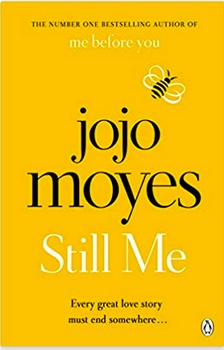
Still Me by Jojo Moyes
Sorry to say goodbye to lovely Lou Clarke (Still Me follows Me Before You (or, as it’s known in our house, ‘the film that made your father cry’) and After You). As a consolation though this book has one of my favourite settings, New York, and a great cast of completely new characters.

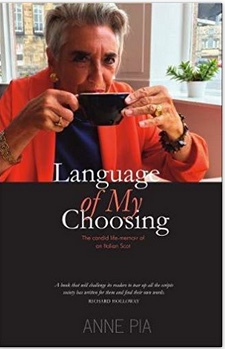
Following on from her rather unhappy childhood in post-war Edinburgh when it was assumed that she join the family business, the Copper Kettle Café, Anne Pia has fought, and succeeded, not to conform; today she is a successful poet and academic writer. The happy legacy of the Italian side of her family is her love of good food and there are some mouth-watering descriptions, and pasta-cooking tips.

Uncle George and the Cacti and other stories by Gillean Somerville-Arjat
This is a veritable feast of short stories. Includes: a Moroccan woman, a recent emigrant to Spain, worries about what will become of her family; a woman of a certain age encounters a street poet in Lisbon; three mysteries/crimes set in Scotland; retellings of classical stories; a relationship goes very wrong between an aunt and her nephews; a young woman forced into prostitution in 19th-century Venice; and the title story, about a schoolgirl’s wonderful and elusive Uncle George and the presents he handed over … ‘as he descended from an overnight bus from London, bearing yet another bowl like a sacred offering.’

Tuesday, 18 July 2017

Seven in June


I read seven books in June.


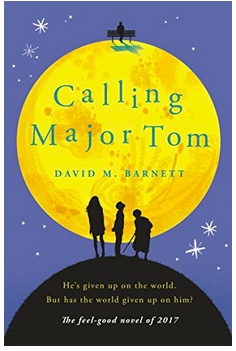
Calling Major Tom by David M. Barnett
Read on Kindle. Think of a story where a highly trained astronaut is about to leave on a one-way trip to Mars, his task to take ten years to set up a colony there. However, when he dies before take-off his place is taken by forty-year-old Thomas Major (and yes, he is Bowie fan) who is unqualified for the job except that he is so unhappy he relishes the thought of the forthcoming solitude. Now think of the Ormerods, a family firmly rooted on Mother Earth, where a teenage girl is desperately holding things together for herself, her little brother and their increasingly forgetful granny, terrified that bureaucracy will separate them.

It seems impossible at first that these stories could plausibly coincide. Yet they do, in this cleverly constructed and heart-warming book.


The Hypnotist’s Love Story by Liane Moriarty
OK, I cracked. I couldn’t leave my last two Liane Moriartys unread any longer. They lay at the side of my bed saying … go on, you know you want to …
Hypnotherapist Ellen is fascinated by what makes people tick. So when she falls in love with Patrick, the fact that he has a stalker doesn't faze her in the slightest. If anything it intrigues her, and the more she hears about Saskia, the more she wants to meet this woman. But what Ellen doesn't know is that they've already met . . .
Not my favourite, which remains The Last Anniversary, but once embarked upon not to be put down until finished.


Truly Madly Guilt by Liane Moriarty
Some similarity to Big Little Lies – an event at a social function has unexpected consequences and results in someone’s death. Terrific characters – I loved Vin in particular, and little Ruby just jumped off the page.

So that’s where my bingeing has got me … no unread Liane Moriartys; I can only hope she is typing at top speed at this very moment.


Foreign Fruit by Jojo Moyes
On the bright side I found a Jojo Moyes I hadn’t read at the Christian Aid booksale and enjoyed it very much too. Set partly in the 1950s and partly fifty years later, the story centres around Arkadia, an Art Deo House, in a staid English seaside town. Notorious in its early days for its bohemian inhabitants, it falls into disrepair until its transformation into a hotel uncovers past secrets.


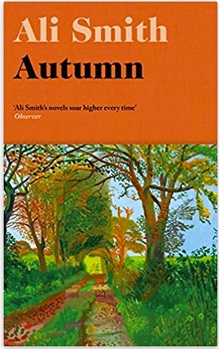
Autumn by Ali Smith
Read for Book Group. I must admit, because I thought it would be a difficult read, that I put off starting it until the Sunday morning before the Monday evening meeting – but then found myself completely involved and read the first 150 pages without looking up, finishing it in the afternoon. Her writing is mesmerisingly good. There’s not a plot as such but different stories illustrate the state of Britain in the time of Brexit. It has some very funny scenes such as when Elisabeth is trying unsuccessfully to produce a suitable photograph for her new passport, and when two characters get onto a TV programme called The Golden Gavel (clearly AS is poking fun at Antiques Road Trip). An unexpected treat.


The Making of Us by Lisa Jewell
I loved Lisa Jewell’s earlier books but after I read, and wasn’t very keen on, The House We Grew Up In, I didn’t pick up her more of hers until I saw this one and liked the premise.
Lydia, Robyn and Dean don't know each other – yet.
It would be a spoiler to tell you what these three have in common so I’ll just say that it opens up a whole new world of possibilities for my favourite TV programme Long Lost Family. Loved it. Now I’m back being a Lisa fan with lots to catch up on.


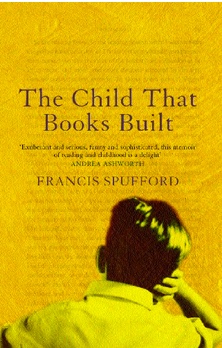
The Boy that Books Built by Francis Spufford
Christian Aid Book Sale purchase. FS had a difficult childhood in some ways – good parents but also a little sister with a very rare medical condition. So he retreated into reading and in this beautifully written memoir he revisits his favourite childhood books. I think he’s a little younger than me but we both grew up before the ‘Young Adult’ book was a thing.

I was a retreater too, if not for the same reason, so I felt we were kindred spirits even if our tastes rarely coincide – for some reason the Narnia books completely passed me by and neither have I read Tolkein or Ursula Le Guin, all of which obsessed him. However, we are a hundred per cent on the same page about Little House on the Prairie; he has a wonderful chapter on the series, and its author, including an account of a visit he made (in order to write a newspaper feature) to De Smet, immortalised in the later books, and now trading on the fame Laura Ingalls Wilder brought to it.

Tuesday, 2 August 2016

Six in July


I read six books in July.


Margaret Fay Shaw was an American-born musicologist, photographer and writer. She and her husband John Lorne Campbell were fascinated by the folklore, culture and language of the Scottish islands, especially South Uist, and set out to record it as much as possible. In 1938 the couple bought the island of Canna where they lived until they died – MFS in 2004 aged 101. What a wonderful woman.


‘April Wilson is wondering what to do next – her life has been turned upside down after the loss of her husband so she’s hoping to piece herself together again with a visit to her elderly great aunt, Edith. Arriving in the rural idyll of Tindledale, she’s dismayed to find Edith’s cottage and the orchards surrounding it in a sorry state of disrepair. Edith seems to have lost interest completely, instead she’s become desperate to find out what happened to her sister, Winnie, who disappeared during WWII.’

I heard this author speak at the recent Romantic Novelists’ Association Conference. Her first (unpublished) book was set in a bank because she worked in one – but now her books are set in picturesque English villages as you can tell from the cover.


Read on Kindle. ‘The first in a series of anthologies of crime stories written by attendees of Crime & Publishment, a yearly crime-writing workshops based in Gretna Green, Scotland, the home of British marriages.’ (All proceeds to Hearing Dogs for Deaf People.) My favourite (and I’m not just saying it because I know her) is by my fellow Edinburgh Writers’ Club member Gillean Arjat; her story It is the cause is set at the time of the Scottish referendum in 2014.


Christian Aid Book Sale Purchase 2016. ‘Life is the strangest thing. One minute, Mrs Elner Shimfissle is up a tree, picking figs to make jam, and the next thing she knows, she is off on a strange adventure, running into people she never expected to see again … ’

I have enjoyed other books by Fanny Flagg (such as Finding the Rainbow, Welcome to the World Baby Girl, and Fried Green Tomatoes at the Whistle Stop Café, which was made into a film). I wasn’t so keen on this one which hopped into everyone’s head, even that of the most minor characters, and where the whole premise was too sugary even for my sweet tooth.


After You by Jojo Moyes
I read and cried over (as did millions of others) Me Before You and enjoyed the recent film too. Even my husband (‘I’m only going because your mother wants to see it.’) had to be passed a tissue. So naturally I was keen to find out what Lou did next. Perhaps inevitably I was a leeetle bit disappointed. Nothing could have the emotional impact of Me Before You of course– what happened in that book should/could only happen to a person once in their lifetime. And I didn’t take to Lily, the damaged teenager who seemed to be straight from central casting. But it was good to meet lovely Lou again and her family – and to know that there will be a third book about them.


The Fire Maker by Peter May
Peter May wrote five police procedurals set in Beijing in the 1990s which I believe were published before he became so well known (with his Lewis trilogy, and Enzo Macleod books among others) and are now being reissued. The Fire Maker is the first. I was intrigued to read it, as a Peter May fan and because I have been to Beijing (as I’ll tell anyone who’ll listen; I did a post on my visit to China here). 

I think, if I may say so, that Peter May’s writing is much better now, but The Fire Maker is, er, a cracking good read with very evocative descriptions of the sights, sounds, smells and tastes of the Chinese capital, and a fast-moving plot. My only complaint is that we are told rather too often that Margaret Campbell, the visiting American forensic pathologist, isn’t wearing a bra. Perhaps in the second book, due out next month, she'll have remembered to put one on.

Thursday, 16 April 2015

Seven in March


I read seven books in March, two more than last month. But one was very short and I’d read four of them before …


My Brilliant Friend by Elena Ferrante
Read for book group. The first in a series of, possibly, autobiographical novels (the identity of the author is uncertain). The cover does not remotely reflect what the book is about. Two girls come of age in the back streets of Naples in the 1950s. I liked the premise, I liked the setting and the era, I liked the characters – but I won’t be reading any more by this author because I didn’t care for the actual writing. Usually I admire and appreciate spare, economic writing but here there was virtually no flesh on the bones and after a while I longed for some. Others in the group were very keen though so don’t let me put you off.

I was looking at my bookshelves for something else and caught sight of the Carol Shields section and thought I was due for a reread of this late and much lamented Canadian writer. So one after the other I read:


Happenstance
I blogged about this here recently, in a post called Patchwork Pieces.


Judith Gill is writing a biography of a minor Victorian novelist; she has also written a novel of her own but is unhappy with it – is it plagiarism and has she, in turn, been plagiarised? She’s also puzzled by her husband who keeps odd balls of wool in a bottom drawer, and her son, who shares his secrets only with a pen friend. This is a companion novel to The Box Garden.


Judith, from Small Ceremonies, has a sister, Charleen, and this is her story. Charleen’s husband has left her and their laid-back teenage son Seth, but they’re doing fine. She is a published poet, she has a job on the National Botanical Journal, and she has a man friend, Eugene. But her life – and Judith’s – is suddenly thrown by the news that their geographically and emotionally distant elderly mother is to remarry. Charleen goes to the wedding leaving Seth behind with her friend, Greta, who decides to interfere in the family dynamic in a very dramatic way.


Winner of the Orange Prize in 1998. Larry gets fascinated by mazes after visiting Hampton Court on his (first) honeymoon, and eventually acquires a career and reputation for building them in Canada. I love the clever way this is written. It’s Larry’s life from 1977 to 1997, told in chapters called eg Larry’s Folks, Larry’s Words, Larry’s Friends, Larry’s Kid, Larry’s … er, a dangly piece of Larry’s anatomy. It ends with Larry’s Party and as the reviewer from Good Housekeeping said ‘The brilliant finale will go down as one of the great literary dinner parties, up there with Thackeray, Woolf and Austen.’

 She also described it as ‘An intricately textured, utterly captivating new novel’ and these words could be used to describe all Carol Shield’s books. She won the Pulitzer Prize for The Stone Diaries, which proves, for me, that Pulitzer winners are much more readable and lovable books than are the Bookers (see the Pulitzer/Booker winners I’ve read here).


A ‘Quick Read’ – but, as usual, from this author a warm and sparky one. When her boyfriend doesn't turn up for their romantic mini-break normally unadventurous Nell decides to go on her own.


The Husband’s Secret by Liane Moriarty
Resisted this for long enough because there was a lot of hype round it but it waved to me from a scout jumble sale. I should probably have realised before I did what the secret was but when, with horror, it began to dawn on me I couldn’t put the book down. All the characters (it’s set in Australia) and their story-lines were interesting as was how they all tied together. I wasn’t sure about the epilogue though, didn’t think it was necessary, but will definitely read more of hers.

A talented family –  Liane is the sister of Jaclyn Moriarty whose YA epistolary novel Feeling Sorry for Celia I read and loved a few years ago.

I must admit I thought the name Moriarty had been made up by Arthur Conan Doyle – but then perhaps you thought Rowan Atkinson made up mine.