katewritesandreads

katewritesandreads
Showing posts with label Jane Austen. Show all posts

Tuesday, 7 April 2026

Six in March

I read six books in March.


The Mountains Sing by Nguyễn Phan Quế Mai

Drawn from the experiences of the author’s family, this follows two generations through the Vietnam wars. Here, we follow a grandmother and grand-daughter as they have to confront missing or injured family members, poverty, violence and politics both at international and local levels.

The grandmother’s story of how she got her six children to safety (one just a babe in arms), after their business and home were attacked by people they thought were their friends, is heartbreaking – but also uplifting in showing her resourcefulness and courage.

This may sound like a harrowing read – and of course it is in places – but it’s written in an engaging style, a page-turner. Read for book group. Recommended.


Introducing Mrs Collins by Rachel Parris

‘Mrs Collins’ – the name probably needs no introduction, not to Jane Austen aficionados anyway. This is Charlotte’s story – Charlotte who set her cap at the much-sneered-at vicar because, well past the usual age of matrimony, she was that dreadful thing: a spinster.

The author looks quite kindly on Mr Collins (it wasn’t his fault that Longbourn should be entailed to him and she has given him a traumatic childhood to account for his demeanour) but of course he isn’t hero material … No spoilers!

Not as enjoyable as the sparkling, recently televised The Other Bennet Sister but a good read; shortlisted in the Debut Romance section of this year’s Romantic Novelists’ Association Awards.


A Lesson in Dying by Ann Cleeves

An early book by the author of the Shetland and Vera series, reprinted because of her subsequent massive success. A much-hated head teacher is found murdered in a grisly fashion – step forward Inspector Ramsay. Will read anything Ann Cleeves writes so I’m happy with this.


Provincial Daughter by R. M. Dashwood

A reread. The author (Rosamund) is actually the daughter of E. M. Delafield who wrote Diary of a Provincial Lady and its sequels. EMD’s books are among my very favourite comfort reads.

Provincial Daughter was Rosamund’s only published novel, first appearing in 1961; this Virago edition came out in 2002. It’s set in the 1950s otherwise it echoes EMD’s '30s novels – woman with little domestic interest and literary aspirations is stuck in rural Devon with, in this case, three small boys (and a handsome husband called Lee).

It is entertaining enough; I would probably have enjoyed it more were I not so enamoured with the Provincial Lady.

Years ago, I did a blog post on clothes in fiction and included a piece from The Provincial Lady Goes Further in which, when on holiday in France, she has to take her son’s white shorts to another town to be dry-cleaned. In Daughter, it was the total palaver of school ‘packed lunches’ that made me glad to have had my children in the late 20th century – not a sandwich or healthy flapjack in sight, but cottage pie in a glass jar to be heated up at school. L


The Dearly Departed by Elinor Lipman

Anyone else read Elinor Lipman? She’s American, writes novels, short stories and essays. I love her wacky, edging on black, sense of humour. In The Dearly Departed, Sunny returns to her small hometown following the death of her mother and discovers that she possibly has a half-brother the same age as herself. Also includes local politics and golf …


Notes on Your Sudden Disappearance by Alison Espach

The author’s The Wedding People is one of my favourite recent reads, its word-of-mouth success so justified. I will reread it at some point. That book starts with a very dark scenario (do stick with it though). Notes also has a dark theme (not a spoiler) – the death of Sally’s beloved older sister in a car accident and the effect that has on her and their parents (and the driver of car). In navigating the world without Kathy (and referring to her sister as ‘you’ throughout the book), Sally, a clever, bookish child finds her own path away from home eventually – and back again.


Monday, 3 March 2025

Five in February

I read five books in February.


Orbital by Samantha Harvey

Read for book group. Winner of the Booker Prize 2024. A short book but you need to savour every single poetic sentence so it’s not a quick read. It imagines life on a space station through the eyes of six astronauts – two women, four men; two Russians, one American, one Italian, one Japanese, one English – as they orbit around the earth seeing their home countries so far below. Wonderful. I want to read it again.


Close to Death by Anthony Horowitz

And now for something completely different … Various people had recommended this who-dunnit series featuring Detective Hawthorne – and Anthony Horowitz himself. This is the fifth title.

It’s a great conceit that only he (also author (amongst many other titles) of the story-within-a-story Magpie/Moonflower Murders books) could pull off.

A newcomer to a gated community in a very desirable area of London has been found dead, shot through the neck with a crossbow. He’s made himself very unpopular to everybody so there is no shortage of suspects.


Visiting Miss Austen by Angela Pearse

‘Felicity Fitzroy is delighted when she receives an invitation from her good friend Jane Austen to visit her in Bath. Despite living in domestic bliss in Derbyshire, Felicity craves excitement and a trip to the lively spa town sounds like the perfect cure.’

But Felicity and the niece she is chaperoning soon find themselves in peril …

Great fun.


Probably Nothing by Lauren Bravo

I enjoyed this author’s first novel Preloved (which I heard about on Joanne Baird’s blog). Probably Nothing is blackly funny. 

Bryony’s had a brief fling with Ed – nothing serious on her part; in fact she’s about to break it off.

But <spoiler alert>when Ed, who’s allergic to wasps, dies of anaphylactic shock, she finds that he has had a different view of their relationship and his loud and loving family embrace her as one of their own. As her own family situation is unhappy she’s torn between enjoying the affection and attention, especially from Ed’s mother, and telling them the truth. (Oh, and she’s a hypochondriac, hence the title.)


Wavewalker: A Memoir of Breaking Free by Suzanne Heywood

Actually for March’s book group meeting – I’m ahead of myself.

When Suzanne Heywood was seven, her parents announced that they were going to take her and her brother and sail around the world for three years.

Ten years later … Suzanne, having more or less educated herself but has no formal qualifications, applied to Oxford and got in.

In between was a life of terror and privation – terror, for example, at being in the Indian Ocean hurled from wave to wave (think A Perfect Storm) and privation from being often hungry because supplies or money had run out.

Her parents were more interested in each other than in their children and considered Suzanne difficult for wanting any other way of life.

Astonishing. 


NOTE up on the right-hand side, a shiny new sign-up box!


Wednesday, 2 October 2024

Seven in September

I read seven books in September.


Always Gardenia by Betsy Hanson

In July I reported that I had a story in an anthology called All this Richness by Barbara Pym and her readers; all the stories were taken from entries to the short story competitions run by the Barbara Pym Society. Betsy Hanson also has a story in it – she has been shortlisted twice and won in 2023. We connected on social media and she kindly sent me a copy of her lovely novel.

Gardenia, from Seattle, is fifty-six and mourning the premature loss of her husband. But she is making a new life for herself – she has started a job as an administrative assistant in a university and is getting to know her colleagues (academia is such fertile ground for a novelist); she babysits her grandson (and worries about her daughter-in-law’s erratic behaviour) and she has her best friend Sylvie, and her beloved dachshund.

Wise and witty and Pymish – I loved it.


Murder in Bloom by Liz Fielding

More flowers … but this is the third in a great cosy crime series featuring garden designer, Abby Finch. In this one, Abby is invited onto a gardening TV programme and ends up investigating the murder of the presenter.


A Pen Dipped in Poison by J. M. Hall

Another cosy crime, this time with three ex-teacher sleuths Thelma, Liz and Pat. Careers and marriages are destroyed before the three discover the sender of the letters revealing the recipients’ secrets.


Broken Bayou by Jennifer Moorhead

Not a book I would have come across if it hadn’t been an Amazon Prime free pick.

Child psychologist Willa Watters has come back to the small town in Louisiana where she, her feckless mother and her damaged little sister, spent childhood summers with her two great aunts. The aunts’ house has been left to the town but there are some boxes Willa must go through. A dry summer lowers the water in the bayou, bringing to light a serial killer’s work – and a shock for Willa.


Amusing Miss Austen by Angela Pearse

Sisters who must get married to avoid poverty, a dull clergyman cousin who will inherit their home – sounds a familiar story? Well, indeed – this, after all, is the situation that inspired Felicity's friend Jane Austen to write her best-loved novel ... I look forward to meeting these characters again. Felicity is a delightful heroine and Max is as dashing and (at first) as taciturn as one hopes for in a Regency hero, and of course one can never have too much of Miss Austen.

Great fun – and the sequel Visiting Miss Austen is now available to pre-order.


Highland Deceived by Jayne Castel

What a compelling hook – Connor, the new young chieftain of the Mackays of Farr has been betrothed for years but until now has never met his bride – and the woman he retrieves from the nunnery is not who he thinks. Keira – from the Gunn family, sworn enemies of the Mackays – falls hard for her husband but how can she keep her identity a secret? My heart was in my mouth when she got called out by someone who knew the girl she'd replaced. Set in the beautiful far north-west of Scotland, in Sutherland, this is a page-turning read and I look forward to revisiting the area and discovering what happens with Connor's siblings in the follow-up titles.


Miss Blaine’s Prefect and the Gondola of Doom by Olga Wojtas

The latest mission for time-travelling Morningside librarian Shona, as given to her by her fearsome old headmistress Marcia Blaine. This time Shona thinks she’s been asked to travel back to 17th-century Venice to prevent an outbreak of the plague but she may (as usual) have got the wrong end of the stick. Misunderstanding abound, as do the puns and witticisms and literary allusions. Eventually, Shona’s 21st- century knowledge helps to change Italian history, just not in the way she expected.

An absolute joy.


Friday, 10 February 2023

Seven in January

 I read seven books in January.


Bibliomaniac: An Obsessive’s Tour of the Bookshops of Britain 

by Robin Ince

Signed copy, a lovely Christmas present.

When Robin Ince’s stadium tour with Professor Brian Cox was postponed because of the pandemic he decided, as you do, to go on a bookshop tour, by public transport.

As well as giving talks (customized to each venue) he bought books either in the shops or adjacent charity shops, and was given books as gifts – leading to lugging heavy loads around on buses and trains. What an enviable way of spending time …

Here’s a flavour: ‘Edinburgh probably represents my highest per-day date of book purchases of any city I visited. I won’t list my favourite purchases, but rather the one I most regret leaving behind.’


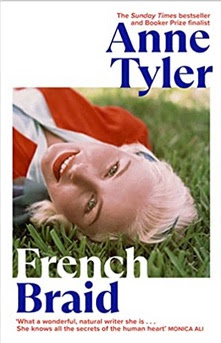
French Braid by Anne Tyler

Pleased to have a hardback version (from Waterstones’ hardback half-price sale).

When her children grow up and leave home then, inch by inch, their artist mother Mercy does too. But family life turns out to be inescapable …

I got very involved with all the characters who we follow at various stages of their lives and was frustrated by some gaps and unfinished stories – but, hey, it’s Anne Tyler; she’s forgiven.


Friday’s Child by Georgette Heyer

Delightful heroine (called Hero) and her marriage of convenience to the dashing Lord Sherry, on whom she’s always had a crush. Not-really-a-spoiler – the book ends with one of my favourite Heyer scenarios: a chase through the darkening countryside and a showdown in an inn.


The Village of Lost and Found by Alison Sherlock

‘Scandal-hit party girl Lucy Conway needs to leave London fast, so she packs her bags and escapes to the sleepy village of Cranbridge to take care of her beloved Uncle Frank.’


Blurb your Enthusiasm: An A-Z of Literary Enthusiasm by Louise Willder

Bought with my Bookshop.org voucher. Fab. How are we persuaded to buy/read the books we do? Louise Willder (who’s written 5000 blurbs) tells of the tricks of the publishing trade and discusses among much else what she sees as the best and the worst blurbs of all time.


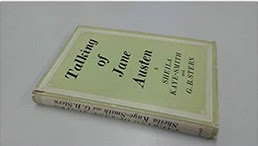
Talking of Jane Austen by Sheila Kaye-Smith and G. B. Stern

Bought in the Christian Aid Booksale last year. Published in 1943. Two writers, famous in their day, discuss most eruditely a writer unsung in her day but now one of the world’s most known and beloved.


The Art of Falling by Danielle Mclaughlin

When Danielle Mclaughlin won the Sunday Times Audible Short Story Award in 2019 her story ‘A Partial List of the Saved’ was available online and I thought it was terrific. Since then she has published a story collection Dinosaurs on Other Planets and I should have bought that instead of this, her first novel, which left me cold.

I can understand, of course, that it’s stressful for Nessa having problems at home and at work but my understanding is of the situation not of the effects on the character who, with the rest of the cast, I did not believe in never mind care for. There was much that didn’t add up – eg Luke was said to be ‘very fond of Eleanor’ when to my recollection they hadn’t met.

It’s interesting that an author who I thought wrote brilliantly about relationships (and much else) in her short story failed to convince me about any of the relationships in a much longer piece.

Saturday, 3 April 2021

Seven in March

 I read seven books in March.


The Other Bennet Sister by Janice Hadlow

That’s Mary*, the middle sister from Pride and Prejudice. This is an extremely enjoyable read – a standalone but of course all the better if you’ve read P&P / seen the film(s).

The first quarter of the book is the timeframe of P&P, seen from Mary’s point of view. Thereafter <spoiler alert> with her four sisters married and her father deceased, she and her mother live with the Bingleys where Mary is tormented by the ghastly Caroline.

So she moves on to Pemberley but here she feels like a gooseberry in the midst of the Darcys’ domestic bliss – so much so that she gets herself invited to stay in her old home, Longbourn, where the Collins now reign. Unexpectedly, she finds more in common now with the much-maligned Mr C than she does with her friend Charlotte, née Lucas.

It was lovely to catch up with these old acquaintances before we made some new ones.

Mary then goes to London, to the welcoming home of her mother’s brother and sister-in-law, the Gardiners.

And there I will leave you, gentle reader, to find out for yourself what happened next. (I succumbed to a supermarket paperback but it is currently 99p on Kindle.)


*I too was inspired to write about Mary Bennet, in a modern-day story called The Real Thing; it was long-listed for the Jane Austen Short Story Award a few years ago. You can read it in my collection Another World.


The Jane Austen Society by Natalie Jenner

Read on Kindle. Still on a JA jag here.

The blurb said it was a fictionalised account of a group of people who saved the Austen’s house in Chawton, Hampshire to be a museum to her, and bought back various Austen artefacts that had been sold abroad. I did get absorbed in their various stories (especially Dr Benjamin’s) while at the same time thinking that in places the dialogue was a bit clunky.

Then I got to the end where a note says that all the characters are entirely fictitious and not based on anyone who was involved in that (real) exercise. Not sure what to make of that.


The Madonnas of Leningrad by Debra Dean

A Christmas present. I knew a little about the long siege of Leningrad (now called Saint Petersburg), which began in September 1941, and I knew a little about the Hermitage Museum there because they lent objects for a National Museums Scotland exhibition some years ago.

But I didn’t know that Hermitage Museum staff and some of their families spent that dreadful time actually in the museum, cataloguing and wrapping the precious paintings and objects for safekeeping.

In this novel, partly set in present-day America, former guide Marina, now slipping into dementia, can still walk through the Hermitage in her mind and recall especially the paintings of the Madonna. It’s a time of her life that her children and grandchildren don’t know about – and one that I was very interested to read about.


Lucy Crocker 2.0 by Caroline Preston

I’d finished The Madonnas one evening and thought I’d go for a reread rather than embarking on a new book (anyone else do that?).

This is a quirky novel, set (indeterminately) around the early 1990s, about Boston-based Lucy who is artistic, slightly hippyish, upset at how much time her 13-year-old twin boys spend on their computer – but who nevertheless has made up a multi-million-selling video game called Maiden Quest.

For various reasons, she rebels against what her life has become and nostalgically recalls her father’s cabin in the wilds of Wisconsin, still in the family but unvisited for fifteen years. She enrols her urban and very unsporty lads in a canoe summer camp she’d loved when she was a girl and, without leaving a note for her husband, sets off to relive her youth.

I love this book! (I bought my ex-library copy some years ago for 80p).


 Jackie by Josie by Caroline Preston

So having happily reacquainted myself with Lucy I reread this equally enjoyable novel by the same author.

Josie has been asked to do some research (ie look for scandal) at the Kennedy Library for someone who is writing a biography of Jackie Kennedy Onassis. She’s going to be well paid so she temporarily moves back with her small son to her mother’s large, ramshackle house while her husband takes up a teaching post in California.

It’s difficult having that (pre-mobile) distance between them; her mother’s asked a convicted arsonist to move in; and her own dissertation on an obscure woman poet has ground to a halt.

Warm and funny.


A Long Petal of the Sea by Isabel Allende

Read for book group … the ‘long petal’ being Chile. The book begins in Spain during the bloody civil war; when dictator Franco wins, the losing side disperse in various directions. Victor, Roser and baby Marcel are picked by poet and activist Pablo Neruda to embark on his rescue ship, the Winnipeg, to begin a new life in Chile. Years later, they find their lives turned upside down by another dictator, General Pinochet.

This is a fictionalised version of historic events. I learned a lot that was interesting and it was page-turning but the novel part of it was rather unsatisfactory; it seemed to play second-fiddle and the tone made me feel as if I was being hastily told a story rather than been given the chance to get involved with the characters.


The Castilians by V E H Masters

By coincidence, another novelised version of historic events, this time of the siege of St Andrews Castle (1546/47). Here, the characters spring to life and carry the story of this little-known or long-forgotten extremely dramatic part of Scotland’s history.

Look out for my interview with the author coming soon.


Tuesday, 7 August 2018

Six in July


I read six books in July, four fiction and two non-fiction.


From Christian Aid Booksale. From the back cover blurb: ‘Nancy Drew has survived the Depression, World War II, and the sixties to enter the pantheon of American girlhood.’ But the story of how the books were written is even more exciting than the girl detective’s many adventures. The ‘author’ Carolyn Keene <spoiler alert> did not exist.  Instead, Edward Stratemeyer thought up the storylines and formed a syndicate of writers to whom he farmed out the work; when he died his daughter Harriet took over.

This is really Harriet’s story, and that of one of the writers, Mildred Wirt, who (long before word processors) could turn in a manuscript in a matter of days. It was many years before Carolyn Keene’s non-existence was admitted to by the Stratemeyers and there had to be many subterfuges (eg when answering fan letters) to keep the secret. And in telling the history of Nancy Drew, the author has also given an engrossing account of women’s history over the decades.


The Wonder Spot by Melissa Banks
Sophie Applebaum feels a bit of a misfit. We first meet her when she’s about twelve at her cousin’s Bar Mitzvah and go with her through various (unsuitable) jobs and various (unsuitable) boyfriends, visit her beloved brothers and not-so-beloved grandmother, until we leave her in her early thirties, still not really sure of her place in the world. I liked the episodic way this was told so that with each chapter we have to fill in the gaps. I enjoyed the writing very much too.


The Curious Heart of Ailsa Rae by Stephanie Butland
I read Lost for Words by this author last July and absolutely loved it, one of my favourite books of the year. So I was very keen to read her new one and while I didn’t fall for it quite as much I would certainly recommend it. Ailsa was born with a serious heart defect; now, in her twenties, her life has been saved through having a heart transplant. In part the book is told through a blog she has kept during and after her days in hospital. Ailsa lives in Edinburgh and she finds herself involved in the production of a Fringe Festival event, Romeo and Juliet with tango … At the same time she is getting used to her new heart, she’s wondering about getting in touch with her estranged father, and there’s an unexpected new man in her life.


A Mother’s Goodbye by Kate Hewitt
I do like Kate Hewitt (who also writes as Katherine Schwartz). This story is told in alternate chapters, in the first person, by two women: Heather lives in a too-small house in downtown New Jersey; her husband is injured and unable to work and they have just found out that their fourth child is on the way; Grace works for an investment bank, lives in a minimalist flat in New York, and is realising how empty her life is. Under normal circumstances the two would never meet but … well, find out for yourselves and remember to have a box of tissues handy.


I usually avoid Jane Austen spin-offs and the title of this one did not appeal but when I flicked through I liked the look of it – and I thoroughly enjoyed it. ‘Jane Mansfield’, a gentleman’s daughter in England in 1813, wakes up in Los Angeles in the 21st century in the body of Courtney Stone. As she tries to realise what has happened and who she really is, she must quickly get to grips with the dizzying new world she finds herself in – I found it all very convincing. In Confessions of a Jane Austen Addict Courtney finds that she has gone back in time and is now Jane – look forward to reading that at some point.


Edited by Mary F Williamson and Tom Sharp

Christian Aid Book Sale purchase. During the days of the Second World War when children were being evacuated from cities to countryside, and from Britain overseas, Marie Williamson in Toronto and her family welcomed into their home two boys they had never met, children of a distant cousin in England. During the four years they stayed – and they weren’t the easiest of lads – she faithfully wrote long letters to their mother, which were found just a few years ago.

 I found the whole story fascinating. The boys could not have had a better foster family – the editors of the book are, respectively, Marie’s daughter and the younger of the evacuees. It was also a revelation to me that Canada too had wartime rationing – in part that was because they sent so much in the way of food over to Britain.