katewritesandreads

katewritesandreads
Showing posts with label A Time to Reap. Show all posts

Monday, 19 April 2021

The Saturday Scribblers


In 2005 I did two things that changed my life. I started going to a drop-in creative writing class run by Edinburgh Council and I joined Edinburgh Writers’ Club. As well as meeting lots of lovely people I discovered a whole new world of writing prompts and exercises.

Although I’ve subsequently (and with no little thanks to both these organsiations) had a novel, four magazine serials, and around seventy short stories published, I still go to both the class and EWC and it’s still a thrill to get a great writing prompt to respond to.

So when it came to writing a fifth People’s Friend serial I decided to move from my previous locations in rural Scotland* and set it in a writing group in a fictional town in the north of England (in my mind, it’s near Alnwick).

In my writing class there can be up to eighteen people and more than that at an EWC meeting but of course I couldn’t have that many in a story.

So it was fun to think of a reason why the class would be small (it’s migrated to Jess’s house when funding is withdrawn from it being held in a library) and to dream up the attendees, Tina, Madeleine, Clarissa and Neil, and decide on their varying reasons for joining, and of course their lives when they’re not being ‘Saturday Scribblers’.

I’ve found in real life that everyone responds differently to a writing prompt and personalities emerge so that turned out to be a good way for the characters (or some of them anyway … ) to find out more about each other.

I was delighted with the illustration (see above) for the first instalment (in issue dated 17 April) and (I have a subscription so get an early copy) here’s a sneak preview of the second.


* my first four serials are now available on Kindle; the first three are in a ‘boxset’ Kindle edition and in large-print library editions:


The Family at Farrshore

The Ferryboat

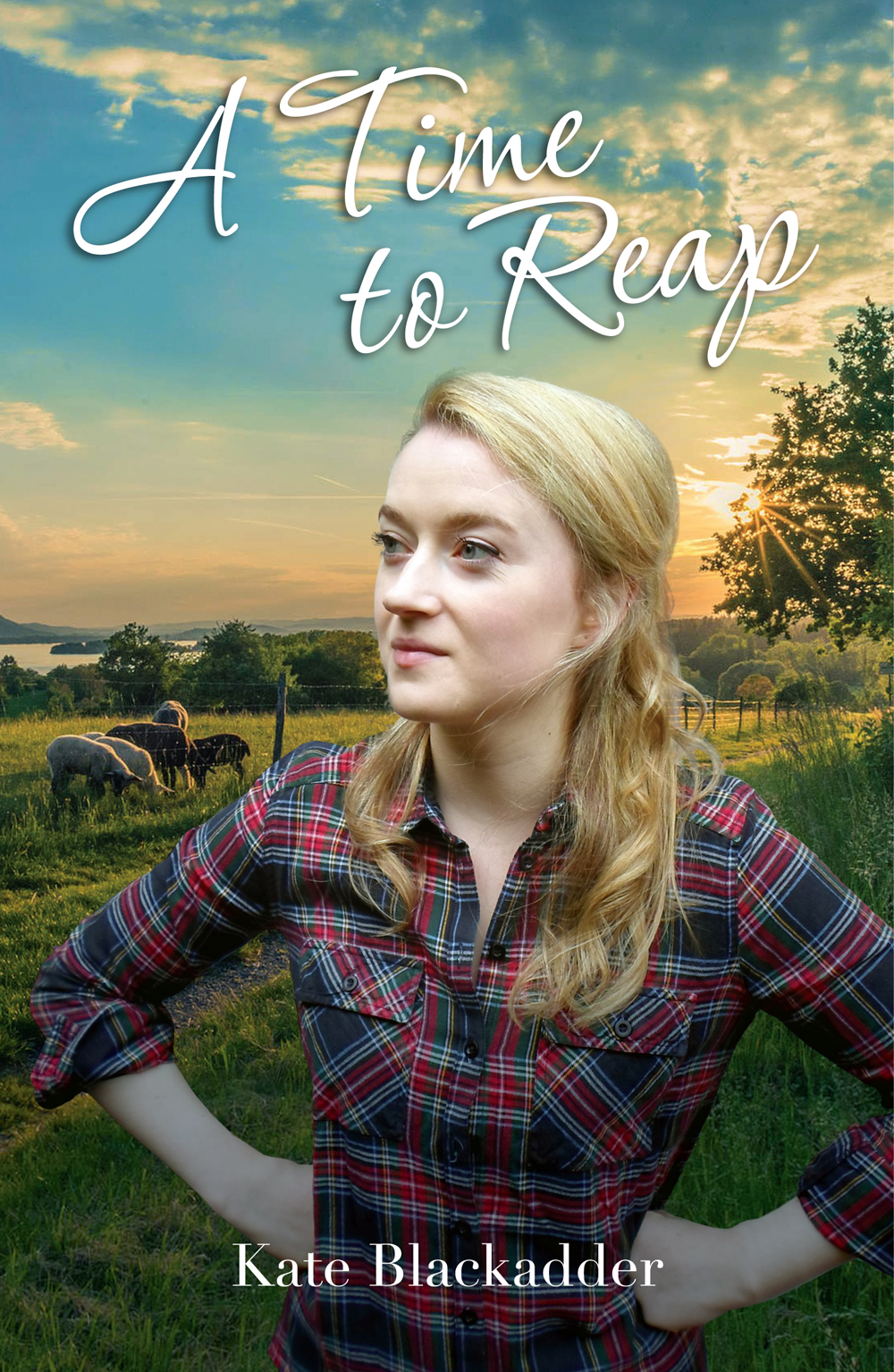
A Time to Reap

Jinty's Farm


Monday, 18 May 2020

Family Stories Boxset

 
I completed a short story last week and have submitted it to a magazine – the first new writing I’ve done since lockdown (apart from the diary I’ve kept now for 63 days). 

It’s hard to forget the elephant in the room but it’s too early to write lockdown stories – I think we’ll need a bit of distance for that – but undoubtedly it will eventually keep writers of books and screenplays in plotlines for decades to come.

To keep my writing hand in as it were I’ve been looking at previously published work and repurposing it.

First up was an anthology of magazine stories, Still Rocking, see more details in this post.


Now I’ve published a ‘Family Stories Boxset’, or Kindle e-equivalent – three of my People’s Friend serials in one file. These are already available singly at £1.99; the boxset is £3.99 so you get three for the price of two. 

It was easy enough to put the three texts together but it took a bit of Internet trawling to find out how to do the graphic (preferably at no cost). Here it is, courtesy of www.covervault.com – the website is well worth a look.
  

The Ferryboat: Judy and Tom Jeffrey move north after buying a hotel in the West Highlands of Scotland, with their daughter and her chef husband – but have they made a terrible mistake?

The Family at Farrshore: Spending the summer working on Scotland’s north coast, archaeologist Cathryn is drawn into the local community – and to Magnus who is visiting the area for reasons of his own.

A Time to Reap: It’s 1963 on a Scottish Highlands estate. Farm manager Elizabeth Duncan has the unpleasant factor to contend with, and is unsettled by the arrival of an American visitor.

Monday, 30 December 2019

Jinty's Farm

My latest People's Friend serial, Jinty's Farm, is set on – surprise! – a farm. The first instalment is in the bumper issue dated 21 December.

The setting for my last serial, A Time to Reap, was also a farm, although the scenarios are quite different.

Whereas A Time to Reap was historical (1963 – yes, a story taking place before 1970 is now deemed 'historical') and the farm was part of a large estate in the Scottish Highlands, 'Jinty's' is a small farm in Fife which, in 2019, the Watson family have run for a hundred years.

All farms have to diversify in some way these days and so Isla and Kerry, wives of the Watson brothers, have begun an artisan gin company in the old byre; Jinty's Gin (named after the brothers' granny) is flavoured with local rosehips and rowan berries. I did have fun researching how to make it!

Then there's Isla and Bill's elder daughter Rosalyn and her boyfriend problems; an entry in the farm diary from the WW2 years which has a link to the present day; and Isla, the main character, who's run ragged between managing the house and the family and school farm visits and the gin company and the holiday cottages and her part-time teaching job ...

I was brought up on a farm but that doesn't mean I know anything much about farming as I blogged here when A Time to Reap came out. However, as I can't seem to stop writing about it, it would seem you can take the girl out of the farm but not the farm out of the girl.

A large glass of Jinty's Gin (or your chosen tipple) to all my readers. Cheers!

Saturday, 4 November 2017

Living vicariously – or not


One reason I like writing fiction is that I can live vicariously through my characters. I can look different, travel to other times and far-off places, and have talents that I certainly don’t have in real life. For example I have been an archaeologist, played the fiddle, been a glamorous redhead, and travelled back to the 1950s (not all in the same story ...).

But I’ve never wanted to do what my heroine Elizabeth Duncan, in A Time to Reap, does – be a farmer.

My father was a farm manager so I was brought up on several farms in the Scottish Highlands. Most of my uncles were farmers, on both sides of the family. But get up early every single morning, be outside in all weathers? Not for me, thank you very much. I was roped in to help at some unearthly hour of the morning when it was time to gather the sheep off the hill and, I am shamefaced to recall, I did nothing but moan about it.

Sometimes I’d watch what Dad and his colleagues were doing, whether it was sheep-dipping, lambing, ploughing, making hay bales or milking the cow, and with my siblings and neighbouring children I roamed around over a wide radius, untroubled by traffic or worries about bogeymen.

My much-preferred occupation though was to read (in the garden on warmer days, hugging the Raeburn the rest of the year). The books I liked best were set hundreds of miles away geographically (in rambling houses in Cornwall, tapping walls for secret passages and finding buried treasure), or light years away from my own experience (having midnight feasts in a boarding-school dormitory). When, around the age of ten, I tried to write stories myself I aped my favourite authors. Write about life on a Highland farm? It never crossed my mind for a minute.

So no one was more surprised than me when many years later I found myself writing a serial for The People’s Friend – about a farming community in 1963. Despite my upbringing, research was required. Online I found a ‘calendar’ of a farmer’s year from around the right time-period and place. I asked a cousin how a haystack was made. In a second-hand shop I found a copy of The Farm as a Business: A Handbook of Standards and Statistics (Her Majesty’s Stationery Office, seven shillings) and an item in it, about cattle-rearing, gave me an idea for a plotline.

I got rather obsessed with remembering life on big estates – not just the farming side; there were gamekeepers, foresters, gardeners, the wider community – and trying to think of it from the perspective of a grown-up, not as the child I was when actually there.

I enjoyed writing A Time to Reap more than anything I’ve ever written and of all my characters (in over 50 short stories, two other serials and a novel) I’d like to be Elizabeth Duncan.

That’s on paper only though – I’m afraid the intervening years have shown no improvement in my bad temper when I have to get up very early.

It’s April 1963 in the Scottish Highlands. Elizabeth Duncan, widowed with two small daughters, is the farm manager on the Rosland estate, the job previously held by her husband, Matthew. Following a hard, snowy winter, her working life is made more difficult by the unpleasant estate factor.

Elizabeth enjoys support in the small community from family and friends, including her cousin Peggy and local vet Andy Kerr. The arrival of an American visitor at Rosland House unsettles her in a way she hadn’t expected but, after Matthew’s mysterious death, a new relationship has been the last thing on her mind. However, as she dances at the annual estate ball in September, that may be about to change …

A Time to Reap is available in a large-print edition in libraries, and on Kindle.


Tuesday, 3 October 2017

A Time to Reap – again


I told in this blog post last year how I wrote a poem called Cousin Hugh, turned the poem into a short story called Jack’s Lad (of which more here), and then turned the short story into a People’s Friend serial called A Time to Reap. 

What could be next, I asked myself? A musical? A cinema blockbuster??

Well, as to those possibilities, watch this space (but don’t hold your breath).

In the meantime, I’ve put the serial on Kindle:


It’s April 1963 in the Scottish Highlands. Elizabeth Duncan, widowed with two small daughters, is the farm manager on the Rosland estate, the job previously held by her husband, Matthew. Following a hard, snowy winter, her working life is made more difficult by the unpleasant estate factor.  

Elizabeth enjoys support in the small community from family and friends, including her cousin Peggy and local vet Andy Kerr. The arrival of an American visitor at Rosland House unsettles her in a way she hadn’t expected but, after Matthew’s mysterious death, a new relationship has been the last thing on her mind. However, as she dances at the annual estate ball in September, that may be about to change …

And there’s a large-print version for libraries published by Ulverscroft:


In another blog post last year I confessed that I was ignorant about many aspects of farming (despite having been brought up on a farm) and that I'd consulted a cousin (wearing the hat) for advice. He kindly wrote a lovely article for me (and you) on how to make a haystack – now, sadly, a lost art.


 Here’s the illustration The People’s Friend gave the first instalment of the serial: 


And if a musical or a film are ever on the cards you’ll be the first to know.

Tuesday, 27 June 2017

Running an imaginary hotel


I wrote my first People’s Friend serial after winning the First Instalment of a Serial competition at the Scottish Association of Writers conference (see here). Called The Family at Farrshore it’s now available as an e-book and as a large-print edition in libraries.  

When PF Fiction Editor Shirley Blair asked me to think about a second serial I thought a family-run hotel would be a good setting. It’s a natural place for all sorts of people to come together.

My grandparents ran a hotel in Inverness shire in the 30s and my mother told me some stories about that.


During two summer holidays when I was a student I worked in family-run hotels – one on an island, and one by a loch where a bridge would shortly be replacing the ferryboat.

And of course I have also stayed in hotels so I could use those as research too.

I brainstormed lists of everything that came to mind from these three resources and came up with lots of material, some of which I used and some I didn’t (yet). As a background to the story, I went with the building of a bridge that can be seen from the hotel window and will put the ferryman out of work and impact in other ways on the community. That scenario was real, as I’ve said, but I had fun making up people to populate it and fictional situations to put them in.

Once I’d got my characters, I watched TV programmes on hotels, and googled restaurant menus and various aspects of running a small hotel – in fact I got so carried away with that last one I had to remind myself I was writing a story not planning to become a landlady …

I did incorporate one of the stories my mum told me about her family’s inn – a smugglers’ tale from a couple of hundred years ago.

I liked how The People’s Friend illustrated the first instalment of The Ferryboat.


When Judy and Tom Jeffreys are asked by their daughter Holly and her Scottish chef husband Corin if they will join them in buying The Ferryboat hotel in the West Highlands, they take the plunge and move north.

The rundown hotel needs much expensive upgrading – and what with local opposition to some of their plans, and worrying about their younger daughter, left down south with her flighty grandma, Judy begins to wonder if they’ve made a terrible mistake.

Other characters include Corin's rather intimidating parents Philip and Verity; Iris, a young widow with a small child, who loses her job at the hotel when the Jeffreys take over; Sandy, Iris' childhood sweetheart; Donny the ferryboat man; and forthright Roberta who refuses to name the day but has been engaged to Donny for eleven years. And of course there are hotel guests, both pleasant and otherwise.
 
Ulverscroft bought the large-print rights and produced a cover that got lots of nice comments when I posted it on social media.


So much so in fact that I asked if I could buy it and my graphic-designer husband altered it to make a terrific cover to go with the Kindle edition.


For my third serial I chose to write about a Highland farming community in the 1960s (A Time to Reap, coming soon on Kindle) but a hotel is a setting I hope to return to.

I was delighted to hear of a forthcoming book set in a hotel in the Lake District, Felicity at the Cross Hotel, and asked the author Helena Fairfax to tell me more about it. You can read her answers in a blog post here on publication day 8 July 2017 but to whet your appetite this is the really gorgeous cover:


Tuesday, 16 August 2016

Going to the tatties


The seventh instalment of my People's Friend serial A Time to Reap, set in a Highland farming community in 1963, will be published this week (available 17 August 16). 

To give readers of this blog some related bonus material I first of all asked my cousin David Allison, who farmed in that era, to describe how haystacks were made – which he did here in a post that garnered a huge number of views (it was especially popular in Russia).

In this second guest post, find out from farming historian Dr Heather Holmes about 'Going to the tatties':

For many children in rural Scotland ‘going to the tatties’ was a right of passage. If you ask former tattie pickers, gatherers, or howkers about their experiences they will usually get quite animated: ‘Oh, it was backbreaking work!’ or ‘It was a great laugh; we had a great time!’ They will tell you about the highs and lows of the work. Their memories are as clear as if they had only just been at the work. 


Children played an important role in harvesting the potato crop until well through the twentieth century. They gathered potatoes which had been uncovered from the drills in which they grew by machines such as the spinner digger or elevator digger. Their filled baskets of potatoes were emptied into carts or trailers, or tattie boxes by the farm staff.

Their work was organised by ‘stents’, marked out by a twig or stick. Each child, or a pair, was given a stent. A stent was a section of the length of the field, divided equally by the number of children employed. Where there was only a small squad, stents were longer. They could be tiresome to pick or gather before the digger came back down the field to dig the next drill.  If you got a longer stent than your neighbour you knew about it! They could cause disagreements and fall-outs!


In some parts of the country, such as Fife, Perthshire, and Angus, children (and women) were the main source of casual labour to gather the potato crop. As they were locally employed, farmers depended on the local school population of young teenagers, though some were younger. In these, and other districts, from the 1870s schools closed their doors from a week to as long as a month in October to let the children participate in the work. Had they remained open, they would have been empty and the attendance officer chasing the children out of the fields. And the farmers would have been none too pleased either!

Where smaller numbers were employed, another system was used. From 1901 tattie exemptions were used to allow individual children to be released from school for the work; the school remained in session during the time of ‘the tatties’.  Some school boards attached conditions to them, such as near-perfect school attendance for the rest of the year or economic need, with the family requiring the income from the work. Many a Christmas present, boots and coats were paid for by work at the tatties. So too were a few treats.


While tattie exemptions continued to be used until 1962, tattie holidays became an institutionalised custom, with the term ‘tattie holiday’ being used long after children were no longer employed, replaced by mechanical harvesters. The term became synonymous with going to the tatties. For many children it was the first experience of paid-employment. It really was a rite of passage!  

(Photos taken at Blair Mains, Culross, Fife, in October 1990. © Heather Holmes)

For more about the potato harvest, see Heather Holmes: “As good as a holiday”: Potato harvesting in the Lothians from 1870 to the present. 


And see also:


Wednesday, 20 July 2016

A Time to Reap (2) – How to make a haystack


See previous post on my current serial in The People’s Friend, A Time to Reap, set in a Highland farming community in 1963. In Instalment 3, on sale 20 July, Peggy is preparing for visitors from California while her farmer husband Alec and their boys are making haystacks. 

My lack of farming knowledge is lamentable considering I was brought up on a farm. I wanted to visualise what my characters were doing so I asked my cousin David Allison, who used to farm with his father in the Highlands in the 60s, How do you make a haystack? And I liked his answer so much I wanted to share it with you. (He's the lad in the hat.)


‘Haymaking in the 1950s and early 60s was a rather long drawn-out affair, even if the weather was favourable.

The first job about the end of June or early July was mowing the grass into 5-foot long bouts (rows) and depending on the weather the cut grass was left for a few days to wilt. About 4-5 days later the bouts were mechanically turned over. If it was a warm day with a bit of wind, by the afternoon the turned grass could be gathered into rows – this was done by a hayrake (a curved pronged machine about 10’ wide) pulled by a tractor across four or five bouts. A lever on the rake was pulled and the gathered bouts were released – then the big job started of making the now single row of raked hay into heaps called ‘coles’ (local term).


This was done using a hand-held, double pronged, 8-foot pitch-fork. The coles were dome shapes of layered hay, about 4-6 feet high and a similar base. It was a bit of an art to layer the hay and another art to ‘dress’ the cole so that the outside stems of grass were vertical and tight to shed the inevitable rain. The coles were left to cure and after a few days would settle down to about 4 feet high. A buckrake (a 10-foot wide implement with a series of 5-foot long pointed tines) was fitted onto the back of the tractor’s hydraulic linkage. The buckrake was reversed under the cole which was then transported to a corner of the field to be made into ‘rucks’.

Rucks were built on the same principle as coles and up to eight coles were used to make a ruck – they would stand about 10-12’ high. A couple of ‘hemp’ ropes (tied to a brick, four to five feet off the ground) were placed over the ruck. Over time the ruck would settle down to about 8 feet high.

A few weeks later the rucks were made into round stacks. This was a major operation as stacks were about 16-20 feet high, with a 16-foot diameter base (the radius of the pitch-fork). The side of the stack went straight up for about 10 feet, then coned into a peak. If the hay in the coles and rucks were properly layered it made the stacker’s job a lot easier.

The layers of hay were forked to the stacker’s assistant, whose job it was to place the fork-full of layered hay neatly in front of the stacker who equally and neatly locked each layer. There were usually three circles or rounds of layered hay, each going further out from the centre of the stack and each circle layer locked upon the other. As the stack got higher the hay from the ruck was forked onto a trailer, then onto to the stack. The stacker used a ladder to place the last few forkfulls to make the cone peak. Then the cone and the side of the stack were dressed using a wooden pegged hand rake. Later the stack was netted and or roped down. Stacks could be left in the field until the following March or even April.

I’m amazed now at the continual mental calculations that the stacker would have had to make in order to end up with a symmetrical 20-foot structure without any sophisticated measuring device.


There was great rivalry in the farming districts between farm workers as to who made the neatest and symmetrical stacks. Many Sunday afternoons were spent walking to stackyards to pass judgement and of course great play was made of poorly shaped stacks – with the unfortunate stacker reminded of his efforts long after the stack was carted away.’

The second and third pictures are from the wonderful Scottish Life Archive 
© National Museums Scotland