katewritesandreads

katewritesandreads
Showing posts with label haystacks. Show all posts

Saturday, 4 November 2017

Living vicariously – or not


One reason I like writing fiction is that I can live vicariously through my characters. I can look different, travel to other times and far-off places, and have talents that I certainly don’t have in real life. For example I have been an archaeologist, played the fiddle, been a glamorous redhead, and travelled back to the 1950s (not all in the same story ...).

But I’ve never wanted to do what my heroine Elizabeth Duncan, in A Time to Reap, does – be a farmer.

My father was a farm manager so I was brought up on several farms in the Scottish Highlands. Most of my uncles were farmers, on both sides of the family. But get up early every single morning, be outside in all weathers? Not for me, thank you very much. I was roped in to help at some unearthly hour of the morning when it was time to gather the sheep off the hill and, I am shamefaced to recall, I did nothing but moan about it.

Sometimes I’d watch what Dad and his colleagues were doing, whether it was sheep-dipping, lambing, ploughing, making hay bales or milking the cow, and with my siblings and neighbouring children I roamed around over a wide radius, untroubled by traffic or worries about bogeymen.

My much-preferred occupation though was to read (in the garden on warmer days, hugging the Raeburn the rest of the year). The books I liked best were set hundreds of miles away geographically (in rambling houses in Cornwall, tapping walls for secret passages and finding buried treasure), or light years away from my own experience (having midnight feasts in a boarding-school dormitory). When, around the age of ten, I tried to write stories myself I aped my favourite authors. Write about life on a Highland farm? It never crossed my mind for a minute.

So no one was more surprised than me when many years later I found myself writing a serial for The People’s Friend – about a farming community in 1963. Despite my upbringing, research was required. Online I found a ‘calendar’ of a farmer’s year from around the right time-period and place. I asked a cousin how a haystack was made. In a second-hand shop I found a copy of The Farm as a Business: A Handbook of Standards and Statistics (Her Majesty’s Stationery Office, seven shillings) and an item in it, about cattle-rearing, gave me an idea for a plotline.

I got rather obsessed with remembering life on big estates – not just the farming side; there were gamekeepers, foresters, gardeners, the wider community – and trying to think of it from the perspective of a grown-up, not as the child I was when actually there.

I enjoyed writing A Time to Reap more than anything I’ve ever written and of all my characters (in over 50 short stories, two other serials and a novel) I’d like to be Elizabeth Duncan.

That’s on paper only though – I’m afraid the intervening years have shown no improvement in my bad temper when I have to get up very early.

It’s April 1963 in the Scottish Highlands. Elizabeth Duncan, widowed with two small daughters, is the farm manager on the Rosland estate, the job previously held by her husband, Matthew. Following a hard, snowy winter, her working life is made more difficult by the unpleasant estate factor.

Elizabeth enjoys support in the small community from family and friends, including her cousin Peggy and local vet Andy Kerr. The arrival of an American visitor at Rosland House unsettles her in a way she hadn’t expected but, after Matthew’s mysterious death, a new relationship has been the last thing on her mind. However, as she dances at the annual estate ball in September, that may be about to change …

A Time to Reap is available in a large-print edition in libraries, and on Kindle.

Tuesday, 3 October 2017

A Time to Reap – again


I told in this blog post last year how I wrote a poem called Cousin Hugh, turned the poem into a short story called Jack’s Lad (of which more here), and then turned the short story into a People’s Friend serial called A Time to Reap. 

What could be next, I asked myself? A musical? A cinema blockbuster??

Well, as to those possibilities, watch this space (but don’t hold your breath).

In the meantime, I’ve put the serial on Kindle:


It’s April 1963 in the Scottish Highlands. Elizabeth Duncan, widowed with two small daughters, is the farm manager on the Rosland estate, the job previously held by her husband, Matthew. Following a hard, snowy winter, her working life is made more difficult by the unpleasant estate factor.  

Elizabeth enjoys support in the small community from family and friends, including her cousin Peggy and local vet Andy Kerr. The arrival of an American visitor at Rosland House unsettles her in a way she hadn’t expected but, after Matthew’s mysterious death, a new relationship has been the last thing on her mind. However, as she dances at the annual estate ball in September, that may be about to change …

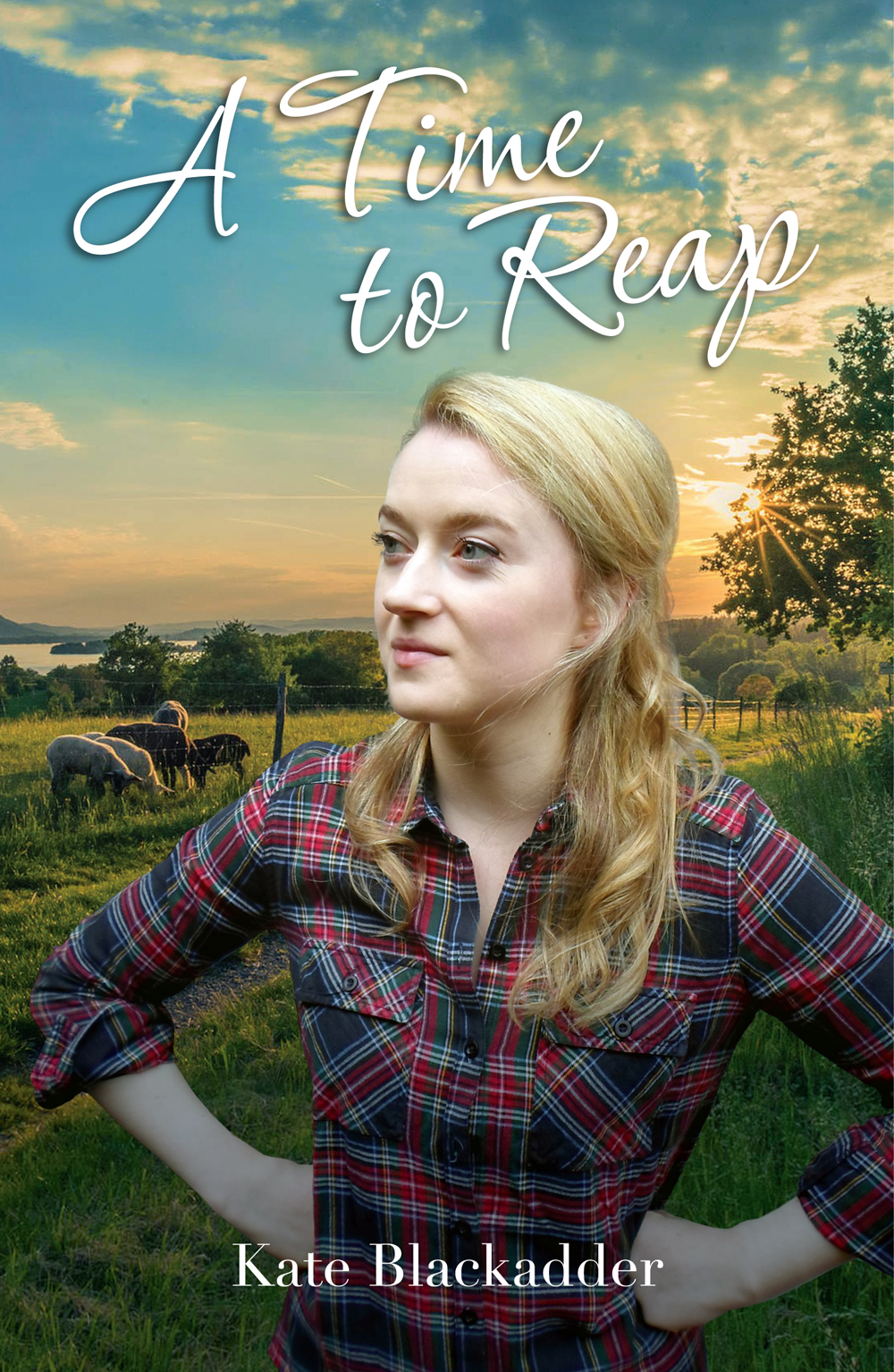
And there’s a large-print version for libraries published by Ulverscroft:


In another blog post last year I confessed that I was ignorant about many aspects of farming (despite having been brought up on a farm) and that I'd consulted a cousin (wearing the hat) for advice. He kindly wrote a lovely article for me (and you) on how to make a haystack – now, sadly, a lost art.


 Here’s the illustration The People’s Friend gave the first instalment of the serial: 


And if a musical or a film are ever on the cards you’ll be the first to know.

Tuesday, 16 August 2016

Going to the tatties


The seventh instalment of my People's Friend serial A Time to Reap, set in a Highland farming community in 1963, will be published this week (available 17 August 16). 

To give readers of this blog some related bonus material I first of all asked my cousin David Allison, who farmed in that era, to describe how haystacks were made – which he did here in a post that garnered a huge number of views (it was especially popular in Russia).

In this second guest post, find out from farming historian Dr Heather Holmes about 'Going to the tatties':

For many children in rural Scotland ‘going to the tatties’ was a right of passage. If you ask former tattie pickers, gatherers, or howkers about their experiences they will usually get quite animated: ‘Oh, it was backbreaking work!’ or ‘It was a great laugh; we had a great time!’ They will tell you about the highs and lows of the work. Their memories are as clear as if they had only just been at the work. 


Children played an important role in harvesting the potato crop until well through the twentieth century. They gathered potatoes which had been uncovered from the drills in which they grew by machines such as the spinner digger or elevator digger. Their filled baskets of potatoes were emptied into carts or trailers, or tattie boxes by the farm staff.

Their work was organised by ‘stents’, marked out by a twig or stick. Each child, or a pair, was given a stent. A stent was a section of the length of the field, divided equally by the number of children employed. Where there was only a small squad, stents were longer. They could be tiresome to pick or gather before the digger came back down the field to dig the next drill.  If you got a longer stent than your neighbour you knew about it! They could cause disagreements and fall-outs!


In some parts of the country, such as Fife, Perthshire, and Angus, children (and women) were the main source of casual labour to gather the potato crop. As they were locally employed, farmers depended on the local school population of young teenagers, though some were younger. In these, and other districts, from the 1870s schools closed their doors from a week to as long as a month in October to let the children participate in the work. Had they remained open, they would have been empty and the attendance officer chasing the children out of the fields. And the farmers would have been none too pleased either!

Where smaller numbers were employed, another system was used. From 1901 tattie exemptions were used to allow individual children to be released from school for the work; the school remained in session during the time of ‘the tatties’.  Some school boards attached conditions to them, such as near-perfect school attendance for the rest of the year or economic need, with the family requiring the income from the work. Many a Christmas present, boots and coats were paid for by work at the tatties. So too were a few treats.


While tattie exemptions continued to be used until 1962, tattie holidays became an institutionalised custom, with the term ‘tattie holiday’ being used long after children were no longer employed, replaced by mechanical harvesters. The term became synonymous with going to the tatties. For many children it was the first experience of paid-employment. It really was a rite of passage!  

(Photos taken at Blair Mains, Culross, Fife, in October 1990. © Heather Holmes)

For more about the potato harvest, see Heather Holmes: “As good as a holiday”: Potato harvesting in the Lothians from 1870 to the present. 


And see also: