katewritesandreads

katewritesandreads
Showing posts with label Scottish Highlands. Show all posts

Monday, 18 May 2020

Family Stories Boxset

 
I completed a short story last week and have submitted it to a magazine – the first new writing I’ve done since lockdown (apart from the diary I’ve kept now for 63 days). 

It’s hard to forget the elephant in the room but it’s too early to write lockdown stories – I think we’ll need a bit of distance for that – but undoubtedly it will eventually keep writers of books and screenplays in plotlines for decades to come.

To keep my writing hand in as it were I’ve been looking at previously published work and repurposing it.

First up was an anthology of magazine stories, Still Rocking, see more details in this post.


Now I’ve published a ‘Family Stories Boxset’, or Kindle e-equivalent – three of my People’s Friend serials in one file. These are already available singly at £1.99; the boxset is £3.99 so you get three for the price of two. 

It was easy enough to put the three texts together but it took a bit of Internet trawling to find out how to do the graphic (preferably at no cost). Here it is, courtesy of www.covervault.com – the website is well worth a look.
  

The Ferryboat: Judy and Tom Jeffrey move north after buying a hotel in the West Highlands of Scotland, with their daughter and her chef husband – but have they made a terrible mistake?

The Family at Farrshore: Spending the summer working on Scotland’s north coast, archaeologist Cathryn is drawn into the local community – and to Magnus who is visiting the area for reasons of his own.

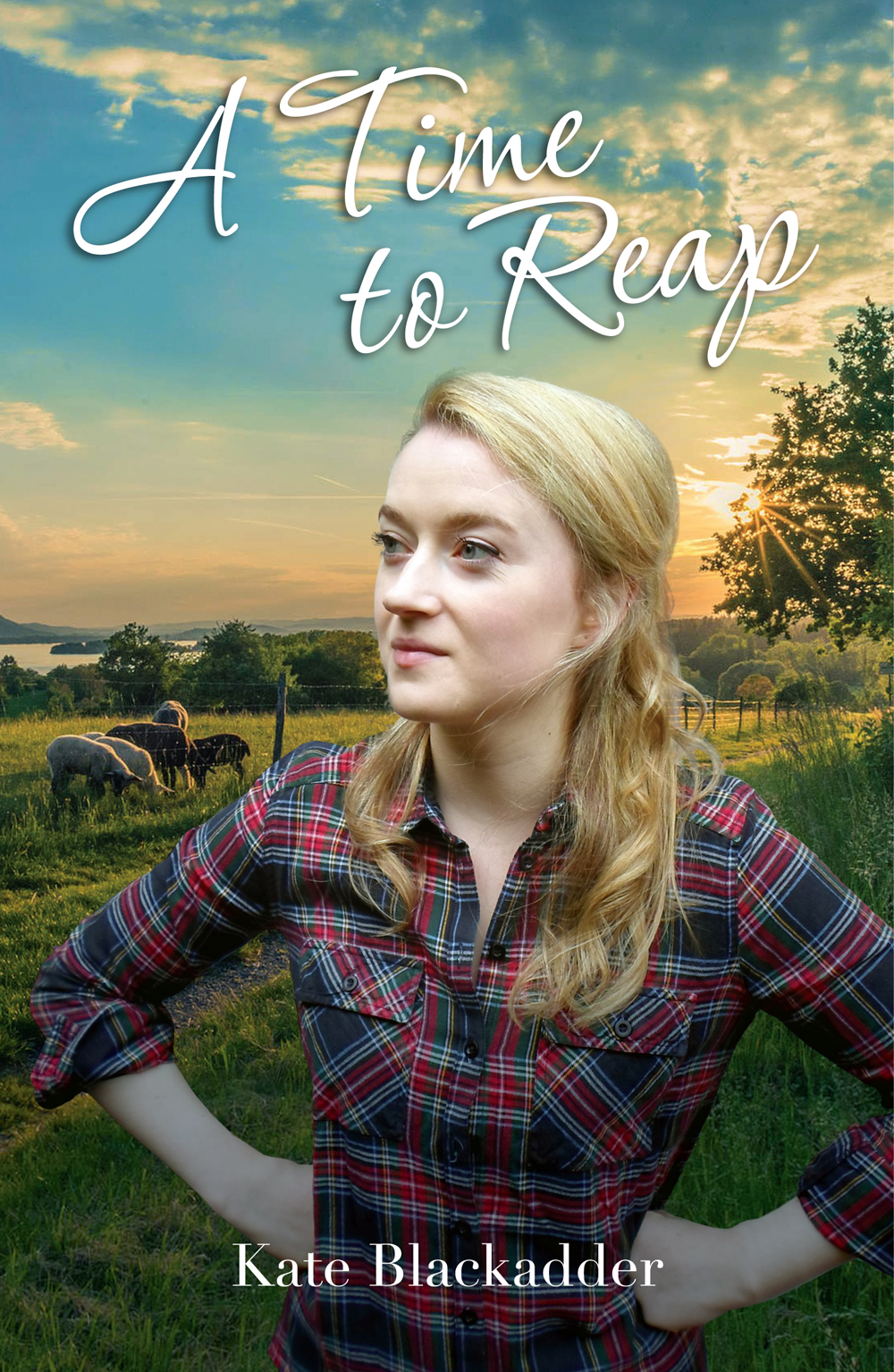
A Time to Reap: It’s 1963 on a Scottish Highlands estate. Farm manager Elizabeth Duncan has the unpleasant factor to contend with, and is unsettled by the arrival of an American visitor.

Tuesday, 9 July 2019

North Coast 500


For the first thirteen years of my life I lived in the Scottish Highlands including two places in Sutherland, one in the north-west and the other in the east.

It’s a beautiful county full stop but it’s the lovely, lonely landscape of the north-west that haunts me, the one I like to visit when on holiday from Edinburgh and that has been the background for several of my short stories and poems and a contemporary People’s Friend serial.


We lived thirty-one miles north-west of Lairg and would drive home from a trip to Tain or Inverness hardly encountering another car. When we did, we looked at the number plate and out would come the AA Guide where in those days there was a list of prefixes and you could tell where that car had come from. For example, our own car, a two-tone Hillman Minx, had the prefix SST and that signified Sutherland. 

All part of in-car entertainment in the 1960s, folks …

The sight of mountains and moors and moonscape rocks and Highland cows and sheep staring from the roadside and seas and cliffs and hidden silver and gold beaches and far-off horizons still tugs at my heart in sunshine and in rain.


But there would be no time to consult the AA Guide if it still had that list because the landscape is now full of cars. Lonely no more!

The marketing of the ‘North Coast 500 Route’ has been an astounding tourism success. I’m sure the vast majority of visitors appreciate the scenery (although not the driver of a open-top, cream-coloured sports car speeding up the Bealach na Bà last September – if you know its steep hairpin bends you’ll appreciate his idiocy), and the business it has given to providers of accommodation and visitor attractions is terrific, so my hankering for the empty roads is entirely selfish.


For the aforementioned People’s Friend serial, The Family at Farrshore I altered the geography to suit my purpose and I made up place names (in case there were real people in the area with my characters’ names) – but in my head ‘Farrshore’ is on a hill just south of Scourie. When Cathryn stopped her car in the rain to pick up a stranger, that was on the A894, and when Tyler and Rosie got lost I was picturing them on the beach at Durness.

Cathryn? Tyler and Rosie? The Family at Farrshore is available on Kindle, and in large-print from libraries, if you want to find out more about them – and at the same time have yourself a fictional tour on part of Route 500.

And if you would like to hear how I came to write the serial I’m a guest writer this week at Anne Stormont’s Virtual Book Festival (be sure to check out Anne's own books while you're there, highly recommended).


Saturday, 4 November 2017

Living vicariously – or not


One reason I like writing fiction is that I can live vicariously through my characters. I can look different, travel to other times and far-off places, and have talents that I certainly don’t have in real life. For example I have been an archaeologist, played the fiddle, been a glamorous redhead, and travelled back to the 1950s (not all in the same story ...).

But I’ve never wanted to do what my heroine Elizabeth Duncan, in A Time to Reap, does – be a farmer.

My father was a farm manager so I was brought up on several farms in the Scottish Highlands. Most of my uncles were farmers, on both sides of the family. But get up early every single morning, be outside in all weathers? Not for me, thank you very much. I was roped in to help at some unearthly hour of the morning when it was time to gather the sheep off the hill and, I am shamefaced to recall, I did nothing but moan about it.

Sometimes I’d watch what Dad and his colleagues were doing, whether it was sheep-dipping, lambing, ploughing, making hay bales or milking the cow, and with my siblings and neighbouring children I roamed around over a wide radius, untroubled by traffic or worries about bogeymen.

My much-preferred occupation though was to read (in the garden on warmer days, hugging the Raeburn the rest of the year). The books I liked best were set hundreds of miles away geographically (in rambling houses in Cornwall, tapping walls for secret passages and finding buried treasure), or light years away from my own experience (having midnight feasts in a boarding-school dormitory). When, around the age of ten, I tried to write stories myself I aped my favourite authors. Write about life on a Highland farm? It never crossed my mind for a minute.

So no one was more surprised than me when many years later I found myself writing a serial for The People’s Friend – about a farming community in 1963. Despite my upbringing, research was required. Online I found a ‘calendar’ of a farmer’s year from around the right time-period and place. I asked a cousin how a haystack was made. In a second-hand shop I found a copy of The Farm as a Business: A Handbook of Standards and Statistics (Her Majesty’s Stationery Office, seven shillings) and an item in it, about cattle-rearing, gave me an idea for a plotline.

I got rather obsessed with remembering life on big estates – not just the farming side; there were gamekeepers, foresters, gardeners, the wider community – and trying to think of it from the perspective of a grown-up, not as the child I was when actually there.

I enjoyed writing A Time to Reap more than anything I’ve ever written and of all my characters (in over 50 short stories, two other serials and a novel) I’d like to be Elizabeth Duncan.

That’s on paper only though – I’m afraid the intervening years have shown no improvement in my bad temper when I have to get up very early.

It’s April 1963 in the Scottish Highlands. Elizabeth Duncan, widowed with two small daughters, is the farm manager on the Rosland estate, the job previously held by her husband, Matthew. Following a hard, snowy winter, her working life is made more difficult by the unpleasant estate factor.

Elizabeth enjoys support in the small community from family and friends, including her cousin Peggy and local vet Andy Kerr. The arrival of an American visitor at Rosland House unsettles her in a way she hadn’t expected but, after Matthew’s mysterious death, a new relationship has been the last thing on her mind. However, as she dances at the annual estate ball in September, that may be about to change …

A Time to Reap is available in a large-print edition in libraries, and on Kindle.


Tuesday, 3 October 2017

A Time to Reap – again


I told in this blog post last year how I wrote a poem called Cousin Hugh, turned the poem into a short story called Jack’s Lad (of which more here), and then turned the short story into a People’s Friend serial called A Time to Reap. 

What could be next, I asked myself? A musical? A cinema blockbuster??

Well, as to those possibilities, watch this space (but don’t hold your breath).

In the meantime, I’ve put the serial on Kindle:


It’s April 1963 in the Scottish Highlands. Elizabeth Duncan, widowed with two small daughters, is the farm manager on the Rosland estate, the job previously held by her husband, Matthew. Following a hard, snowy winter, her working life is made more difficult by the unpleasant estate factor.  

Elizabeth enjoys support in the small community from family and friends, including her cousin Peggy and local vet Andy Kerr. The arrival of an American visitor at Rosland House unsettles her in a way she hadn’t expected but, after Matthew’s mysterious death, a new relationship has been the last thing on her mind. However, as she dances at the annual estate ball in September, that may be about to change …

And there’s a large-print version for libraries published by Ulverscroft:


In another blog post last year I confessed that I was ignorant about many aspects of farming (despite having been brought up on a farm) and that I'd consulted a cousin (wearing the hat) for advice. He kindly wrote a lovely article for me (and you) on how to make a haystack – now, sadly, a lost art.


 Here’s the illustration The People’s Friend gave the first instalment of the serial: 


And if a musical or a film are ever on the cards you’ll be the first to know.