katewritesandreads

katewritesandreads

Thursday, 4 March 2021

Ten in February (2)

 I read ten books in February. Five of them are here, five in the previous post.


Life and Death in the Woods by Cecilia Peartree

A proposal to build a museum of trees on the outskirts of a town in central Scotland brings together a disparate assortment of people – and a dead body. Max, curator of a small university museum, gets involved against his better judgment. Janice, the owner of a local sandwich shop, finds herself becoming an eco-warrior, against her better judgment. A good cosy crime with some light-hearted fun-poking at academic institutions and the machinations of local government.


Dead Stock by Rachel Ward

I much enjoyed the first outing for amateur sleuths Ant and Bea, The Cost of Living. Twenty-one-year-old Bea is on the checkout of a supermarket and Ant, with whom she was at school, does shelf-stacking, floor-wiping and other odd jobs. I love that the titles of the books reflect their environment so aptly.

Here, cats are going missing and a body is found on the bypass. Ant and Bea investigate but juggling that, work, and their difficult home lives takes its toll. The dialogue between them, and the other characters, crackles with life.


Expiry Date by Rachel Ward

Bea is worried for the safety of one of her regular customers and the discovery of a body on a building site causes an upheaval in her own family. Meanwhile, Ant finds himself homeless. Another corker; more please.


House of the Glimmering Light by Jane Shaw

First published in 1943 and reissued by Girls Gone By Publishers. Jane Shaw, best known to girls’ story aficionados for her Susan series, has two engaging heroines here, Angela and Noel. They meet when they are both staying in the House of the Glimmering Light built on a rocky promontory in the wilds of Argyllshire.

Yes, of course the plot, of two young teenagers outwitting a dastardly enemy in their midst to save Great Britain from devastation, is to be taken with a cellar-full of salt but it is gripping and told with the author’s good sense of humour and great sense of place – plus the fact that it was actually written when the outcome of the war was unknown gives it an urgency.


Motherwell, A Girlhood by Deborah Orr

Read on Kindle for book group. DO was brought up in Motherwell in the west of Scotland in the 60s/70s, a turbulent time of industrial unrest for that area where most of the men, including her father, were employed at the steelworks, Ravenscraig, later closed by the Thatcher government.

A clever and artistic child, Deborah was encouraged at school by her parents – but only up to a point. What they really wanted for her was to stay virgo intacta until a suitable husband presented himself, then she should live round the corner and give them grandchildren.

There’s a pun in the name of the book and the name of the town – because since she grew up and defied them by moving away (becoming a respected journalist in London and marrying and divorcing Will Self) she has pondered at length on the personalities of her parents, particularly her mother, and come to less-than-flattering conclusions about them. That they were controlling of her and had baggage of their own is undeniable but she appears to blame them totally for subsequent toxic relationships she had.

I thought her writing was terrific and the snapshot of 1970s industrial Scotland she shows the reader is an important one, rarely seen. I was totally on her side for more than half the book but then I began to think of it as a misery memoir which isn’t really my cup of tea.


Ten in February (1)

 I read ten books in February. Five of them are here, five in the next post.


A Town Called Solace by Mary Lawson

It’s seven years since ML’s last book was published, a very long but worthwhile wait and its timing turned out to be perfect for me. I picked my copy up click and collect from The Edinburgh Bookshop in the afternoon and had my first vaccine a few hours later. I didn’t feel fluey the next day but just a bit ‘wabbit’ as we say in Scotland, the perfect excuse to put my feet up with coffee and toast and marmalade to hand – and a new book to read.

ML lives in Kingston on Thames now but grew up in Northern Ontario, Canada; all her books are set there (with a foray to London in one of them, of which more later) and the landscape is as much a character as the people.

A Town Called Solace, set in 1972, is told from three perspectives. Precocious Clara, aged seven, has taken up vigil by the window in case she misses the return of her adored older sister Rose who has run away. Liam moves into the house next door (unaware that he is being observed by Clara); he has mysteriously been left it in the will of a woman he barely remembers from his childhood. The third perspective is that of Elizabeth, Liam’s benefactor, as she lies dying.

No less a person than Anne Tyler says of Mary Lawson: ‘Each of her novels is just a marvel.’ I can only agree so I had to have a reread then of two of her previous ones.


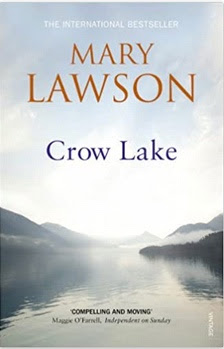
Crow Lake by Mary Lawson

When I read this, her first novel, almost twenty years ago, I knew that it was a keeper, a book to literally hug to myself. 

It is about so much more but primarily it’s a story about siblings, particularly the relationship between Kate and Matt. In the rural farming community of Crow Lake the Morrison children – Luke and Matt in their teens, Kate aged seven and toddler Bo – are orphaned. Offers of help from far-off relatives would mean splitting the family up; clever Luke and Matt sacrifice their ambitions to keep the family together. The story is narrated by Kate, twenty years on, a zoologist, now living in Toronto and feeling emotionally distant from the family who once were her whole world.

I loved the book so much I didn’t dare to read it again in case it wasn’t as good as I remembered – but having dared I found that it had only improved over time.


Road Ends by Mary Lawson

This is her third book. I will reread her second, The Other Side of the Bridge, soon but I skipped to this one because fleetingly we meet Luke and Bo again from Crow Lake.

This is mostly Megan’s story though. Her mother keeps having baby boys (six when the story opens); she loves babies but loses interest in them when the next one comes along. Megan, the only girl and an incredibly practical one, keeps the household clean and fed but she has told her mother that when the latest baby is on his feet she will be leaving.

She ends up in London (in the 1960s, a planet away from small town Ontario) where her practical skills are put to use running a hotel. But back home things are disintegrating – and there’s yet another baby boy.


Business as Usual by Jane Oliver and Ann Stafford

First published in 1933 and reissued. Told through illustrated letters, it's a delight with all the period detail. Hilary, from Edinburgh, finds work in London in the book department of (a thinly disguised) Selfridges. She writes home to her parents and doctor fiancé. 

I took against said fiancé because a) he was called Basil, a name that should be reserved for TV foxes, and b) he wasn’t at all supportive of her wanting to work for a year before their wedding; plus he refers to twenty-seven-year-old Hilary as ‘my dear child’. So I was glad that <spoiler alert> there was someone nicer waiting in the wings.

What I mainly liked though was hearing about the work of the book department, not just selling books from the shelves but sending out books on subscription – recording readers’ likes and dislikes on a complicated card index system.


Slow Horses by Mike Herron

Described as ‘the best thriller of the last decade’ by The Times. The ‘slow horses’ are a crew of men and women who, for various reasons (alcoholism, fouling up a mission etc) have been banished from actively working in the Intelligence Service to pen push in Slough House in a seedy part of London. But none of them joined the service to pen push and when the opportunity comes to be ‘spooks’ again they take it.

Terrific; really great characters and great writing. This is the first in a series and I’d love to read the others.


Thursday, 4 February 2021

Nine in January


I read nine books in January.


Snow and the Works on the Northern Line by Ruth Thomas

It’s been too long since Ruth Thomas’ last book, The Home Corner (2013) so I was delighted to see she had a new one out (and also that it was serialised on Radio 4).

She has such a sly wit; you are always on the edge of snorting with laughter. Here she pokes gentle fun at archaeologists, academia, museums and museum shops, and poetry classes. All of which ticked boxes for me.

Her Things to Make and Mend and short stories are also highly recommended.


The Duchess Deal by Tessa Dare

Read on Kindle. Like approximately 62,999,999 other people worldwide I watched Bridgerton and loved it. Will get round to reading the novels from which the series is made but in the meantime The Duchess Deal was touted as ‘for fans of Bridgerton’.

Here, the hero looking for a duchess to give him an heir wasn’t  a flawlessly good-looking young man – he’d been shockingly scarred on one side at the Battle of Waterloo and his former fiancée had run away screaming; understandably all that has made him reclusive and angry.

Emma is a struggling dressmaker who arrives at his house with the aforementioned fianceé’s wedding dress for which she has not been paid and finds herself proposed to.

There are scenes later on, when the couple find themselves adrift in the back streets of London, which are reminiscent of Georgette Heyer – always a good thing.


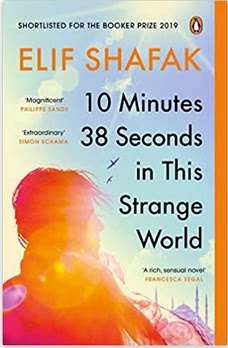
10 Minutes, 38 Seconds in this Strange World by Elif Shafak

Read on Kindle for book group. Short-listed for the Booker Prize in 2019.

Brothel-worker Tequila Leila’s has 10 minutes and 38 seconds to live. As her life ebbs away she remembers her unhappy, abusive childhood but also delicious, sensuous things – smells and tastes of life in the Middle East. And she remembers her five good friends who are, although she doesn’t know it, trying to find her; we learn more about each of those friends in turn. Lyrically written.


The Killings at Badger’s Drift by Caroline Graham

Read on Kindle. I’ve never seen Midsomer Murders but I know it’s the fictional crime capital of England. I read somewhere about the original novels that sparked the series; the article said how well written they were and that they had more depth than in their TV life.

Here, an elderly spinster dies in her own home which hardly seems suspicious but her doughty friend, the wonderfully named Miss Lucy Bellringer, is sure she was murdered. She manages to convince Chief Inspector Barnaby and soon the seamy side of tranquil Badger’s Drift becomes the focus of his attention. Excellent and satisfying …


A Place of Safety by Caroline Graham

… so I bought another one. This has a do-gooding ex-vicar giving ‘a place of safety’ to young offenders, some of whom are more reformed/reformable than others.

Barnaby is a great creation. Unlike many fictional policemen, he has a happy home life (his only ‘problem’ is that his wife is a really terrible, salad-burning, cook) and his actor daughter and son-in-law add interest.


Apple Island Wife: Slow Living in Tasmania by Fiona Stocker

I have been to Tasmania so I was looking forward to being there again vicariously by reading this account of a young British couple settling in a rural five acres of it and aiming to be self-sufficient, after busy working lives in urban mainland Australia.

I guess I hoped it would have a flavour of The Egg and I, a famous, comical account of two townies trying to live the dream and/or that it would have gorgeous writing like Island Wife, an account of moving to a Hebridean island.

But, compared to these, the telling of what this couple did was banal. They almost could have been anywhere, with wallabies. Some amusing small events are spun out to a numbing degree. There’s no exploring of the island other than their own little corner of it.

‘Apple Island’ makes for a pretty title but the name has not been appropriate for many decades, not since Britain joined the EEC (as it was then), stopped importing apples from Tasmania, causing the collapse of the industry. 

Oh – hang on a minute, maybe…


The Last Piece by Imogen Clark

Read on Kindle. When mother and grandmother Cecily suddenly ups and offs to a Greek island on her own for a week her three daughters are aghast, especially uptight Felicity who relies on her for some childcare.

Their dad knows why she’s gone but he’s not telling. And I’m not going to tell you either because that would be a big spoiler. But I can say that we go with Cecily to Greece and for a bit of her history, and also follow the sisters, two of whom are having dramas of their own back home.


The Saturday Morning Park Run by Jules Wake

Read on Kindle. Accountant Claire is trying to make partner in a prestigious firm and works round the clock. She has a lovely one-night stand with Armani-suited Ash but then he goes quiet. Visiting the doctor for a cut on her hand that isn’t healing, she finds herself signed off for a month with stress

She plans a few weeks of pottering around the house she’s bought but barely spent time in – but life has other ideas, firstly in the formidable shape of Hilda, an elderly woman in search of a project and a friend, secondly with the daughters of Claire’s wayward sister, and thirdly with a much-changed Ash. Oh, and park running.

Loved the multi-generational aspect of this, a real feel-good read.


The Cost of Living by Rachel Ward

This (punny) title kept popping up, waving to get my attention. And I’m very glad it did. It’s a cosy crime (well, the crimes, attacks on women connected to the supermarket, are far from cosy but the gory bits are well off stage).

The amateur sleuth is a bright twenty-year-old supermarket checkout girl called Bea, and her sidekick is the newest member of staff, the gormless-seeming Ant, with whom Bea was at school.

Terrific, and there are two more in the series, also with punny titles, to look forward to.

Wednesday, 13 January 2021

My year in books (maybe ... )


In school I was 


People might be surprised by 


I will never be 


My life in (full) lockdown was


My fantasy job is


At the end of a long day I need 


I hate 


I wish I had


My family reunions are 


At a party you’d find me with


I’ve never been to 


A happy day includes


The motto I live by


On my bucket list is


In my next life I want to have 


I’ve pinched this idea from a post on Joanne Baird’s terrific blog

She, in turn, was inspired by 746 books


How has your book year been?


Friday, 1 January 2021

Eleven in December

 I read eleven books in December.


The Bookshop of Second Chances by Jackie Fraser

Thea’s been made redundant, and her husband of twenty years has just left her. Salvation comes when she hears that a great-uncle she barely knew has left her his house in a small Scottish town (possibly based on Wigtown ?) – and a large collection of second-hand books.

Cue her relationship with the artistocratic (but reluctantly so) Edward who owns a second-hand bookshop in the town and has a commitment problem.

So far, so like many a romantic plot description … But Jackie Fraser gets deep into the hearts and souls of Thea and Edward, concentrating on them with no sub-plots to speak of, to show a totally believable relationship. I absolutely loved it.


Miss Plum and Miss Penny by Dorothy Evelyn Smith

Dorothy Evelyn Smith is one of those authors who was popular in the 40s and 50s but is now mostly forgotten. Engaging enough, but didn’t inspire me to read more. A pale imitation of Miss Pym.

Alison Penny is forty, single, doesn’t need to work, lives with her family’s old retainer, Ada, who treats her as if she were still a child – and Alison is perfectly happy with that arrangement.

Into her uneventful life comes friendless Miss Plum whom Alison prevents from throwing herself in the pond (or thinks she does) and so finds herself with a guest who outstays her welcome. Miss Plum (her life blighted apparently by her parents thoughtlessly christening her Victoria) eventually departs with the only real beau Alison has ever had but, not to worry, one of Ada’s shepherds pies will make everything all right again.


Home by Marilynne Robinson

Home, along with Gilead and Lila, formed a trilogy of award-winning books (which can be read in any order), set in the small town of Gilead in Iowa in the early 1950s. Then Marilynne Robinson, clearly reluctant to say goodbye to her characters, wrote a fourth, Jack, which came out this year. I succumbed to buying a hardback edition as Blackwell’s were offering (lockdown treat) to send out signed copies. But to refresh my memory of the Boughton family I reread Home first because Jack, chronologically, comes before it.


Jack by Marilynne Robinson

Jack Boughton is possibly fiction’s most heartbreaking character. He's one of the Rev Boughton’s eight children, and despite being much loved by them, he has not seen his family for years. He’s a bum, a petty thief, a drunk, living in a grotty rooming house in St Louis, just after WW2.

He’s clever, he’s musical, he has charm – there are so many times that things could have worked out well for him but his personality can’t allow that; he takes a wrecking ball to anything good.

But when he falls in love with a beautiful and good schoolteacher, Della, and his feelings are reciprocated, the wrecking ball comes from elsewhere – because Della is black and mixed-race relationships were illegal in Missouri (and other American states) at the time.

Like I said, heartbreaking.


Stolen Holiday by Lorna Hill

Needed a break after the intensity of Jack. I know from FB forums that I’m not the only one to have been rereading childhood books over the last few months and I bought a copy of this one through one of these forums. No jacket but that meant it cost £5 and not a ludicrous Marketplace price. Escapism on the wild coast of Northumberland.


The World of Elizabeth Goudge by Sylvia Gower

And so to a biography of Elizabeth Goudge who was a mega-selling author, mostly of historical novels, in her day; one of her books Green Dolphin Country was made into an MGM film. She still has fans as the re-publication of this biography proves.


Hot Winter Nights by Jill Shalvis

Lucas works for Hunt Investigations doing dangerous stuff; Molly is the office manager but wants to do dangerous stuff too. So when one of her elderly neighbours voices concerns about the owner of a nearby Santaland she decides to dress up as an elf and investigate. Their boss orders Lucas to keep an eye on her …


Christmas at Maldington by Anne Stenhouse

A My Weekly Pocket Novel; rightly described on the cover as a ‘great quick read’ and a ‘celebrity drama’. I liked that it was the female character who was the celebrity. Genni Kilpatrick, escaping from her London life which has turned toxic, and hoping for a peaceful time at Maldington House, is asked by local businessman (and stage lighting engineer) Paddy Delford to run the village panto.

Maldington House, in the north of England, was also the setting for A Debt for Rosalie; both available from the DC Thomson shop 0800 904 7260 (UK) or + 44 (0) 1382 575 322 (overseas).


The Thursday Murder Club by Richard Osman

I expected Mr House of Games’ first novel to be good and so it proved. Passed Boxing Day afternoon and evening very nicely, thank you.


Death at Rainbow Cottage by Jo Allen

The fourth in the DCI Jude Satterthwaite mysteries was another page-turner in this series, set in Cumbria. Jude has a series of apparent random killings on his doorstep – and his personal problems are added to by the arrival of a new boss.


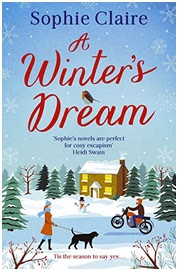
A Winter’s Dream by Sophie Claire

A return to the English village of Willowbrook, and to Provence, a delightful combination successfully used in The Forget-me-not Summer and The Christmas Holiday.

This time it’s timid Liberty who is centre stage along with Alex Ricard, the famous, thrill-seeking motorbike champion, who’s in Willowbrook to try to solve a family mystery.

On Liberty’s 30th birthday she resolves to be more open to new opportunities and invitations and to be braver (which includes taking in Alex as a lodger).

As research, author Sophie Claire also embarked on pushing herself out of her comfort zone, climbing a mountain and driving on the ‘other’ side of the road, for example.


A good lesson to learn and a positive and uplifting note on which to end this most challenging of years.

Monday, 14 December 2020

Five in November

I read five books in November.

On Chapel Sands by Laura Cumming

Read for book group. Non-fiction. In 1929, a little girl, who went on to become Laura Cumming’s mother, was kidnapped from a beach in Lincolnshire and was retrieved, unharmed, a few days later dressed in different clothes. Laura Cummings unravels what led up to that event in this wonderfully written and so well structured book, slowly revealing a community that kept of its secrets right until the end of her quest.

Much enjoyed by all and highly recommended.


Venetia by Georgette Heyer

Continuing my extremely enjoyable travels through Heyer-land.


The Christmas Swap by Sandy Barker

The Holiday is my favourite Christmas rom-com (thank you, Netflix; just had my first viewing of the season) although not my favourite Christmas film which, unoriginally, is It’s a Wonderful Life (also had first watch of 2020 this weekend).

So, as Sandy Barker’s book was inspired by The Holiday, I was keen to read it. And it was fun, easy to read. Three childhood friends, now on different continents, decided to swap and spend Christmas with one of the other families. It was a little hard to keep track of who was who and came from where but the settings of Colorado, ‘a sleepy village’ in Oxfordshire, and Melbourne were enviable locations to spend the Christmas season, with a handsome man or three about as well of course.


A Single Thread by Tracy Chevalier

I have read all of Tracy Chevalier’s books and have seen her numerous times at the Edinburgh International Book Festival where she is a very engaging speaker. As her many fans know, she gets very involved in a subject and weaves her stories around them – eg quilting, William Blake, growing apple trees.

Set in 1932, A Single Thread is about a group of women who stitch kneelers and cushions for Winchester Cathedral and in particular, Violet.

This is TC’s most up-to-date book chronologically and it’s a period I love to read about, if not one I’d like to have lived in. I thought this had the feel of books I’ve read about that time which were actually written then, so that was brilliant. And I love cathedrals.

As well as finding out about the intricacy and meanings of the stitches (including the use of the swastika before the Nazis adopted it), we also get a lesson in bell ringing.

I read the book in one go – but I admit to feeling a little let down when I’d finished, because I’d have liked a different resolution to one aspect of it.

<Spoiler alert> TC invoked a terrific feeling of menace on a couple of occasions when Violet encountered a man who was violent towards her. Quite frankly, I’d like to have seen her push him off the bell tower … as it was, we found out nothing about him beyond his name and his actions went unpunished.

Perhaps fewer lessons and more story I guess is what I was wanting.


Lessons by Jenny Colgan

Read on Kindle. The third book in the ‘Malory Towers for grown-ups series’. I enjoyed the first two and I enjoyed this – BUT I didn’t appreciate the cliffhanging ending when there’s no indication of when (or if) there will be a follow-up.

The tone seemed slightly different in this one, with authorial asides and voiceovers which were sometimes intrusive, but the latter worked wonderfully in Chapter Ten in the Summer Term section. Just saying.

And thank you to the author for introducing me to A E Housman’s poem Shake Hands.