katewritesandreads

katewritesandreads

Saturday, 20 December 2014

Six in November


I read six books in November.


Here’s Looking at You by Mhairi McFarlane (on Kindle). I read and enjoyed Mhairi McFarlane’s first book You Had Me At Hello but didn’t believe at all in the relationship at the core of this one. Very disappointing. (Incidentally, have you noticed that on Amazon reviews lots of people spell that word ‘dissapointed’?) Maybe you have to be the age/mindset of the characters (30-something adolescents) to appreciate it. Or maybe it suffers from quickly-written-follow-up-to-successful-first-novel syndrome. I'll probably give her the benefit of the doubt and try her third one.


The House We Grew Up in by Lisa Jewell. I’ve been a big Lisa Jewell fan ever since her first book Ralph’s Party – didn’t think this was her best although I wouldn’t say I was ‘dissapointed’ with it. Have you seen those TV programmes about people who hoard – the extreme cases who end up hardly able to move for stacks of newspapers and other stuff most would call rubbish? The mother in this story is one of those hoarders and her husband and each of her offspring have to find their own way of dealing with it, as children and then as adults.

Martha’s Ark by Charlotte Moore. A pleasure to reread this, published in 1996 (now o/p) and described by the Sunday Telegraph as ‘Like Jane Austen, Charlotte Moore directs a sharp and sympathetic gaze.’ Charlotte Moore seems to have concentrated on non-fiction in recent years; I’ve just googled her and see she’s written the story of her family home which sounds fascinating: 

Something Beginning With by Sarah Salway (on Kindle) With quirky alphabetical headings, this is Verity’s account of her relationships with her friend Sally and her married lover John. Original and observant, albeit with a rather abrupt ending.

Snow Angels, Secrets and Christmas Cake by Sue Watson (on Kindle)
What it says in the title. Frothy ‘Christmas read’.


Empress Dowager Cixi by Jung Chang – actually this 500-pager spilled over into December, a book group read. And a very colourful one it is, from the author of Wild Swans.

Cixi (pronounced See-shee, 1835-1908), the concubine who became an Empress, is the most important woman in Chinese history – credited, although not in China, for bringing that medieval empire into the modern age. She opened up links with the rest of the world and allowed railways and telegraph lines to be built. Just before she died she was paving the way for the country to be governed by a constitutional monarchy – and if she had lived a few years longer the history of China in the twentieth century might have been quite different. Not a saint, but a clever, fascinating woman.

In China (where this book is banned) Cixi is regarded in a different light. The author relates how present-day visitors to the Summer Palace are told by guides that extravagant Cixi redirected money that should have been spent on the Chinese navy to the restoration of the Palace, and that China lost a war again Japan as a result. This was exactly the experience my sister and I had in China four years ago – our guide pointed to a marble boat and told the story of the redirected funds; he did not say one word in Cixi’s favour. That was the first time I had even heard of Cixi so I was extremely interested to read a quite different account of her in this book.

Summer Palace 2010


Friday, 12 December 2014

Christmas Past


I'm delighted to have a Christmas story in The People’s Friend this week (December 13): Bicycles for Two.


It’s set in the 60s and the heading is:

Jilly and I were always getting in trouble for being late for school. Now we knew the answer to the problem!

The title gives away what the answer is – but it didn’t come about in quite the way that Isabel and Jilly hoped.

When I gave a talk to the lovely people at Ayr Writers’ Club last week on writing stories for women’s magazines I said that I hardly ever was inspired to begin with a character but with a setting or a situation. 

However, Bicycles for Two began not with a character exactly but with character sketches. It was from an exercise at a writing class whereby we had to imagine the contents of a handbag or briefcase and build up a character from that. Then we branched out into other character traits and, because it was nearly Christmas and I had fond memories of presents I used to get as a child, I imagined two characters setting about their Christmas shopping in different ways.

One liked buying things like bubble bath in bottles shaped like poodles, and soap that looked and smelled just like a lemon. The other, less frivolously, bought tapestry kits, and pencil cases with propelling pencils and pens with nibs. The character traits evolved into two people, Aunt Edie and Aunt Ann respectively, and then I put them away in my character file for putting into a story at a later date. 


When I reread the list of presents I could almost smell that lemon … but I remembered that what I really wanted the Christmas I was ten was a bicycle. 

Happily, I got one for my birthday the following year.


I hope your Christmas wishes come true even if they don't arrive on 25th December.

Monday, 17 November 2014

Five in October


I read five books in October.

Foreign Correspondence by Geraldine Brooks
As readers here will know, Geraldine Brooks is one of my favourite novelists (March and The Year of Wonders highly recommended). 


Foreign Correspondence is a memoir of her childhood in the 50s and 60s in Sydney before it was the multi-cultural city it is today. She dreamed of a life far away and so, to find out more about the world, acquired various pen friends from the United States, France and Israel. As these things tend to do, the pen-friendships petered out after a few years. She grew up to get her wish, becoming an award-winning foreign correspondent in the Middle East. Then she had the idea of tracing her former pen friends …

Murder Underground by Mavis Dorelia Hay
A classic whodunit first published in the 1930s and recently reissued by The British Library


Maximum Exposure by Jenny Harper
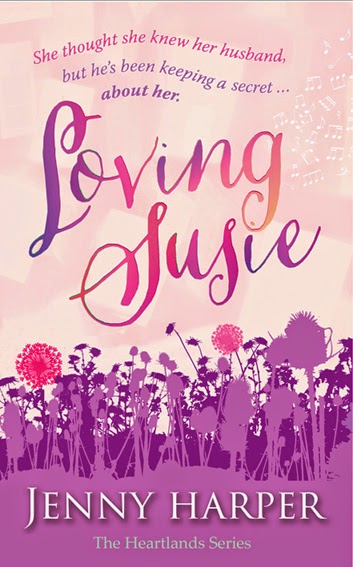
This is the third in the Heartlands series of novels – all set around the town of Hailesbank in East Lothian. It follows Feel the Wind and Fly and Loving Susie. Maximum Exposure’s heroine Daisy Irvine is a photographer with The Hailesbank Herald. I do like a story based around a newspaper.


The Trumpet of the Swan by E. B. White
E. B. White wrote very prolifically for the New Yorker but he is best known for his children’s novels Charlotte’s Web and Stuart Little. His third novel for children The Trumpet of the Swan is less well-known but equally good. A friend lent me this lovely copy but it’s available in various versions.


The Signature of all Things by Elizabeth Gilbert
Read for book group. Actually this spilled over into November – it’s a page-turner but there are 588 pages to turn. It begins with the birth of Alma Whittaker in Philadelphia in 1800, the daughter of Henry, former London vagrant, now a very rich botanical explorer and businessman. Alma wants nothing more than to learn her father’s business, and to make her own investigations into mosses as she figures out the part they play in evolution – until events lead to her sailing across the world to Tahiti and then to Holland. An enjoyable great sweep of a novel (although I did feel my red editorial pen twitching towards the end). 


I have never read Eat, Pray, Love by the same author, nor seen the film. The person suggesting this book for reading by the book group said it was nothing like EPL, a statement that will either encourage or deter you from reading it.

Wednesday, 29 October 2014

Interview with Jenny Harper


Jenny Harper is the author of The Heartlands Series, published by Accent Press – three titles to date set in and around the fictional small market town of Hailesbank near Edinburgh. The just-published Maximum Exposure follows Face the Wind and Fly and Loving Susie.


Maximum Exposure is described on the cover as ‘Page-turning and thoroughly entertaining. I loved it!’ by Katie Fforde.

from the blurb:
Livelihoods are at risk when a local newspaper begins to fail, but the future of one member of staff depends more on the choices she makes than the decisions of others…

Adorable but scatterbrained newspaper photographer Daisy Irvine becomes the key to the survival of The Hailesbank Herald when her boss drops dead right in front of her.


I asked Jenny some questions about Maximum Exposure, the series, and her writing process.

Jenny, Daisy is a delightful character – dizzy and scatterbrained in some ways but with real emotional depth. She follows your two perhaps more ‘grown-up’ heroines, Kate Courtenay, wind-farm engineer, in Face the Wind and Fly, and Susie Wallace, a member of the Scottish Parliament, in Loving Susie. Was Daisy inspired by anybody you know?

I have no idea where Daisy came from! No, she’s not based on anyone I know, she just grew in my mind. At one point, I did feel she lacked depth though. I needed to know more about why she was the way she was – and so her controlling father walked into the pages of the novel. It would be interesting to revisit Daisy in a year or two and see how life with Ben might change her. Now there’s a thought …

We see the story from Daisy’s viewpoint and from that of her childhood friend Ben. Did you know from the beginning that you wanted both of them to have a voice?

Yes. I find single viewpoint novels really difficult to write and admire anyone who can do it. I like to get inside at least two characters, and I also like to be able to move the action around more than is possible with a single point of view.

I know that you have been a journalist and also published non-fiction books. Have you ever worked on a newspaper?

Only as a freelance. I used to be a regular feature writer for many Scottish newspapers, particularly The Scotsman and The Sunday Times Ecosse (as it was when I wrote for it). But I ran a corporate communications agency for more than 20 years and we published magazines and newspapers for private and public sector organisations, from banks and oil companies to organisations such as Seafood and Historic Scotland.

The setting of the series is a small community. As far as I’m aware none of the characters so far cross over from one book to the next. Is that a possibility?

Yes. The next in the series again features new characters, but the one I’m working on at the moment (Number 5) takes one of the minor characters and develops her story. And now that I know Hailesbank, Forgie and Summerfield quite well, I’ll be picking up other characters in major or minor ways again too.

When will the next Heartlands title be available?

The People We Love is due out in ebook format on 26 February and paperback in August, and I believe it’s my best yet.

And how many do you envisage being in the series?

Who knows? It depends on many factors – if I continue to enjoy writing them, if my publisher wants more of them, if readers like them – and if it doesn’t all become too complicated! I have at least two more novels roughly planned, but I don’t know whether I’ll develop them or not. But I also have a hankering to revisit the first novel I ever tried to write, based loosely on my parents’ experiences during the war, in Scotland and in India. I didn’t have the technical experience to write back then, but maybe I do now.

Do you like the writing or the editing best?

It depends which stage of writing I’m at. I love it when everything starts to come together, and I love enriching what I have written, making it stronger and deeper. I am appalling in the early stages of a novel, I go down false avenues, prevaricate, change plot lines and fiddle with characters. It all takes a while to settle down in my head – but once I get to a certain point, it’s much easier and I really begin to enjoy it. I love editing – it was my professional discipline and I think I’m quite good at it.

You had a short story in the Romantic Novelists’ Association anthology Truly, Madly, Deeply. How do you like writing short stories compared with novels?

I’m a complete beginner at short stories. I went on a writing course to the gorgeous Chez Castillon tutored by Veronica Henry and she decided to spend a morning on short stories. I hadn’t expected it – but I’ve been so grateful ever since. By the way, I have another short story coming out on 1 November in an anthology called Let’s Hear It For the Boys It’s all for the charity Movember, in aid of men’s health, so please do click and buy! A great read for just 99p and a great cause.

Do you have a website or a blog?


 Thank you for answering my questions – I look forward to seeing more of the Heartlands community in The People We Love.

Thank you for hosting me!

Friday, 17 October 2014

Five in September


I read five books in September. Only five! Must do better.


Ice Dancing by Catherine Czerkawska. Read on Kindle. Set in rural Scotland with a great sense of life in a small community. Narrator Helen’s world is turned upside down when Joe, a Canadian ice hockey player, moves into a cottage nearby. Helen – about to turn 40 and with her only child about to leave home – is feeling that her life with farmer husband Sandy is rather stale and she falls in love with Joe – nine years younger than her and very attractive. Joe returns Helen’s feelings but he has his demons which are slowly and shockingly revealed. A very grown-up love story … and if you are a fan of ice-hockey that would add an extra dimension to your enjoyment.


In 1933, Patrick Leigh Fermor, aged 18, walked from the Hook of Holland to Istanbul. The books he wrote about his travels have become classics of the genre – A Time of Gifts, Between the Woods and the Water and the posthumously published The Broken Road.


In 2011, Nick Hunt began his own ‘great trudge’ to follow in Fermor’s footsteps and using only his books as guides. He trekked for around 2500 miles through Holland, Germany, Austria, Slovakia, Hungary, Romania, Bulgaria and Turkey.

Fermor had carried little or no money and had relied on a (aristocratic) network of contacts for bed and board, and on the kindness of strangers. In the 21st century Hunt used social networking to plan some free accommodation in advance but like his predecessor found himself on several occasions sleeping rough. He too was sometimes overwhelmed at the bounty shown to him by people who didn’t know him and had nothing to gain.

You would expect much to have changed in the last eighty-four years encompassing wars and occupations and changing political landscapes and technology, and of course it has. But it was even more fascinating to see what hasn’t changed – great swathes of beautiful landscapes, and the interest in and generosity shown to a passing traveller.


Elizabeth is Missing by Emma Healey
This is a much-hyped first novel – it’s from the point-of-view of a woman with dementia whose memories mix up her sister Sukey who went missing just after the war, and the current disappearance of her friend Elizabeth. And the hype is justified – I’m lost in admiration of how a writer who looks about twelve in her cover pic could get the voice so convincing, tell a great story through her unreliable narrator, and bring it to a satisfactory conclusion.


Murder Most Unladylike by Robin Stevens
And now for something completely different … This is, according to the back of the cover, aimed at ages 9+. It’s set in the 30s in a girls’ boarding school and is a kind of cross between Angela Brazil school stories and Hercule Poirot. Daisy Wells (the Hercule character) and Hazel Wong (Hastings) investigate a murder that no one else, apart from the perpetrator, knows has happened. Throw in the suicide the year before of one of the girls – this is strong stuff for nine-year-olds and a long way from Angela’s jolly romps in the dorm and worrying that you’d lost your hockey stick. I think it works though and the heroines are engaging; I would read another one although the period is not as well evoked as in Beswitched by Kate Saunders.


Ace, King, Knave by Maria McCann
Read for book group. Described by Hilary Mantel as ‘Hogarth sprung to life’ and I can only agree with her (I’m sure she would be thrilled to hear). It takes a few pages to know where you are then you settle down and enjoy the roller-coast ride through Georgian London, a page-turner despite having to refer periodically to the glossary – as the author uses (but doesn’t over-use) Georgian words to help bring the period brilliantly to life. For example: Romeville – London; cackler – a preacher; autem mort – a wife, or female beggar impersonating a desperate mother; daisy – a naïve person; fawney – a ring (as in piece of jewellery); three-legged mare – the gallows; plus, as one of the characters is a prostitute, words which would block your spam filter were I to set them down here.

Tuesday, 14 October 2014

Prize-giving


Tonight, 14 October, this year's winner of the Man Booker Prize will be announced.

The short-listed titles are:

How to be Both by Ali Smith
The Narrow Road to the Deep North by Richard Flanagan
How to Rise Again at a Decent Hour by Joshua Ferris
J by Howard Jacobson
The Lives of Others by Neel Mukherjee
We are All Completely Beside Ourselves by Karen Joy Fowler

I have not read any of them (yet … ).

I thought I would look back at twenty years of the prize and see how many of the winners I’ve read (and if I liked them or not). There were more than I’d expected:

2010 The Finkler Question by Howard Jacobson x
2009 Wolf Hall by Hilary Mantel √
2007 The Gathering by Anne Enright -
2002 The Life of Pi by Yann Martel √
2000 The Blind Assassin by Margaret Atwood √
1997 The God of Small Things by Arundhati Roy x
1995 The Ghost Road by Pat Barker √

(2012 Bring Up the Bodies, I have a lovely hardback copy and look forward to reading, suspecting though that I might have to skim through Wolf Hall again first)
2013 The Luminaries by Eleanor Catton, bought, signed by the author, as yet unread)
  
The American equivalent is the Pulitzer Prize and my reading of those is:

2011 A Visit from the Goon Squad by Jennifer Egan √
2010 Tinkers by Paul Harding √
2006 March by Geraldine Brooks √
2005 Gilead by Marilynne Robinson √ (coming to Edinburgh on November 16th)
1995 The Stone Diaries by Carol Shields √
1994 The Shipping News by Annie Proulx √

Not so many – but they include titles by three of my top ten authors, Geraldine Brooks, Marilynne Robinson and the late lamented Carol Shields. Another winner, Anne Tyler (in 1989 for Breathing Lessons) is also a favourite. Donna Tartt won this year with Goldfinch, yet another title on my wish list.

So little time … so much to read.

Thursday, 2 October 2014

A room of my own


Virginia Woolf advocated A Room of One’s Own to write in. Jane Austen wrote in the family parlour. Paper and pencil/laptop being portable, writing is physically possible anywhere but not always mentally possible. 

Some write in coffee shops – I’ve tried that but find it hard to tune out other people’s conversations, not to mention the noise of the coffee machine. But complete quiet around you, in the Reading Room of the National Library for example, can have a paralysing effect. Am I making too much noise tapping keys, making notes, breathing?

At home my writing space used to be the kitchen table but now that my son lives far away from home I’ve commandeered the desk in his bedroom … bought a new chair … put up a notice board … and added bits and pieces to make it look like a writer’s room.

There’s a lovely view from the window (shame about the cars though) and gazing at it is not procrastination of course – staring out of windows is part of the writer’s job description. The green on the other side of the road is a golf course in the summer – and beneath the velvet grass, it’s said, is a burial ground for long-ago plague victims. In the winter when the trees are leafless, and if I crane my neck, up on the right I can see Edinburgh Castle.


On the wall in front of me and my laptop is the aforementioned notice board. Scribbled notes on various works-in-progress (hope I can still read them.) On the bottom left, the illustration of my story, Class of '64 published last month in The People’s Friend, the red-haired young girl looking spookily like my teenage self (see photo on the right). 


In front of the notice board is my favourite red-head, Anne of Green Gables, a doll brought back by my sister from Prince Edward Island.

There was a TV show a few years ago called End of Story (sadly, never repeated), a competition where well-known writers, such as Ian Rankin and Marian Keyes, wrote part of a story and viewers finished them – the winners had their stories read out and got to meet the authors. I didn’t enter but sent off for the End of Story mug to keep pencils in and to inspire me to keep going. It's sitting on top of a box of index cards, one for each story I've written.


On the chest of drawers is a lovely sunflower tin with horrible receipts in it – book writing is one thing but book-keeping is something else and the downside of being self-employed. Next to it is the quaich awarded when I won the Romance Novel competition at this year’s Scottish Association of Writers’ Conference. And next to that a collection of bookmarks in a (washed …) syrup tin.

I can’t always be sitting in that office chair though. A useful piece of advice is to print out the last page of your wip, or write the last sentence down on an index card, and carry it around with you – then you can keep writing wherever you are.

And eventually you, or even I, will get to the end of the story.