katewritesandreads

katewritesandreads

Friday, 28 October 2016

Guest post by Helena Fairfax


I’m delighted to have this guest post from Helena Fairfax (and not just because she loves Edinburgh!).
Scottish mystery in A Year of Light and Shadows, by Helena Fairfax

Thanks for hosting me on your blog, Kate!
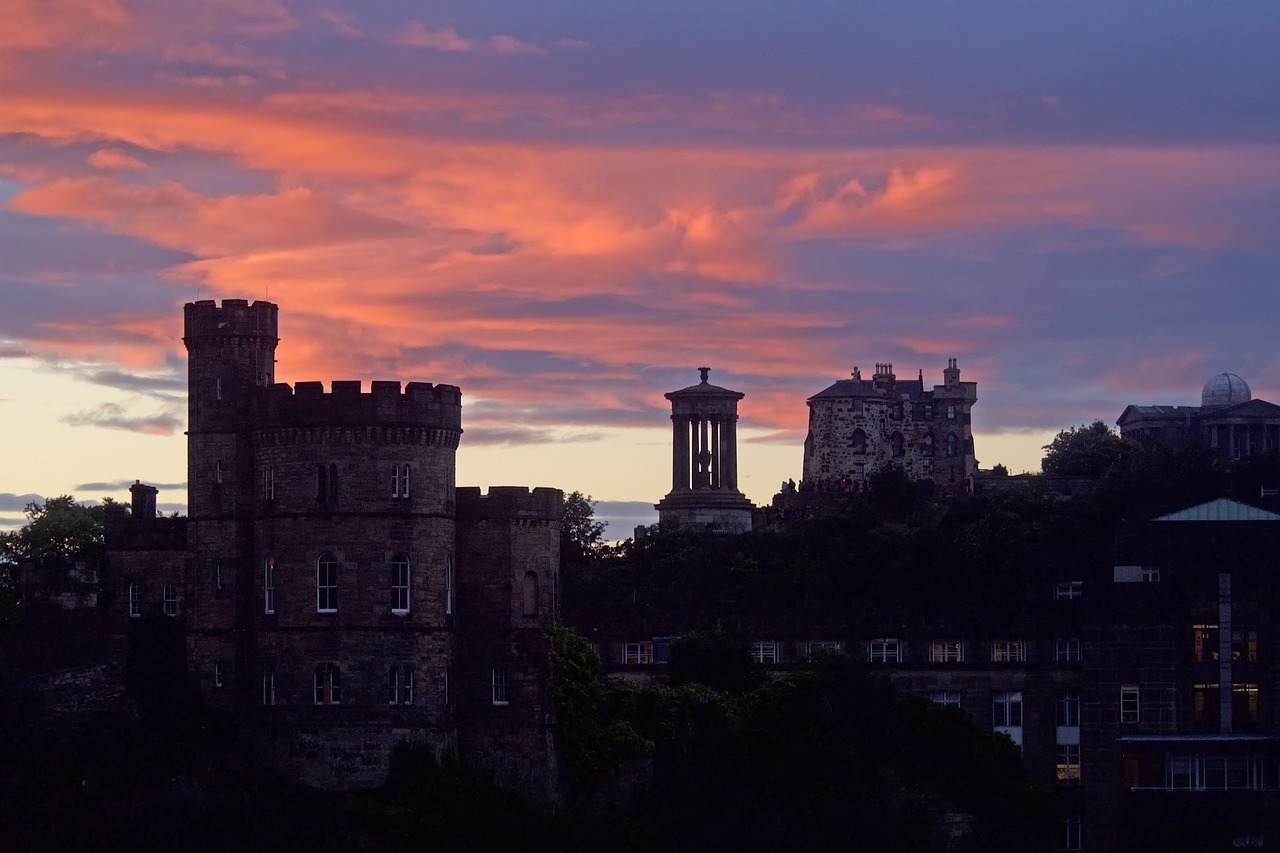
Your home city of Edinburgh is one of my favourite cities in the world. I love the mix of the old and the new, the dark buildings and alleyways, the views of the sea and the arches of the Forth Bridge stretching away. I don’t think there’s another city quite like it. I remember the first time I ever visited, stepping out of Waverley train station and onto bustling Princes Street. A man in a kilt was playing the bagpipes in front of one of the dark stone Victorian buildings, and at the top of the street, perched on a volcanic crag and dominating the skyline, was Edinburgh Castle. It was a magnificent and unforgettable sight.

One thing that struck me about Edinburgh (and still does whenever I visit) was its bloody and dramatic history. What sights the Castle must have seen!

In my novella The Scottish Diamond – the second book in my anthology A Year of Light and Shadows –my heroine describes visiting the Castle:

For hundreds of years its dark battlements have dominated the Edinburgh skyline, a symbol of royal power. This is no fairy tale castle, but one of military might. Whenever I pass through the imposing stonework of Portcullis Gate, I think of all the footsteps that have trodden this path before me down the ages – of the bloody battles, the royal ceremonies, of King James VI’s birth here, the deaths of queens, of Oliver Cromwell’s army, and of the doomed Jacobite uprising. The walls enclosing the castle bear witness to great turning-points in history. It’s a place to inspire awe.
Edinburgh is the perfect setting for a story of mystery, romance, and intrigue. 
Here is the blurb to the anthology:

A Year of Light and Shadows contains three romantic mysteries in one volume.


Palace of Deception
From the heat of the Mediterranean ...
When the Princess of Montverrier goes missing, Lizzie Smith takes on the acting job of her life. Alone and surrounded by intrigue in the Royal Palace, she relies on her quiet bodyguard, Léon. But who is he really protecting? Lizzie ... or the Princess?

The Scottish Diamond
To the heart of Scotland ...
Home in Scotland, Lizzie begins rehearsals for Macbeth, and finds danger stalking her through the streets of Edinburgh. She turns to her former bodyguard, Léon, for help – and discovers a secret he'd do anything not to reveal ...

A Question by Torchlight
A story of mystery and romance ...
The approach of Hogmanay in Edinburgh means a new year and new resolutions. Lizzie and Léon have put their year of danger behind them. But something is still troubling Léon, and Lizzie fears the worst ...
  
BUY LINKS: A Year of Light and Shadows is available on pre-order on Amazon: http://mybook.to/lightandshadows
and other major e-tailers. The print version is coming soon!


* * *


Social Links
If you’d like to get in touch, or find out more about my books, writing, and photos of my settings or the Yorkshire moors where I live, please follow my newsletter by subscribing here:

All new subscribers to my newsletter will receive a FREE copy of Palace of Deception – the first book in the collection A Year of Light and Shadows

You can also visit me on my website at www.helenafairfax.com, or on Facebook https://www.facebook.com/HelenaFairfax/, or Twitter https://twitter.com/HelenaFairfax

Author Biography
Helena Fairfax writes engaging contemporary romances with sympathetic heroines and heroes she's secretly in love with. Her novels have been shortlisted for several awards, including the Exeter Novel Prize, the Global Ebook Awards, the I Heart Indie Awards, and the UK's Romantic Novelists' Association New Writers' Scheme Award.
Helena is a British author who was born in Uganda and came to England as a child. She's grown used to the cold now, and these days she lives in an old Victorian mill town in the north of England, right next door to the windswept Yorkshire moors. She walks this romantic landscape every day with her rescue dog, finding it the perfect place to dream up her heroes and her happy endings.

* * *

Thanks very much for having me today, Kate. I always love to revisit Edinburgh!

My pleasure, Helena.

Monday, 24 October 2016

A Learning Curve and a Half


When I put twelve of my magazine stories together for publishing on Kindle as Three’s a Crowd it was a learning curve and a half to format them. I've used Word for years and years but there were sections of the formatting palette I hadn't known existed.


And – aargh – the hyperlinking, linking the contents to each chapter head. Apparently hyperlinking is easy-peasy on a PC but I work on a Mac … a kind friend pointed me in the direction of this YouTube video.

Then there was all the US tax info to sort out. They say tomayto, we say tomahto … they don’t call it your UTR (Unique Tax Reference) number but that’s what they are looking for. However, thankfully, the tax form only needs to be completed the first time you publish on Kindle.

There were a couple of things I couldn’t figure out so I got in touch via the KDP contact form and got friendly, helpful replies – from real people  –within twenty-four hours.

And I happen to have a graphic-designer husband who was also friendly and helpful, in the matter of putting the cover together.

If you’re planning to publish through Kindle Direct Publishing for the first time my first top tip would be to print out all their directions first and read through them, highlighting anything you’re not sure about and finding out how to do that first. Much easier than trying to juggle the directions on one half of your computer screen and your Word doc on the other. 

My second top tip is to marry a graphic designer.

Easy when you know how … second time around, I wondered what I’d made such a fuss about. I’ve put one of my magazine serials up: The Ferryboat


When Judy and Tom Jeffreys are asked by their daughter Holly and her Scottish chef husband Corin if they will join them in buying The Ferryboat hotel in the West Highlands, they take the plunge and move north.

The rundown hotel needs much expensive upgrading – and what with local opposition to some of their plans, and worrying about their younger daughter, left down south with her flighty grandma, Judy begins to wonder if they’ve made a terrible mistake.

I might even do it a third time …

Coming on Kindle NEXT WEEK, written by me but published by Black & White Publishing is:


You can pre-order it now for a bargain 99p and it will be on your Kindle on 3 November.

One phone call can change everything...
Six days before Christmas, Stella could never have anticipated the impact on her life when the phone rings in her London office.
The phone call is from a friend of the family informing Stella that her grandmother has been hurt in a fall at her home in the Scottish borders and is in hospital. Torn between her responsibilities at work and the need to be with her grandmother she decides she must return to Scotland immediately.
However, on her return to where she grew up, it becomes apparent that her grandmother’s health is not her only concern. Relationships which have lain dormant for years are re-kindled and fresh opportunities present themselves – if she will only dare to take them...


Monday, 10 October 2016

Stella's Christmas Wish


Christmas has come early for me this year with the imminent publication of my first full-length novel Stella’s Christmas Wish. It’s from Edinburgh publishers Black and White Publishing – the cover isn’t black and white though; it’s in pretty colours, with my name on it …


You can pre-order now for a bargain 98p and it will be on your Kindle on 3 November.

One phone call can change everything...
Six days before Christmas, Stella could never have anticipated the impact on her life when the phone rings in her London office.
The phone call is from a friend of the family informing Stella that her grandmother has been hurt in a fall at her home in the Scottish borders and is in hospital. Torn between her responsibilities at work and the need to be with her grandmother she decides she must return to Scotland immediately.
However, on her return to where she grew up, it becomes apparent that her grandmother’s health is not her only concern. Relationships which have lain dormant for years are re-kindled and fresh opportunities present themselves – if she will only dare to take them...

Up until now I’ve had published around fifty short stories and three magazine serials and I self-published a collection of short stories Three’s a Crowd. I'm very excited to have written A Whole Novel and very very excited to be having it published by Black and White Publishing who say they are ‘committed to publishing the best books from the most talented writers in the UK’.

Tuesday, 4 October 2016

Six in September


I read six books in September.


This Must be the Place by Maggie O’Farrell
Two pics for this title – the jacket and the lovely binding underneath. 


I’ve liked all of Maggie O’Farrell’s books – but while I’ve found them page-turning and engaging while reading them, apart from The Vanishing Act of Esme Lennox I haven’t thought about them much once I’ve finished them and in retrospect can’t really distinguish one title from another. I do hope that doesn’t happen with This Must be the Place because I absolutely loved it and a few weeks after finishing it still think about the characters as if they were people I actually knew.

I saw her at the Edinburgh Book Festival this year – before I bought the book. Chicken and egg – I’d like to have read it first so that I could appreciate what she said about it more, and maybe have had a question to ask her myself.


Casting Off by P I Paris
Set in a Highland Care Home, this explores some serious issues in a truly laugh-out-loud way. When the residents are told that their fees are going up by an exorbitant amount some of them take it upon themselves to raise money in a variety of ways – and, despite the cover picture, it’s certainly not all about knitting egg cosies. As the publisher’s blurb has it, this is Calendar Girls meets The Best Exotic Marigold Hotel. See a post by the author on this blog.


Finding Audrey by Sophie Kinsella
Sophie Kinsella’s first book designated for Young Adults and as warm and funny as her readers, including me, will expect. Actually any of her books could be enjoyed by Young Adults as well as by Old Adults …  but this one has a teenage protagonist. I liked that she was called Audrey – I think it’s odd that the name is not more popular given the iconic-ness of Miss Hepburn.


Courting the Countess by Anne Stenhouse
Lady Melissa Pateley has been virtually abducted by handsome Colonel Harry Gunn – for her own safety because Melissa has been left a rich widow and there are those, including Harry’s deranged cousin, who would like to get their hands on her fortune – and on herself. Melissa and Harry develop a relationship but then he discovers a family secret which could put paid to that continuing. The story takes place against the backdrop of beautiful Regency Edinburgh. A great read. (Check out Anne Stenhouse's previous Regencies including Bella's Betrothal also set in Edinburgh.)


Fashion on the Ration by Julie Summers
I saw this exhibition when I was in London last year. The make-do-and-mend ingenuity shown by women during the Second World War was light years away from popping down to Primark – silk underwear made out of maps issued to RAF pilots, coats made out of blankets, a duster as a headscarf, earrings from shattered aircraft windscreens …

The many fascinating things I leaned from the book included: to save cloth that could be used for uniforms men’s trousers could not have turn-ups; you’d slide off a chair when you wore a parachute-silk dress; shortage of elastic meant knickers had to have buttons; there were no extra coupons for maternity clothes. This would be a terrific resource if you were writing a book/story set in the 40s.


And – not exactly a book, but well-worth mentioning – I read the summer issue of Slightly Foxed ‘The Real Reader’s Quarterly’. Great writing and a lovely line-drawing-illustrated production. I bought it in the wonderful Topping bookshop in St Andrews and am thinking of subscribing (Santa, if you’re reading this … )

Thursday, 1 September 2016

Five in August


I read five books in August.


The first of a series, Stormbird is about the accession to the throne of England of ‘the Lamb’, the sickly Henry VI. ‘With England's territories in France under threat, and rumours of revolt at home, fears grow that Henry and his advisers will see the country slide into ruin. With a secret deal struck for Henry to marry a young French noblewoman, Margaret of Anjou, those fears become all too real.’ As the English famers resident in France are driven from the country (in scenes not for the faint-hearted), Margaret (aged just fourteen) realises that she must not just be the king’s wife but make decisions on his behalf. Terrific. Like the best historical novels it inspires further reading, not only of the other books in the series, but on finding out more about Margaret of Anjou, and about the Battle of Agincourt which is much alluded to.


A second book this month with ‘bird’ in the title, but a quite different genre. This is the first book I’ve read about Glasgow’s DCI Lorimer and it’s the eleventh in the series so I have a lot to catch up on, always a good thing. Anarchy and people-trafficking plus a red-haired woman from Lorimer’s past, all set against the background of the 2014 Commonwealth Games.


Delighted to say that Victoria is a fellow-member of Edinburgh Writers’ Club and that I’ve known her since before her acclaimed first novel A Capital Union was published. That book was set during the Second World War. This one is also about a war but a much more recent one. Archie Forbes, former financial lawyer and Army reservist, is homeless on the streets of Edinburgh after active service in Afghanistan has left him with post-traumatic stress disorder and a broken marriage.

His feelings are beautifully illustrated when he looks at a magpie ‘in his feathered uniform of black, white and brilliant green’. Where, he wonders, ‘did this eternally perfect magpie come from? Where were all the old magpies, the sick magpies, the magpies down on their luck.’ His struggles to cope are leavened by black humour – such as the way (I won’t tell you what) he endeavours to make some money.

The Last Tour of Archie Forbes is a tour de force I would say.


The Gunner Girl by Clare Harvey
Set during the last war, three girls from varying backgrounds join the ATS. The Gunner Girl is based on memories of the author’s mother-in-law and was the recent winner of the Romantic Novelists’ Association Joan Hessayon Award – but is much bleaker and grittier than that award might perhaps lead you to expect.


Stoner by John Williams
Read on Kindle. Stoner was first published in 1965 and reissued as a Vintage Classic in 2012 and has gone on to become a word-of-mouth best-seller, with accolades from literary giants, and lauded as ‘the must-read novel of 2013’ by the Guardian. It tells the story of Missouri farm boy William Stoner who is sent to study agriculture but gets diverted into literature and becomes a lecturer. It’s billed as the story of a quiet life and that appealed to me. But I’m afraid I struggled to see what the fuss is about.

After his first – and only – rebellion in not going back to his parents’ farm, Stoner lives a life that is passive. Unlike his (only) two friends he doesn’t join up when war comes in 1914. He marries Edith who is droopy and neurotic and horrible to him (although of course we only see her from his viewpoint); his colleagues in the main don’t respect him and he says himself he’s an indifferent teacher, unable to fully pass on his passion for his subject. Pages are devoted to his last illness.

The style is clearly deliberate but, in creative-writing-class parlance, it’s ‘telling not showing’, very distancing. For example, he is frequently referred to by his full name and the much-vaunted beautiful prose reads, in my opinion, like the dullest non-fiction: ‘In the second semester of that school year William Stoner dropped his basic science course … ’

There are 723 5* reviews on Amazon so you should read it for yourself rather than take my word for it. Perhaps I had the wrong expectations – I thought I was getting another Mr Chips, instead I got Mr Chips-on-the-shoulder.

Tuesday, 16 August 2016

Going to the tatties


The seventh instalment of my People's Friend serial A Time to Reap, set in a Highland farming community in 1963, will be published this week (available 17 August 16). 

To give readers of this blog some related bonus material I first of all asked my cousin David Allison, who farmed in that era, to describe how haystacks were made – which he did here in a post that garnered a huge number of views (it was especially popular in Russia).

In this second guest post, find out from farming historian Dr Heather Holmes about 'Going to the tatties':

For many children in rural Scotland ‘going to the tatties’ was a right of passage. If you ask former tattie pickers, gatherers, or howkers about their experiences they will usually get quite animated: ‘Oh, it was backbreaking work!’ or ‘It was a great laugh; we had a great time!’ They will tell you about the highs and lows of the work. Their memories are as clear as if they had only just been at the work. 


Children played an important role in harvesting the potato crop until well through the twentieth century. They gathered potatoes which had been uncovered from the drills in which they grew by machines such as the spinner digger or elevator digger. Their filled baskets of potatoes were emptied into carts or trailers, or tattie boxes by the farm staff.

Their work was organised by ‘stents’, marked out by a twig or stick. Each child, or a pair, was given a stent. A stent was a section of the length of the field, divided equally by the number of children employed. Where there was only a small squad, stents were longer. They could be tiresome to pick or gather before the digger came back down the field to dig the next drill.  If you got a longer stent than your neighbour you knew about it! They could cause disagreements and fall-outs!


In some parts of the country, such as Fife, Perthshire, and Angus, children (and women) were the main source of casual labour to gather the potato crop. As they were locally employed, farmers depended on the local school population of young teenagers, though some were younger. In these, and other districts, from the 1870s schools closed their doors from a week to as long as a month in October to let the children participate in the work. Had they remained open, they would have been empty and the attendance officer chasing the children out of the fields. And the farmers would have been none too pleased either!

Where smaller numbers were employed, another system was used. From 1901 tattie exemptions were used to allow individual children to be released from school for the work; the school remained in session during the time of ‘the tatties’.  Some school boards attached conditions to them, such as near-perfect school attendance for the rest of the year or economic need, with the family requiring the income from the work. Many a Christmas present, boots and coats were paid for by work at the tatties. So too were a few treats.


While tattie exemptions continued to be used until 1962, tattie holidays became an institutionalised custom, with the term ‘tattie holiday’ being used long after children were no longer employed, replaced by mechanical harvesters. The term became synonymous with going to the tatties. For many children it was the first experience of paid-employment. It really was a rite of passage!  

(Photos taken at Blair Mains, Culross, Fife, in October 1990. © Heather Holmes)

For more about the potato harvest, see Heather Holmes: “As good as a holiday”: Potato harvesting in the Lothians from 1870 to the present. 


And see also:


Tuesday, 2 August 2016

Six in July


I read six books in July.


Margaret Fay Shaw was an American-born musicologist, photographer and writer. She and her husband John Lorne Campbell were fascinated by the folklore, culture and language of the Scottish islands, especially South Uist, and set out to record it as much as possible. In 1938 the couple bought the island of Canna where they lived until they died – MFS in 2004 aged 101. What a wonderful woman.


‘April Wilson is wondering what to do next – her life has been turned upside down after the loss of her husband so she’s hoping to piece herself together again with a visit to her elderly great aunt, Edith. Arriving in the rural idyll of Tindledale, she’s dismayed to find Edith’s cottage and the orchards surrounding it in a sorry state of disrepair. Edith seems to have lost interest completely, instead she’s become desperate to find out what happened to her sister, Winnie, who disappeared during WWII.’

I heard this author speak at the recent Romantic Novelists’ Association Conference. Her first (unpublished) book was set in a bank because she worked in one – but now her books are set in picturesque English villages as you can tell from the cover.


Read on Kindle. ‘The first in a series of anthologies of crime stories written by attendees of Crime & Publishment, a yearly crime-writing workshops based in Gretna Green, Scotland, the home of British marriages.’ (All proceeds to Hearing Dogs for Deaf People.) My favourite (and I’m not just saying it because I know her) is by my fellow Edinburgh Writers’ Club member Gillean Arjat; her story It is the cause is set at the time of the Scottish referendum in 2014.


Christian Aid Book Sale Purchase 2016. ‘Life is the strangest thing. One minute, Mrs Elner Shimfissle is up a tree, picking figs to make jam, and the next thing she knows, she is off on a strange adventure, running into people she never expected to see again … ’

I have enjoyed other books by Fanny Flagg (such as Finding the Rainbow, Welcome to the World Baby Girl, and Fried Green Tomatoes at the Whistle Stop Café, which was made into a film). I wasn’t so keen on this one which hopped into everyone’s head, even that of the most minor characters, and where the whole premise was too sugary even for my sweet tooth.


After You by Jojo Moyes
I read and cried over (as did millions of others) Me Before You and enjoyed the recent film too. Even my husband (‘I’m only going because your mother wants to see it.’) had to be passed a tissue. So naturally I was keen to find out what Lou did next. Perhaps inevitably I was a leeetle bit disappointed. Nothing could have the emotional impact of Me Before You of course– what happened in that book should/could only happen to a person once in their lifetime. And I didn’t take to Lily, the damaged teenager who seemed to be straight from central casting. But it was good to meet lovely Lou again and her family – and to know that there will be a third book about them.


The Fire Maker by Peter May
Peter May wrote five police procedurals set in Beijing in the 1990s which I believe were published before he became so well known (with his Lewis trilogy, and Enzo Macleod books among others) and are now being reissued. The Fire Maker is the first. I was intrigued to read it, as a Peter May fan and because I have been to Beijing (as I’ll tell anyone who’ll listen; I did a post on my visit to China here). 

I think, if I may say so, that Peter May’s writing is much better now, but The Fire Maker is, er, a cracking good read with very evocative descriptions of the sights, sounds, smells and tastes of the Chinese capital, and a fast-moving plot. My only complaint is that we are told rather too often that Margaret Campbell, the visiting American forensic pathologist, isn’t wearing a bra. Perhaps in the second book, due out next month, she'll have remembered to put one on.