katewritesandreads

katewritesandreads
Showing posts with label Hilary McKay. Show all posts

Friday, 1 May 2020

Fifteen in April (1)


I read fifteen books in April – this is the first of two blog posts about them.
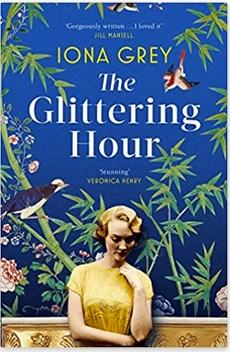
 The Glittering Hour by Iona Grey
I worried that I wouldn't care for this one as much as her Letters to the Lost which I positively inhaled; after I'd got it I put off reading it for ages for that reason. I worried needlessly. Lockdown came, with lots of reading time, and I spent a blissful day or two in the company of Alice and Selina and Lawrence. I love the era and the settings (1920s, country house/London) and the writing was wonderful and evocative and emotional. About two-thirds of the way through, heart pounding, I began to gulp uncontrollably. Luckily tissues were at hand. You have been warned.


Olive, Again by Elizabeth Strout
(after having a quick skim through Olive Kitteridge which I read a couple of years ago)
I used a birthday book token in Toppings Bookshop in Edinburgh to get this copy which is not only beautifully bound but signed by the author. Having loved Olive’s first outing I knew I’d enjoy her second.
Not that she’s a lovable person, or even an easy one; the author shows her how she is, warts and all. As in Olive Kitteridge, each chapter is almost a story on its own and in some Olive barely appears; instead, we might, for example, follow a character who was once taught by her.
I expect this is the last we shall see of Olive, sadly. But there was a pleasant surprise at the end when Olive makes a friend – with someone from another Elizabeth Strout novel.


Half Broke Horses by Jeannette Walls
From Christian Aid Book Sale 2019. Jeannette Walls wrote the extraordinary memoir The Glass Castle – the story of her childhood with a charismatic but unreliable and erratic father, a mother who thought he could do no wrong, and her siblings. The opening scene, of the grown-up Jeannette, a successful film director, being chauffer-driven down a street and seeing her parents foraging for food in a dumpster, is unforgettable.
In this book she tells, in novelised form, the story of her mother’s mother, a most amazing character called Lily, who rode as easily as she walked and, with little schooling, could later turn her hand to anything including teaching.


Standard Deviation by Katherine Heiney
I’ve read this three times now in the last two years or so – and it will always be a go-to for me now. It is rare for a book to become a comfort re-read for me that isn’t one I first encountered decades ago. It is snortingly funny, clever and perceptive; and Audra is one of my favourite ever fictional characters.


I love Hilary McKay’s stories of modern family life, although I’m some decades beyond the target demograph (so what?). I saw that one of them was free on Kindle and after I’d read it I had to buy the other two. After a family tragedy Binnie, her brother and sister and their mother move to Cornwall but their troubles aren’t over.


I’ve been listening to episodes of A Good Read while I’ve been on the exercise bike of a morning (distraction from the agony). Comedian Danny Wallace chose Diary of a Nobody which reminded me that it was ages since I read Keith Waterhouse’s brilliant riposte showing Mrs ‘Nobody’s’ side of the story: Mrs Pooter’s Diary. Great fun.


Friday, 5 July 2019


I read eight books in June.


Nine Perfect Strangers by Liane Moriarty
I’ve had a binge over the last couple of years on Moriarty’s titles, loving especially The Last Anniversary and Big Little Lies. So, despite the number of disappointed reviewers, I was eager to read her new one in which nine people spend ten days at an extraordinary health resort.
I enjoyed it, mostly. It’s partly a psychological thriller (well, sort of; there are various twisty bits). There was a chunk of the book when I felt I was the po-faced designated driver at a very jolly party, not a happy place to be, and I didn’t care for the way the ends were wrapped up. But I’ll hold faith and look forward to the next one.


Barometer Rising by Hugh MacLennan
Christian Aid booksale 2018. Set in Halifax, Nova Scotia in 1917, and published in 1941. Neil, a young man accused of disobeying orders in the trenches of France and now presumed dead, has made his way home to Canada to clear his name. Having been told of his death, Penny, his cousin and former lover grieves for him. Penny is an interesting character – a very talented designer of ships, she encounters daily the sexism given to professional women. And she has a secret …

Her family is pretty unpleasant apart from her young brother but everything changes the morning of 6 December when there’s a collision of ships, one carrying high explosives, just outside the harbour (a true event experienced by the author as a child: over 2000 people died and Halifax was virtually destroyed). Extremely readable; considered a Canadian classic.


You’re Next by Gregg
From a second-hand shelf in a café. I was attracted by the blurb:
'I know you, don't I?' Five words – that's all it takes to plunge Mike Wingate and his family into mortal danger. Mike doesn't recognise the crippled stranger who approaches him at a party . . . but the stranger seems to know all about him.'
The reason why Mike, abandoned by his father in a play park and brought up in a foster home, is being hounded is satisfying and original. But there is, to my mind, a big flaw – I didn’t notice at the time and I kept turning the pages but now it occurs to me – in that: the baddies have killed others before for the same reason, in gruesome fashion but always without leaving any trace or clue. With Mike, as it says in the blurb, they turn up to confront him in public which makes no sense.


‘Accompanied by Meredith Mitchell, Chief Inspector Alan Markby is enjoying the Chelsea Flower Show, until he runs into his ex-wife and her current husband, and when the husband is murdered with a poisoned thorn, Markby and Mitchell set out to find the killer.’
Cosyish crime; first I’ve read in the Markby and Mitchell series; would read more. But why so many first and second names beginning with M – Meredith, Molly, Miriam, Mavis, Martin, Mitchell and Markby and one house name, Malefis?


Chris Paling is a novelist, playwright and BBC radio producer – and a library assistant. Did he take on that last job with a view to writing the book or did that come afterwards? My inner jury is out on that one. It’s entertaining enough but not in the same league as Shaun Bythell’s Confessions of a Bookseller. I hoped for more booky discussions but the anecdotes are mostly of the assorted folk who use the library to sleep in, take drugs in, stalk pretty librarians in etc, and of course it’s about the downplaying of the role of the professional librarian and all the redundancies/library closures.
Some reviewers have said they found it uplifting; I did not.


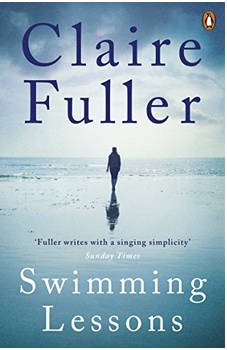
 Swimming Lessons by Claire Fuller
‘Gil’s wife, Ingid, has been missing, presumed drowned, for twelve years. A possible sighting brings their children, Nan and Flora, home.’
I loved wild-child Flora, from the moment she ill-advisedly borrowed a car to drive to the family’s island home, and I liked the writing very much. I wasn’t convinced though by the way of telling the story. Before she disappeared the girls’ mother, Ingrid (very much younger than her womanising husband; she’d been a student of his) wrote accounts of her life in the form of letters and hid them in her husband’s books. No one in the household discovers them but the reader is privy to their contents. There was something unsatisfying about that.


The Skylarks War by Hilary Mackay
I am a very big fan of children’s writer Hilary Mackay. This book won the Costa Children’s Book Award 2018 but it can be read and appreciated by anyone over the age of about ten. It follows ‘the loves and losses of a family growing up against the harsh backdrop of World War One’ and includes scenes on the Western Front –beautifully done.
Heart-breaking inevitably, but so warm and funny too. 


The World my Wilderness by Rose MacAuley
Read for book group. Set in 1946 and published just three years later; this is a Virago Classic edition. The ‘wilderness’ is the ruined landscape of London after the Second World War – and running wild in the bombsites is Barbary, brought up by her unconventional mother in Occupied France, and now under the care of her stuffy father and stepmother. The characters are all interesting and come to life but the book is really a love letter to London as it was before the Blitz; what Rose MacAuley has done is to bear witness to the destruction. I loved the lists of buildings and businesses that would never rise from the ashes.

Friday, 12 February 2016

Five in January


I read five books in January.

Bit of a lazy old nostalgia fest this month.


The Scent of Water by Elizabeth Goudge
I loved Elizabeth Goudge when I was younger and reread her books many times. About three years ago I reread my favourites, the Damerosehay trilogy The Bird in the Tree, The Herb of Grace and The Heart of the Family, and they stood the test of time for me. This one did too, mostly – I was eager to reach the bits I remembered: the wonderful house inherited by the main character, Mary; the description of the ‘little things’; and the evocation of a countryside and way of life that, in the 1930s, was being mourned as slipping into the past. But I’m not sure that it stands a general test of time – would it appeal to many folk reading it now for the first time? Hmm. I'd like to think so though.


The Castle on the Hill by Elizabeth Goudge
Miss Brown – we’re told her first name is Dolores but she’s never thus referred to thereafter – has to leave her seaside home which she’s run as a boarding house as it’s been taken over by the military in the early days of WW2. By a circuitous chain of events she ends up housekeeping in a castle owned by an author who lives there with his two nephews. As before, I still liked my favourite bits. But what my younger self didn’t picked up on was this: Miss Brown aged forty-four is considered well past her sell-by date and Mrs Heather, in her seventies – well, it’s a miracle she’s still alive. 

Maybe it's a mistake to go back to reread old favourites – what do you think? 

And here's another one.


Pollyanna Grows Up by Eleanor H. Porter
I read this as a child, probably from school library. Couldn’t resist this second-hand copy. It has not stood the test of time from a literary point of view – far-fetched, plot holes a mile wide – but I enjoyed it anyway for old times' sake and for the reminder of Pollyanna’s in/famous Glad Game (looking for the silver lining in every cloud). Even though I’m not likely to play it all the time …
E-books are handy but you don’t get this with them, a reminder of a previous owner – or lovely endpapers.
Or this, which was tucked inside – perhaps from a different owner. I like her priorities.


Caddy’s World by Hilary McKay
Love these (children’s) books about the bohemian Casson family and was thrilled to see the author at the Edinburgh Book Festival last year, where I bought this one. It’s the sixth to be published (following Saffy’s Angel, Indigo’s Star, Permanent Rose, Caddy Ever After and Forever Rose) but it’s not chronological – it goes back to when the youngest, Rose, was born early and had to be in hospital for several weeks. A treat, as usual.

And for something completely different –


The Lewis Man by Peter May
An unidentified corpse is recovered from a Lewis peat bog; the only clue to its identity being a DNA sibling match to a local farmer. A man with no memory.
I really enjoyed Entry Island and don’t know why I haven’t read more PM since. This was terrific, although I was cross with myself to realise halfway through that it was the second in the trilogy – look forward to catching up with the characters in the first and third soon.