katewritesandreads

katewritesandreads

Wednesday, 9 April 2014

Nine in March


I read nine books in March:

And the Land Lay Still by James Robertson. Read for book group. 672 pages. A political history of Scotland over the last fifty or so years – in the form of a novel. Let’s just say that didn’t work for me.

As a complete change from the above I re-read three of Jane Gardam’s YA novels in quick succession – A Long Way from Verona (published by Abacus), The Summer after the Funeral and (my favourite of the three) Bilgewater (both Peacock (Penguin) titles) – although the term YA had not been coined when the books were published in the 1970s. Even for this age group Jane Gardam’s writing takes no prisoners and you find yourself concentrating on reading every single word. Her heroines are either very beautiful or (in their own estimation) very plain but they are all eccentric, doughty and fiercely intelligent. Isn't this a gorgeous cover? I don't think the newer edition is so striking.


Who Was Sylvia? by Judy Gardiner. This is the last of the books I bought at the Christian Aid sale last year. I was intrigued by the title and then by the blurb on the back: Why did Sylvia Coryn suddenly leave home one weekend on the eve of World War II? The question obsesses her younger sister Kit … The story was originally published in Woman’s Realm magazine in 1982 – but if you think this means a cosy, predictable ending you’d be quite wrong. What Kit finds out about Sylvia is genuinely shocking. I see that there are copies for 0.1p on Amazon and the book is now available on Kindle.

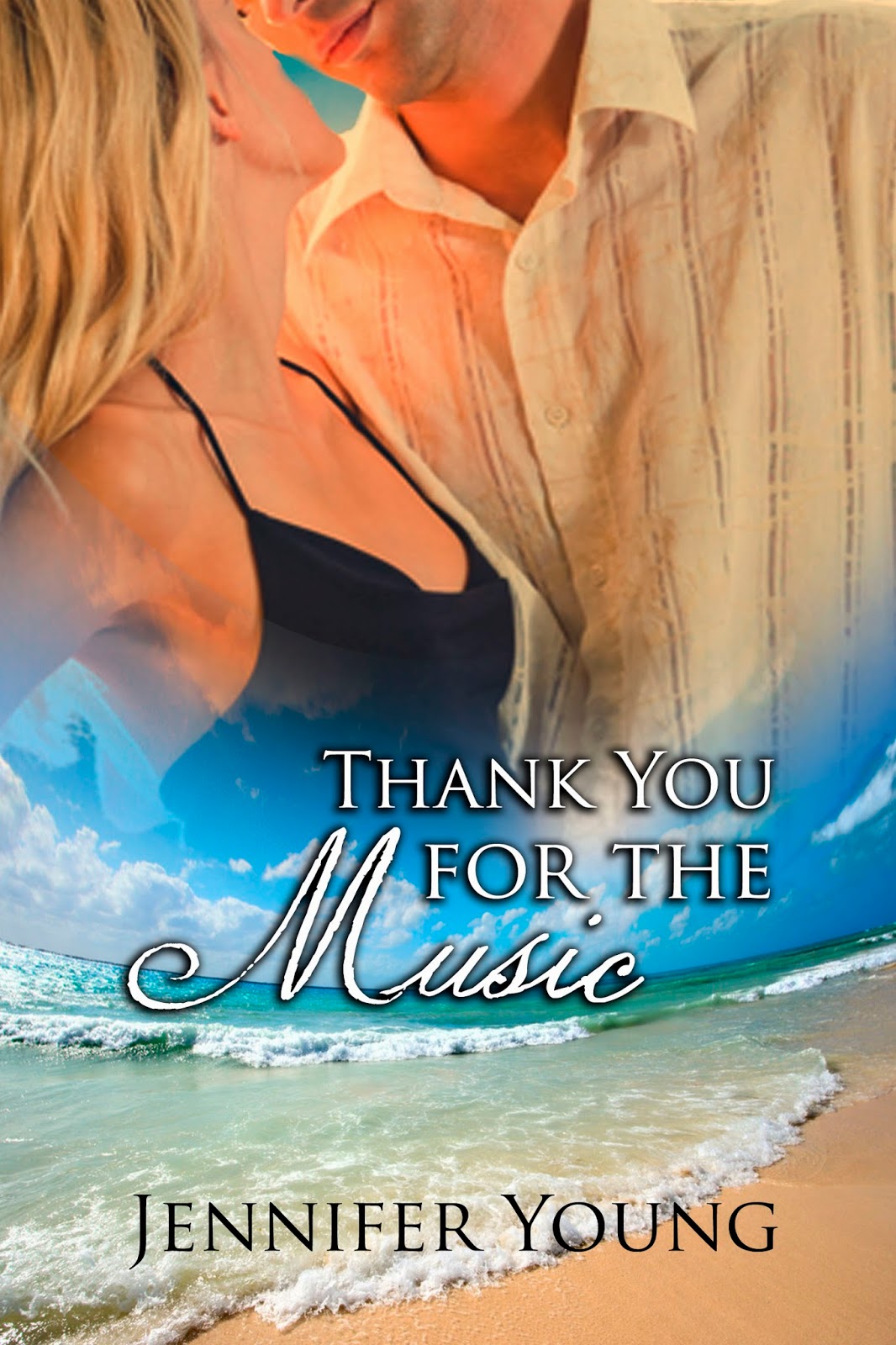
ThankYou for the Music by Jennifer Young. A romance with a dark edge set in St Andrews and Majorca, published by Tirgearr Publishing. I interviewed Edinburgh-based Jennifer about the novel and about her writing here.


A Foreign Country by Charles Cumming. A page-turning spy story. Tom Kell is an agent on the trail of the newly appointed head of MI6, Amelia Levene,who has disappeared while on holiday.

Red Dust Road by Jackie Kay. Poet and novelist Jackie Kay’s encounters with her birth parents in Milton Keynes and Nigeria. Funny, sad, thoughtful – and of course most beautifully written.

From Writing with Love by Avril Joy. By the winner of the first Costa Short Story Prize (chosen by public vote). She’s also a novelist and teacher. The book (available in paperback and Kindle), full of inspirational quotes as well as excellent practical advice for writers, includes her Costa-winning story Millie and Bird and has so far gained thirteen five-star reviews on Amazon.

Tuesday, 1 April 2014

Interview with Jennifer Young


Edinburgh-based writer Jennifer Young’s first novel Thank You for the Music was published as an e-book in February 2014 by Tirgearr Publishing. I asked Jennifer some questions about the novel and about her writing. STOP PRESS Thank you for the Music has just been short-listed for the Joan Hessayon Award.


Jennifer, congratulations on the publication of Thank You for the Music. Can you pitch the book to us – in 140 characters?

Jilted Abby’s off to Majorca to recover. Will she choose repentant Edward or charming pianist Rafa? And what’s Edward’s secret?

Tell us how the novel came about – and are you a plotter or a pantser?

I’ve always been very strongly influenced by place and most of my novels are inspired by either places or situations. We were on holiday and Majorca and I was able to spend some time sitting and people-watching, thinking about them, why were there and so on. Inevitably, a plot emerged.

As to plot or pants…it depends on my mood! Sometimes I plot and sometimes I just write. I haven’t found a foolproof method yet. Thank You For the Music was written from half a plot. I didn’t realise the twist in the tale (I won’t give it away) myself until I got there — I was genuinely surprised at what Abby discovered about someone she thought she loved.

The novel is published by Tirgearr Publishing in Ireland. How did you find the publishing experience?

It was an absolute dream. I kept thinking things would go wrong or get complicated but nothing did. Everyone involved was terrific.


Did you listen to Abba while you were writing it?

I should have done but I didn’t! I did have a playlist for when I was writing it, though — one that included Lady GaGa’s Bad Romance. And actually the song which probably describes the plot best (though perhaps not its theme) is Christina Perri’s Jar of Hearts.

I love Feather Carmen Paterson’s name. How did you decide on that?

I didn’t quite steal it from someone I know, though I almost did. There is a real Feather out there in the world, though she bears no relation to the fictional Feather Carmen Paterson, who turned out to be one of those characters you can’t reign in. I began with the name but the character took off in a completely different direction.

Set in balmy Majorca, the book has a great sense of place. Is it somewhere you know well?

We’ve spent several family holidays there and it’s a place I really love. I find it relaxing and it’s when I’m relaxed that I have most of my ideas. So it’s somewhere I associate very strongly with writing and creativity. It seems natural to set a story there (and in fact I’m working on another set in the same area).

I think it’s true to say that traditionally romantic novels did not include a male point of view but it is a requirement of some publishers now. Did you know from the beginning that you were going to include Rafa’s pov?

To be honest, I can’t remember. I do know that the original version was mainly Abby’s point of view but at some point early on I must have thought that the plot needed something from Rafa to explain his background before they met. And I think you need a balance — 90% from one point of view and the rest from another feels wrong — so I consciously rewrote some scenes to take his PoV when they were originally from Abby’s. And yes, I was aware when I did it that some publishers like that. But it did work for me. I think the balance is about 2:1 in her favour.

What are you writing at the moment?

I usually have at least two on the go. I’m polishing up a romantic suspense book (for which I’m struggling with a title) also set in Majorca. I’ve never written in this genre before and it’s not easy trying to merge the romantic structure and the suspense structure, though I’m enjoying it. When that’s done I need to work on the other current novel, which is a romance but with a slightly darker theme – the heroine has a dangerously possessive ex-husband and the hero has a guilty secret. Oh, and I had another idea last week that I need to work up into something.

Where can we buy Thank You for the Music?

You can get it from Amazon and Smashwords and various other places - there are links to all outlets are on the Tirgearr website.

Thank you for answering my questions, Jennifer. Look forward to your next novel(s). Where can we find your website/blog/twitter?

I’m on Facebook and Twitter @JYnovelist and I blog, on Reading Writing and Wandering (just me) and on Novel Points of View (with four others).

Friday, 28 March 2014

Out of the garret


I’ve had a lovely writerly week – although not much actual writing got done.

Last weekend was the forty-fifth Scottish Association of Writers Conference at the Westerwood Hotel near Cumbernauld. Around 140 writers from all over Scotland met for two days of competition adjudications, workshops, talks, old and new friendships, and some very delicious sticky toffee pudding. And, yes, a few glasses of wine were taken. I was delighted and amazed to win the Romantic Novel Award judged by novelist Rosemary Gemmell.


I’m on the right, with fellow Edinburgh Writers’ Club trophy-winners: Sheila Adamson (Young Adult Novel) on the left, and Kath Hardie (General Short Story/Scholarship). Thanks to Lorna Fraser (also among the prize-winners) for the photo. My prize was a quaich (a drinking cup) and it looks very nice on a shelf in my writing room although whether I shall ever put it to its intended purpose and fill it with whisky depends on how many writing successes/rejections the next year holds.

My novel (actually a novella), provisionally called The Road Home, is set in Edinburgh and in Melrose and the strapline is: A family crisis brings Stella back to the Scottish Borders and the man she left behind. I will say no more for the moment, just get on with those last few thousand words …

Shirley Blair, Senior Commissioning Editor of The People’s Friend, was an adjudicator/workshop leader at the Conference. I hadn’t met her before and as she is my editor at The PF it was lovely to have the opportunity to talk to her face to face. She has been with D C Thomson since the seventies so there is nothing she doesn’t know about writing for women’s magazines. I'm writing another serial for The PF – yes, Shirley, don't worry, I'll just finish this post and get on with the fourth instalment ...

On Thursday a friend and I went through to Glasgow for a launch in Waterstone’s of Catherine Czerkawska's novel The Physic Garden published by Saraband. It is set in Glasgow in the early 1800s and is the story of William Lang and his unlikely friendship with botanist Dr Thomas Brown. Both men were real people but as they disappeared from the records early in their lives Catherine was able to imagine what became of them. I’m really looking forward to reading it and would urge you get a paperback copy; the cover, featuring a sampler from Glasgow Museums, is gorgeous as you can see and the book comes with a matching bookmark.


On Friday morning I went as usual to the creative writing class at the Southside Centre. We've just finished a couple of terms of writing on the theme of transport – planes, trains, automobiles ... not to mention mountain rescue land rovers, space ships and broomsticks – look forward to finding out what next term's topic will be.

To finish off the week was the launch of KelpiesTeen, the new YA imprint from Floris Books. One of the first three titles to be published in the series is Mind Blind by former Edinburgh Writers' Club member, the very prolific Lari Don. This is her first teen novel and if it's as good as her picture books, storybooks for younger readers and retelling of traditional tales, it will be fabulous.

So, a very sociable week. Now it's back to the garret. I believe I said I had some writing to do.

Thursday, 13 March 2014

Six in February


I finished only six books in February, partly because I've started a very long one which will appear in March’s list.

 Janie Steps In by Elinor Brent-Dyer
I needed some respite from large book mentioned above so grabbed this which I hadn’t read in years. It’s a kind of precursor to the Chalet School books – here the future Chalet School pupils are very young. It’s not very good (no plot to speak of, far too many characters and some very irritating baby-speak) but it’s interesting if you’re a CS fan, which I am, to see the lucky little girls who will one day have wonderful adventures in the Tiern See washed down with lots of Kaffee und Kuchen. 
E B-D must have written her books with an A-Z of names by her side, to christen all the babies her heroines produce so effortlessly and so regularly. By the end of this book Janie has five children, the oldest aged eight. If remember rightly, Joey, young sister of the Chalet School founder, went on to have eleven including triplets and two sets of twins. She also found time to write novels. Hah!

The Cleaner of Chartres by Salley Vickers
Read for book group.  A large cast of characters centred around Agnes, one of whose jobs is to clean Chartes Cathedral. A fairly gripping read which fizzled out – the ends tied up in a thirteen-line Afterword as if the author had run out of ink/paper/steam.

Churchill’s Angels by Ruby Jackson
The first in a series of novels about the experiences of four young women in the Second World War. This one concentrates on grocer’s daughter Daisy and her dream of being a pilot. Look forward to reading the other titles and finding out what happened to Daisy’s twin Rose and their friends Grace and Sally. A page-turner.

The Virgin Suicides by Jeffrey Eugenides
The second-last of my Christian Aid books from last year's sale. Brilliant – took ages to read because it takes concentration. The story of the five fascinating Lisbon sisters – as you can tell from the title none of them reach the last page alive but the journey there is evocative, dramatic and surprisingly funny. Very interesting from a writerly perspective: the way it is told is unusual, maybe unique, in that it is first person plural, from the viewpoint of a group of unnamed teenage boys recollecting the sisters twenty years after the last death.
I haven’t seen the film Sofia Coppola made of it but am keen to do so now.
Also loved his The Marriage Plot which I read last year.

The Setons by O. Douglas
Yes, I know I’ve read it forty-four times before, but I’d had a bad day, I’d just finished The Virgin Suicides and I didn’t want to start something new late at night. I thought I’d read just a few pages of O. Douglas’ pre-First World War novel – based very much on her own family (her brother was John Buchan) but ended up reading it the next few nights too.

Longbourn by Jo Baker
Book group read. Below stairs in the Bennett family household. Terrific homage to Pride & Prejudice – it could stand alone but knowing what was happening ‘upstairs’ gave an extra layer of enjoyment. Great characters with their own stories, and very vivid writing. Loved it.
I’ve really enjoyed the dramatisation of P&P on Radio 4 the last three Sunday afternoons and have come to the conclusion – notwithstanding Colin Firth, in a wet shirt (see picture below) – that I prefer to read or listen to all things Austen rather than see someone else’s visual interpretation.

Friday, 28 February 2014

Jolly good books


I have collected girls’ annuals for many years now, having never forgotten the excitement on Christmas morning of feeling the familiar shape of a parcel, knowing it would be a Judy or Bunty or June or Princess annual. I’d have it read before breakfast. Then I’d read my sister’s.


Now I have around 350 annuals, bought in second-hand bookshops and jumble sales, spanning a hundred years of girlhood. Thanks to Mr Handyman putting up lots of new shelves last week I now have the whole collection together and can display some of the lovely covers face out. The names are as brilliant as the pictures: Topping Book for Girls, Girls’ Golden Annual, Girls’ Merry Book, Jolly Days for Girls, Our Girls’ Tip Top, Splendid Book for Girls, Stirring Stories for Girls. I feel merry and jolly just looking at them.


Some are stand-alone and some are allied to weekly magazines – I love the Girls’ Crystal and Schoolfriend annuals.

 
But closest to my heart, the one I’d rescue if the house were on fire, is Princess Gift Book for Girls 1965,  falling apart because it was so pored over when I was the age in this picture.


Sadly, in the 1990s, when I had a daughter to buy magazines and annuals for, even those stalwarts Judy and Bunty were no more and what had replaced them were product/character-related publications none of which were topping or merry or jolly or stirring at all, just crassly commercial. The stories were banal and unambitious, apparently assuming that every little girl wanted to wear a pink dress and a sparkly plastic tiara and aspire to marry a Hollywood prince. And when girls were too old for the plastic tiara, the magazines/annuals were all about relationships, celebrities and worrying about your appearance.

Compare that narrow view of what life has to offer with Princess Gift Book for Girls 1965. Along with ‘Stories of Horses, of Islands, of Mystery, of the Circus’, there’s ‘The Tale of the Jackdaw of Rheims (in verse)’, ‘The History of the Fragrant Rose’, ‘How we made a film’, ‘Wendy’s year – full of things to make and do’ and much more.

However that varied list of contents pales into complete insignificance compared to The Girls’ Own Annual, Volume Fifty-Nine, edited by Gladys M. Spratt and weighing in at a whopping 620 pages. There isn’t a publishing date but the first item is ‘Earl Baldwin’s Call to Youth … delivered by the ex-Premier to ten thousand young men and women … at the great Empire Rally of Youth … May 1937’.

The contents list runs to three large pages in tiny type – dozens of stories and articles. Thinking about your appearance is catered for –  eg ‘Hair, Take Care of Your’ and ‘Keep Fit’ (by Dr Victoria E. M. Bennett, M.B., B.S. (Lond.), D.P.H. (Cantab.) no less).

But other articles include: ‘Try four-handed chess’; ‘How to form a harmonica band’; ‘Alpine sporting’ ‘Careers: Dental mechanics, What about science?, Why not try Massage, Medical gymnastics, Electricity, Flying as a career for Girls … ’; and so on and so on … and on.


It’s easy to mock its earnestness (and even after reading the careers advice I’ve no idea what medical gymnastics are) but here, thirty years before a bra was burnt, the focus was on what a girl could do and be.

The real world had its barriers but in the world of Girls’ Own Annual girls could do and be anything they chose.

And that sounds jolly good to me.


Thursday, 13 February 2014

Interview with Jake Walker Curley


Glasgow Green by Edinburgh-based writer Jake Walker Curley was published at the end of 2013. A gritty thriller, it tells the story of forty-year-old Joe Ray leaving prison in 2006, after twenty years inside. Hoping to lead a good life on the outside from now on, he falls for Margaret, but Margaret is in danger. Her sister has just been murdered and powerful men want her out of the way too. Will Joe have to kill again to protect her?  At the same time, a cull of main players in Glasgow’s underworld is taking place. Everyone knows that Joe’s old school pal JJ McGuire is responsible, but why? Joe knows why, just as he knows the terrible secret McGuire has kept hidden for twenty-eight years. Now more secrets are about to be hidden on Glasgow Green.

I asked Jake some questions about Glasgow Green and about his writing.


Jake, congratulations on the publication of your first book. I believe that you came up with the idea when you attended a screen-writing class and had to write a fifteen-word strap-line. Can you tell us what that line was?

“A man leaves prison determined to make amends for the crimes he got away with.”

And how did it develop from there? How long did the book take you to write?

I had already written a short story “McGuire” loosely based on a well-known Glasgow gangster. When asked to come up with a fifteen-word premise for a movie I turned to McGuire’s childhood friend Joe who was in the same short story.  He had just completed a twenty-year sentence. That gave me two of the main players and when I introduced Margaret (Joe’s future love interest), the story took off, but JJ McGuire, demoted to supporting character, still dominates proceedings.
I have been writing the book off and on for about eight years. I wasn’t sure I could write a novel. I was consumed for a while with getting the word count up to 100,000 words and then it went to 120,000 before being edited down to around 80,000.  But the editing process was enjoyable and it definitely adds pace, taking in others opinions (those who’d read the original manuscript) was liberating. I found it very worthwhile making suggested changes because it is paramount that the reader get the story.

Have you ever known anyone like JJ McGuire?

Oh yes. McGuire is an amalgam of gangland figures, past and present.  I describe him as the equivalent of Alexander the Great born in Glasgow’s east end.  You grow up there among good people but there are some dangerous individuals in the mix.  They can laugh and joke with you, appear empathetic but cross them at your peril. This same is true of childhood to a lesser extent. People don’t just turn bad as they hit sixteen.

The book is told from various viewpoints, all the characters moving towards the finale on Glasgow Green. Did you plot it all first or work it out as you went along?

I have tried to show the good and bad sides of all the characters and that includes Glasgow itself. Good people do bad things and bad people do good things. Glasgow Green is a place of outstanding beauty but after dark things change. The place holds bad memories and dark secrets for Joe, Margaret and JJ McGuire and it will hold a lot more.
I did not plot the book out at all, I had the starting point of Joe’s release and the difficulties life had thrown at the book's other main players. The story grew from there. When it came time to reach the book's climax, I went back to Glasgow Green and walked the same paths my characters would walk. It’s the perfect movie setting and helped so much in completing the book.

 The dialogue is very sharp. Do you read your work aloud to get that right?

Yes I do. Speaking the dialogue aloud definitely helps to strengthen their voices and bring conversations to life. I found it quite amazing how quickly a few lines of dialogue can move the story forward and how one character's reply can place a sudden twist in the plot.

Glasgow Green is a great title. Was the book called that from the start?

No, it was originally called “Best Hoorah”. Joe was a late baby, much younger than his siblings. Joe’s father would say that Joe was his ‘last and best hoorah.’ Then the book became “Amends to a Dead Man” a more plot-driven title.  It was only after completion that I came up with Glasgow Green. The Park itself is a major player in the main characters lives. At the end of the book the new title made perfect sense.

Some light moments in the book are produced by Joe getting to grips with a world where so much has changed over the last twenty years: for example, he tries to work out how to use a mobile phone, and wonders what ciabatta bread is. Did you enjoy looking at the world through Joe’s eyes?

Yes, it was good to look through Joe’s eyes. I did not want to labour the point of change, but the mobile phone was useful in that respect. Nearing the latter years of his sentence Joe would be aware of them. On the outside he would be wary of them. He would be astonished and puzzled as to how people could openly carry on such private conversations in public.

I do hope things worked out for Joe and Margaret … will there be a sequel?

Yes, there will be a sequel. I was surprised by the number of people, who having read the book, asked this question. So the sequel is under way.  As for Joe and Margaret I am looking forward to seeing how things pan out for them. They call Glasgow Green the lungs of Glasgow and the sprawling park will again be a major player.

Thank you for answering my questions, Jake. Look forward to your next book.

Glasgow Green is available in print from Waterstone’s and Blackwell’s in Edinburgh, and Kesley’s of Haddington at £6.99
It is also available from Tyne and Esk Writers and is on Amazon at £6.99 and Kindle at £3.79.


Thursday, 6 February 2014

Eleven in January


So far I’ve kept to (one of) my New Year resolutions which was to record the title of each book when I’d finished reading it.

In January I read eleven books:

1. Christmas at High Rising by Angela Thirkell
A Christmas present. I’d heard of Angela Thirkell, who was a best-seller in the thirties, but had never read her before. Virago has reissued three of her novels and this book of short stories in very pretty covers. The stories are a little mixed in their quality but do inspire me to put her novels on my wish list.

2.The Vault by Ruth Rendell
Good old Wexford, now retired, helps with a multi-murder enquiry. A sense of place is always a big part of Ruth Rendell’s writing and as Wexford and his wife are borrowing a house in London we get a guided tour of some beautiful and some seedy parts of the capital.

A timely and enlightening set of interviews with entrepreneurial Scots including Michelle Mone, Sir Tom Farmer, Muriel Gray and Graeme Obree.

4. The View from Castle Rock by Alice Munro
I find Alice Munro’s stories quite difficult to read, I must admit, which is why this book sat on my shelves for seven years before I got round to reading it, even though I knew that the ‘Castle’ was Edinburgh Castle. I wish I’d got round to it earlier. I absolutely loved it and will read it again. Partly truth and partly fiction, it’s the story of her family, from her Scottish Border ancestors (one of them was the Ettrick Shepherd James Hogg) and their early days in their new life in Canada. That was a brilliant read but even better is her own childhood and young adulthood in small-town Ontario in the forties and fifties – acutely observed, heart-breaking, droll, and sooo beautifully written.

5. Kept in the Dark by Nina Bawden
I bought a pile of books including two Nina Bawdens from the Christian Aid book sale last May and must finish them all to justify a visit to the sale this year ... This book is for older children. It was much darker than I expected, quite disturbing in fact. When their father is ill three children go to stay with hitherto unknown grandparents. A typical plot device to get parents out of the way – but here an unwelcome visitor turns up, a grandson of their grandfather’s by his first marriage, who, although not described as a sociopath, behaves like one.

6. Water’s Edge by Jane Riddell
Family conflicts, set beside a beautiful lake in Switzerland. I interviewed Jane about Water’s Edge here.

7. The Peppermint Pig by Nina Bawden
A gentle read compared to Kept in the Dark but nonetheless dealing with realistic characters in difficult situations.

8. The Tailor of Inverness by Matthew Zajac
Hadn’t heard of this until recently although, in play form, it has apparently been a very successful Edinburgh Festival Fringe show. Actor Matthew Zajac investigates his father’s family history and traces long-lost relatives. His father grew up in what is now Western Ukraine, and the Second World War of course caused havoc in that region. He ended up having a happy life as a tailor in Inverness but some of the stories he told Matthew turned out to be not quite accurate …

9. Glasgow Green by Jake Walker Curley
A gritty thriller from a new Scottish writer. I will say no more now as I shall be interviewing Jake next week on this blog.

10. Nightingale Nurses by Donna Douglas
Nurses in the East End of London in the thirties. A satisfying read, the last in the trilogy, after The Nightingale Girls and The Nightingale Sisters.

11. Highland Doorstep by Kenneth A Macrae
A journalist takes a tour round a corner of Inverness shire in the early fifties. Thrilled to see an uncle of mine mentioned!