katewritesandreads

katewritesandreads
Showing posts with label Ruth Rendell. Show all posts

Wednesday, 2 March 2022

Five in February

 I read five books in February.
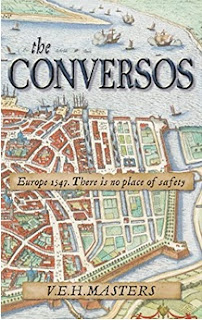
 

The Conversos by V. E. Masters


I read the first book in this series, The Castillians, when it came out last year (you can read my interview with the author here) and much enjoyed it so it was great to get reacquainted with the Seton sister and brother, Bethia and Will.

The turbulent times in which they live (middle of the 16th century) is affecting both of them. Bethia, now married to Mainard, and living in Antwerp, is discovering things about the background of her husband’s family which land her in danger.

Her forthright Fife maid, Grissel, provides some comic relief.

Will, a prisoner after taking part in the siege of St Andrews Castle described so vividly in the first book, is now a galley slave in the company of John Knox, later founder of the Presbyterian Church in Scotland. A bright spot in the dreadful life Will has to lead is the appearance <no spoilers> of another iconic figure from Scottish history.

For siblings devoted to each other, and with little contact from their homeland, it is agonising that they don’t know where the other is, or even if they are still alive.

As in The Castillians, the writing is visceral – such as the opening scenes of sea-sickness and piracy on Bethia’s voyage to Antwerp and Will’s physical agony as a galley slave. I trust that there was no first-hand research there …

And the good news is that V. E. H. Masters is at work on the third book in the trilogy.


The Dutch House by Ann Patchett

I said last month, after reading Ann Patchett’s latest collection of essays, that I wanted to read her novels. This is her newest one and I absolutely adored it. I love a sibling story (see also above … ) and this brother and sister, Danny and Maeve, leapt off the page.

Ousted by their stepmother from their architecturally extraordinary childhood home (in small-town Pennsylvania, while they are little more than children) they cannot let the house go from their minds. Together and separately they return to sit outside it again and again.

The story is narrated by Danny, the younger of the two, and so cleverly told in its weaving of past and present.

Isn’t that cover beautiful? AP was not impressed with her publisher’s cover suggestions (as she says in one of the aforementioned essays) so she commissioned a painting showing how she envisaged Maeve with her striking looks.


Commonwealth by Ann Patchett

So it was with high hopes that I immediately started reading this one, hopes that bounced down a bit as I concentrated on getting to grips with a lot of characters and time shifts that were sometimes hard to figure out.

‘Commonwealth', perhaps more a title for the American market than elsewhere, refers to the ‘Commonwealth of Virginia’. When their mother divorces their father to marry Bert, Caroline and Franny relocate there from California, and every holiday (vacation) Bert’s four children come to visit. With very little parental supervision the six do pretty much what they want, with tragic consequences.


No Man’s Nightingale by Ruth Rendell

I went through a stage a few months ago of rereading some of my Ruth Rendells before passing them on. I had no idea there was a final Inspector Wexford until I saw this in a charity shop. Reg is now retired but Mike Burden still relies on him for advice. Not her best but the bar was set high.


Was William Wallace a Jacobite? A Private Tour Through Scottish History by James A. Johnstone

James Johnstone’s livelihood came to a sudden halt in spring 2020. When Covid 19 brought tourism to a standstill there were no visitors to drive around Scotland, a job he had loved to do for the previous forty or so years.

He used his time off wisely, in writing this book. The title comes from a question he was asked, among many others, by his clients. Over the years he acquired the knowledge not only to answer but also to explain and give context.

If you want the Roberts and the Jameses sorted out in your mind or would like to learn more about the Jacobite rebellions, and much more, this is the book for you.

Look out for my interview with James Johnstone coming soon.

Thursday, 10 June 2021

Ten in May

 I read ten books in May.


Early Morning Riser by Katherine Heiny

Regular readers will know I love Katherine Heiny’s first novel, Standard Deviation, so much that I have read and twice reread it since it came out in 2017. So that was a very hard act to follow – but she’s done it again and I look forward to my first reread of Early Morning Riser soon. Here’s what some others have said about it:

‘Gorgeous. Very, very funny in a knowing wry way but so tender, so beautiful. I loved all the characters.’ Marian Keyes

‘Warm, witty, touching – and frequently hilarious’ David Nicholls, author of Sweet Sorrow

‘You put the book down and feel glad to be alive’ India Knight, Sunday Times


The Long Hot Summer by Kathleen McMahon

‘The MacEntees are no ordinary family. Determined to be different to other people, they have carved out a place for themselves in Irish life by the sheer force of their own personalities. But when a horrifying act of violence befalls television star Alma, a chain of events is set in motion that will leave even the MacEntees struggling to make sense of who they are.’

Cleverly told from nine points of view.


Then, in need of distraction, I took to crime.

I used to work in London for the publishing company who published Ruth Rendell (I met her once) and I have copies of most of her books. I embarked on a galloping reread of six of them, picking up one as soon as I’d finished the one before.

The first five feature Inspector Wexford, one of my favourite fictional detectives, and the last is a standalone.

Hadn’t reread them for a good few years. The plots have stood the test of time and her writing is terrific (in Murder Being Once Done London comes alive as much as any of the characters) but my goodness how much the world has changed since the 1960s/70s. Technology of course and attitudes, but it’s particularly hard to believe that back then there were streets of grotty bedsits in areas of London like Notting Hill, now only affordable by the mega rich.


The Speaker of Mandarin


Murder Being Once Done


The Best Man to Die


Kissing the Gunner's Daughter


                                                          Wolf to the Slaughter


                                                             The Secret House of Death


And still on a crime spree:


Remain Silent by Susie Steiner

The third book (after Missing, Presumed and Persons Unknown) featuring DI Manon Bradshaw (and her complicated personal life, so best to read them in order). Here she is investigating the death of a young Lithuanian man who was a migrant worker in a horrible chicken factory. His fellow workers are frightened to talk about it. Manon’s colleague, Davy, goes to Lithuania to find out more about the dead man.

A satisfying police procedural, with heart. And worth reading alone for the laugh-out-loud scene when Manon tears into the unfaithful husband of her best friend.


The Lost Man by Jane Harper

I could hardly tear myself away from this story of a mysterious death in the Australian outback. Told from the point of view of the dead man’s brother, it’s a tale of old and new family secrets played out in a relentlessly hot and dangerous landscape.


Thursday, 18 April 2019

Five in March


I read five books in March. It was a funny old month for me – I had two medical procedures, one on each hand, and I was selected for jury duty. So most of the time I wanted to read books that were a happy distraction from these unpleasant things. (Hands all better and mole-free now, thank you for asking.)


Asta’s Book by Barbara Vine (aka Ruth Rendell)
I’ve read this before but not for many years. I remembered what a good puzzle it was, this mystery within a mystery, even though I couldn’t recall the solution.

‘It is 1905. Asta and her husband Rasmus have come to East London from Denmark with their two little boys. With Rasmus constantly away on business, Asta keeps loneliness and isolation at bay by writing a diary. These diaries, published over seventy years later, reveal themselves to be more than a mere journal. For they seem to hold the key to an unsolved murder and to the mystery of a missing child. It falls to Asta's granddaughter Ann to unearth the buried secrets of nearly a century before.’

And, as always with Ruth Rendell books, London is as much a character as the people.


Snowdrift and other stories by Georgette Heyer
A friend lent me this collection and I was entranced by it. One of my favourites concerned two young lads who believe themselves in love with the same girl and almost come to fighting a duel over her. When at the last moment they discover that she is engaged to someone else, each of them is considerably relieved and off they go on a fishing trip, the best of friends again. In other stories the endings are more romantic – but all her main characters are unsentimental and a breath of fresh air.

My mum used to love Georgette Heyer. I don’t know where all her copies went but I only seem to have two of them so I read those (and must look for others in the forthcoming Christian Aid booksale).


Sprig Muslin by Georgette Heyer
Amanda is a sixteen-year-old, very detemined runaway who is rescued by Sir Gareth Ludlow because she will be ‘ruined’ if she is found to be stravaiging about the countryside on her own. But Sir G cannot return Amanda to her family because Amanda flatly refuses to tell him who they are … and he has his other problem, namely his proposal to Hester (a spinster of 30 – gasp), which he fully expected to have had accepted, has been turned down. Adventures and misunderstandings abound. Delightful. And so well written – I reckon GH is almost up there with Jane Austen.


Regency Buck by Georgette Heyer
Adventure! Excitement! Romance! It does what it says on the tin. And what more could anyone want??


Handle with Care & other stories by Anne MacLaren
A great collection of stories of which my favourites were Nice Work which highlighted two careers (possibly … ) you may not have thought of; and Trout in which Adam, trying to distract himself while he lies unhappily in a flotation tank, comes up with an ingenious musical idea. Entertaining and thoughtful – recommended.

Tuesday, 11 August 2015

Seven in July


I read seven books in July.


 Daisy’s Dilemma by Anne Stenhouse
 
Read on Kindle. I am a fan of Anne Stenhouse’s Regency novels (read my interview with her here)  – Mariah’s Marriage and Bella’s Betrothal preceded this one. Daisy’s Dilemma picks up a character from the first book – which is great because Daisy is the sort of girl about whom you find yourself wondering what she might do next.

This has all you want in a Regency novel – a heroine with a mind very much her own, a hero made of flesh and blood, and a villain. It also has an intricate plot that takes the reader from the great family house in Grosvenor Square to the London docks – with a dash of Scots mist thrown in. Do find out more for yourself.


To Kill a Mockingbird by Harper Lee

Blogged about To Kill a Mockingbird and Go Set A Watchman here.


Go Set a Watchman by Harper Lee

There was a plethora of reviews right away after the publication of this book. I gathered that some of them were adverse, and some a lot of hot air, and decided not to read any of them in advance, if at all. Well, I loved GSAW – mostly. It was wonderful to see Jean Louise Finch all grown up and to revisit Maycomb. I can see though why Harper Lee’s editor suggested going away and writing a book through the eyes of six-year-old ‘Scout’ because many of the scenes in GSAW are flashbacks to the childhood of this ‘juvenile desperado, hell-raiser extraordinary’. Hers was a story that had to be told.

The last few chapters are less like a novel and more of a very long argument between Jean Louise and her father Atticus about the relaxation or not of segregation. As for Atticus taking the opposing view – well, this is a novel that might never have seen the light of day (controversy surrounds the circumstances of its publication); Harper Lee made Atticus’ views quite different in To Kill a Mockingbird. Let us remember him from that (looking like Gregory Peck of course).


Beach Reads by Jackie Ley
Read on Kindle. An award-winning writer, Jackie was in the Edinburgh Writers’ Club for a couple of years before moving to France so I was interested to read her enjoyable book of four short stories, one of which is a fictionalised account of that move, and was a runner up in the Society of Women Writers & Journalists Life-Writing Competition. The second is also set in France and inspired by a painting. The third – perhaps not a typical ‘beach read’ – has a character receiving a cancer diagnosis and the fourth is about a teacher trying to interest a class in Jane Austen. Find out more about Jackie, her short stories and novels, here.


No Man’s Nightingale by Ruth Rendell
An Inspector Wexford – except that he is now retired but gets involved anyway in the murder of the local vicar. Excellent, almost as good as my favourite Wexfords A New Lease of Death and The Speaker of Mandarin. Very sad to think there won’t be any more.


Enchanted August by Brenda Bowen
Read on Kindle. The Enchanted April by Elizabeth von Arnim was published in 1923 and made into a film in 1991 with a cast including Miranda Richardson, Joan Plowright, Jim Broadbent and Josie Lawrence.

This is a contemporary version, set in an island off Maine. The location immediately attracted me (I have a thing about American places/names) and the thought of vicariously pitching up there to stay in an idyllic cottage for a month was very enticing. But I was disappointed when the ‘cottage’ – like all the others on the island – turned out to have about twelve bedrooms and was flimsily built (only for summer use; you’d freeze there in the winter).

Some of the characters were unappealingly modern such as the financial whizz who wondered how the island might be ‘monetized’, and there was a lot of faffing over cell phone signals (something lucky E von A didn’t have to worry about) but it must have been fun to follow a blueprint of someone else’s plot; it was quite fun to read.


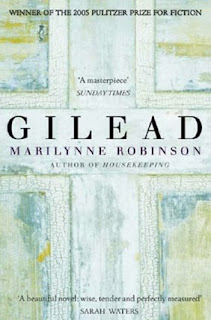
Gilead by Marilynne Robinson

Marilynne Robinson wrote Housekeeping, published in 1980 and later made into a film by Scottish director Bill Forsyth.

There followed a long gap before Gilead was published in 2004. It won the Pulitzer Prize. It will not be everyone’s cup of tea but I loved it. It’s one long ‘letter’, from a Presbyterian minister, John Ames, in 1950s Iowa  (in the fictional town of Gilead) to the son of his old age; he knows he will not live to see the boy grow up. One of his preoccupations is his namesake, the wayward son of his oldest friend, whose unexpected visit home is testing for everybody around him.

I read it when it came out. I later acquired the two sequels Home and Lila. As I am very much looking forward to seeing Marilynne Robinson at the Edinburgh Book Festival I reread Gilead and will read the other two straight after.

Yay! Book Festival time of year! Can’t wait.

Thursday, 1 January 2015

Seven in December


I read seven books in December.

 Well, more or less.

I finished Empress Dowager Cixi by Jung Chang, started in November.

Feeling like a spot of murder and mayhem I read:

Telling Tales by Ann Cleeves. (Christian Aid sale purchase back in May.) One of her brilliant ‘Vera’ novels.

Not in the Flesh by Ruth Rendell. And this is one of RR’s brilliant Wexford novels – my favourite fictional detective.

Then I moved on to espionage:


A Colder War by Charles Cumming, spy novel, a good but not-as-good follow-up to A Foreign Country.


The Spanish Game by Charles Cumming, a satisfying follow-up to A Spy by Nature.

Being a spy sounds very exciting, but a non-existent sense of direction (among other shortcomings) would hamper me were I ever to find myself dodging pursuers. However, I conjure up the thrill of the chase by imagining when on a train, or on the Edinburgh tram, that the 'ticket inspector' coming slowly down the carriage is actually an imposter on the look-out for me. The real inspector is lying trussed up in the guard's van (or tram equivalent). I compose my face. I can only hope that its calm exterior gives no indication of the hammering heart within. I make eye-contact and smile … I’ve got away with it so far.


As is custom in our house, on Christmas Eve I read to my, now 22-year-old, daughter, The Night Before Christmas – two editions, one the traditional version:


and one with the same words but where the characters are mice:


Love them both.


Said daughter gave me a lovely little book published by Galley Beggar Press (‘a new range celebrating the best in classic short fiction’). It’s a Mr Mulliner story called Honeysuckle Cottage by PG Wodehouse. A writer of hard-boiled detective stories inherits the eponymous cottage from his aunt, a romantic novelist a la Barbara Cartland, and to his dismay finds that his writing is being influenced by his surroundings.


And I’ve been dipping into all month and just finished This is the Story of a Happy Marriage, a collection of journalism by the novelist Ann Patchett (winner of the Orange Prize for Bel Canto). Her subjects are far-ranging – from the relationship between her dog and her grandmother; to going through, and passing, all the tests to join the Los Angeles Police Department; to opening a bookshop in Nashville because there weren't any left ('The Bookstore Strikes Back'). But my favourite piece is called The Getaway Car: A Practical Memoir about Writing and Life which is just that. (I see that it’s available on Kindle as an individual entity for £1.81; highly recommended to all writers).

Her main advice, illustrated by her own experience, is to practise, practise (although being American she says practice, practice). So, if I was to break my resolution not to make any New Year resolutions, that is what I would resolve to do.

Happy 2015.

Thursday, 6 February 2014

Eleven in January


So far I’ve kept to (one of) my New Year resolutions which was to record the title of each book when I’d finished reading it.

In January I read eleven books:

1. Christmas at High Rising by Angela Thirkell
A Christmas present. I’d heard of Angela Thirkell, who was a best-seller in the thirties, but had never read her before. Virago has reissued three of her novels and this book of short stories in very pretty covers. The stories are a little mixed in their quality but do inspire me to put her novels on my wish list.

2.The Vault by Ruth Rendell
Good old Wexford, now retired, helps with a multi-murder enquiry. A sense of place is always a big part of Ruth Rendell’s writing and as Wexford and his wife are borrowing a house in London we get a guided tour of some beautiful and some seedy parts of the capital.

A timely and enlightening set of interviews with entrepreneurial Scots including Michelle Mone, Sir Tom Farmer, Muriel Gray and Graeme Obree.

4. The View from Castle Rock by Alice Munro
I find Alice Munro’s stories quite difficult to read, I must admit, which is why this book sat on my shelves for seven years before I got round to reading it, even though I knew that the ‘Castle’ was Edinburgh Castle. I wish I’d got round to it earlier. I absolutely loved it and will read it again. Partly truth and partly fiction, it’s the story of her family, from her Scottish Border ancestors (one of them was the Ettrick Shepherd James Hogg) and their early days in their new life in Canada. That was a brilliant read but even better is her own childhood and young adulthood in small-town Ontario in the forties and fifties – acutely observed, heart-breaking, droll, and sooo beautifully written.

5. Kept in the Dark by Nina Bawden
I bought a pile of books including two Nina Bawdens from the Christian Aid book sale last May and must finish them all to justify a visit to the sale this year ... This book is for older children. It was much darker than I expected, quite disturbing in fact. When their father is ill three children go to stay with hitherto unknown grandparents. A typical plot device to get parents out of the way – but here an unwelcome visitor turns up, a grandson of their grandfather’s by his first marriage, who, although not described as a sociopath, behaves like one.

6. Water’s Edge by Jane Riddell
Family conflicts, set beside a beautiful lake in Switzerland. I interviewed Jane about Water’s Edge here.

7. The Peppermint Pig by Nina Bawden
A gentle read compared to Kept in the Dark but nonetheless dealing with realistic characters in difficult situations.

8. The Tailor of Inverness by Matthew Zajac
Hadn’t heard of this until recently although, in play form, it has apparently been a very successful Edinburgh Festival Fringe show. Actor Matthew Zajac investigates his father’s family history and traces long-lost relatives. His father grew up in what is now Western Ukraine, and the Second World War of course caused havoc in that region. He ended up having a happy life as a tailor in Inverness but some of the stories he told Matthew turned out to be not quite accurate …

9. Glasgow Green by Jake Walker Curley
A gritty thriller from a new Scottish writer. I will say no more now as I shall be interviewing Jake next week on this blog.

10. Nightingale Nurses by Donna Douglas
Nurses in the East End of London in the thirties. A satisfying read, the last in the trilogy, after The Nightingale Girls and The Nightingale Sisters.

11. Highland Doorstep by Kenneth A Macrae
A journalist takes a tour round a corner of Inverness shire in the early fifties. Thrilled to see an uncle of mine mentioned!

Friday, 3 January 2014

On the shelf ... and on the floor


I have a very nice notebook for the purpose of keeping a list of books I’ve read. Unfortunately I hardly ever remember to use it. So one of my New Year resolutions is to keep it in a more handy place and at the end of December to be able to look back over my reading year.

Even without such a record to refer to I know that there is no system to my reading/re-reading. Occasionally I arrange a pile of books beside my bed and vow to read them in the order in which they are stacked. But then, I’ll be scanning a bookshelf and something – new or oft read – catches my eye and that is what I want to read and no other book will do. Or that month’s book group title has to be put to the top of the pile. Or I like a particular book so much all I want to read is something else by the same author. Or I’ve finished a book and don’t want to start a brand new one late at night so reach for an old favourite. So the bedside pile gets scattered and re-formed any old how.

Now there are also e-books … I have a Kindle app on my laptop with, currently, fifty-six titles waiting for my attention. And of course there are all the books I’ve seen reviewed/have been recommended waiting to be bought/downloaded/borrowed from the library.

In a parallel universe I would have a year (or three) off and do nothing but catch up on all of these.

I can’t remember what I’ve read over the whole year but these, not in any order, are some from the last few months, fiction unless otherwise stated:

Gilead by Marilynne Robinson (a re-read)

The Greengage Summer by Rumer Godden (a re-read)

Bella’s Betrothal by Anne Stenhouse (Anne’s second Regency novel following Mariah’s Marriage)


The Complete Book of Aunts by Rupert Christiansen (non-fiction)

The London Train by Tessa Hadley

A Capital Union by Victoria Hendry (for book group)


Austerity Britain 1945-51 by David Kynaston (non-fiction, half finished)

 Penny Plain et al by O. Douglas (an O. Douglas (sister of John Buchan) is what I usually reach for as a late-night comfort blanket; her titles are mostly out-of-print but The Day of Small Things has been reissued by Greyladies Publishing. I know them all almost off by heart.) 


Princess Tina Annual 1969 (new addition to collection of girls’ annuals; approx 380 so far; planning to blog on this subject soon)

The Nightingale Girls / The Nightingale Sisters by Donna Douglas

The Home Corner / The Dance Settee and other stories by Ruth Thomas

Instructions for a Heatwave by Maggie O'Farrell (for book group)

The Unlikely Pilgrimage of Harold Fry by Rachel Joyce (for book group)


I am currently reading: on Kindle app Carnegie’s Call by Michael Malone, in anticipation of hearing Michael’s motivational talk to the Edinburgh Writers’ Club on 6 January; and in paperback Ruth Rendell’s last Inspector Wexford novel The Vault (I tend to go on a crime-reading spree every January); also enjoying a Christmas present, a huge book on quilts from the American Folk Art Museum.

Now I’m off to rearrange that to-be-read pile yet again and to place the Books Read notebook by its side.

Do you have a reading plan? I would love to know what it is (and if you stick to it).