
Seven in January
I read seven books in January. (I know it’s
almost March but this month I’ve published a new story collection and had other
news to report … )

Uncommon Type: Some Stories by Tom Hanks.
Yes, the
Tom Hanks. And it’s a signed copy,
courtesy of the wonderful Topping bookshop in St Andrews and my (also
wonderful) husband.

Each of the stories involves a manual
typewriter in either a minor or a major way (TH has collected about a hundred
of them). Some of the stories have the same characters. Some are very
thoughtful, others very funny. I think my favourite, and falling into the funny
category, was the very first one, about three best friends, two men and a girl,
Anna. One of the men, the narrator, makes the mistake of having an affair with
Anna for ‘three exhausting weeks’, after which they revert, with mutual relief,
to their previous relationship.

Between Friends by Jenny Harper
‘Love, secrets and loyalty’ in contemporary
Edinburgh. When Marta bumps into an old acquaintance, Tom, during the Edinburgh
Festival and asks him to dinner, a whole domino effect of disasters occurs, as
Marta is unaware of the effect that Tom’s appearance will have on her two best
friends Jane and Carrie. Of course the Edinburgh setting was bound to appeal to
me but I also enjoyed this gripping story of female friendships.

The Savage Garden by Mark Mills
I read this author’s The Whaleboat House last year and loved it. Enjoyed this
one too which is set in Tuscany in 1958. A young English scholar tries to
decode the clues in a mysterious garden and in doing so uncovers secrets of
love, revenge and murder from 400 years ago and much more recently …

Howard’s End is on the Landing by Susan Hill
The house Susan Hill shared with her
Shakespearian scholar husband had bookshelves everywhere. One night she went in
search of Howard’s End. She couldn’t
locate it but she did realise that there were books on their shelves that she’d
forgotten they had, some she would love to re-read and perhaps two hundred that
she hadn’t read at all. So she decided to give up buying new books for a whole
year, instead going through the house shelf by shelf. At the end, with great
difficulty, she compiled a list of the forty books she would keep if she had to
give the others up.
I liked reading about her experience – and
although I could do the same (check my to-be-read pile, print and Kindle!) I’m
afraid I would not have the self-discipline.
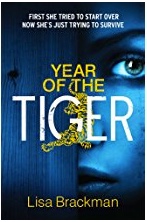
Year of the Tiger by Lisa Brackman
A thriller set in China, with flashbacks to
the war in Iraq where the narrator, Ellie, was a medic. Ellie’s friendship
with a missing local artist leads her into big trouble when both Chinese and
American government agents hound her about him.
I’m mad keen on books – fiction and
non-fiction – set in China since a visit there a few years ago.

The Secret of Nightingale Wood by Lucy Strange
'1919. Henry [Henrietta] moves to the countryside with her family, scarred by her brother's untimely death. Her only friends are characters from her favourite books - until, one day, she wanders into the woods and meets Moth, a striking witch-like woman. Together they form a bond that could help Henry save her family and overcome her grief.'
Henrietta is twelve, but this could be read by anybody of any age. Adults will read it on an extra level, knowing about the horrors of the First World War and of the way mental illness (not just of war veterans) was treated at this time.
I adored this book and cannot recommend it highly enough.

A Cold Case in Amsterdam Central by Anja de Jager
Excellent contemporary police procedural. A
workman falls from the top of a half-finished building – accident or murder?
The answer – spoiler alert – has its roots in the Nazi occupation of Holland
and a present-day extortion racket. Great sense of place and an interesting
protagonist in Lotte Meerman, a police detective who has just returned to work
four months after being shot; not all her colleagues are pleased to see her …
This is the second Lotte book; I'd like to read the other two (which is why, see above, I could never do a Susan Hill).


