katewritesandreads

katewritesandreads
Showing posts with label Jenny Harper. Show all posts

Thursday, 22 February 2018

Seven in January


Seven in January

I read seven books in January. (I know it’s almost March but this month I’ve published a new story collection and had other news to report … )


Yes, the Tom Hanks. And it’s a signed copy, courtesy of the wonderful Topping bookshop in St Andrews and my (also wonderful) husband.


Each of the stories involves a manual typewriter in either a minor or a major way (TH has collected about a hundred of them). Some of the stories have the same characters. Some are very thoughtful, others very funny. I think my favourite, and falling into the funny category, was the very first one, about three best friends, two men and a girl, Anna. One of the men, the narrator, makes the mistake of having an affair with Anna for ‘three exhausting weeks’, after which they revert, with mutual relief, to their previous relationship.


Between Friends by Jenny Harper
‘Love, secrets and loyalty’ in contemporary Edinburgh. When Marta bumps into an old acquaintance, Tom, during the Edinburgh Festival and asks him to dinner, a whole domino effect of disasters occurs, as Marta is unaware of the effect that Tom’s appearance will have on her two best friends Jane and Carrie. Of course the Edinburgh setting was bound to appeal to me but I also enjoyed this gripping story of female friendships.


The Savage Garden by Mark Mills
I read this author’s The Whaleboat House last year and loved it. Enjoyed this one too which is set in Tuscany in 1958. A young English scholar tries to decode the clues in a mysterious garden and in doing so uncovers secrets of love, revenge and murder from 400 years ago and much more recently …


The house Susan Hill shared with her Shakespearian scholar husband had bookshelves everywhere. One night she went in search of Howard’s End. She couldn’t locate it but she did realise that there were books on their shelves that she’d forgotten they had, some she would love to re-read and perhaps two hundred that she hadn’t read at all. So she decided to give up buying new books for a whole year, instead going through the house shelf by shelf. At the end, with great difficulty, she compiled a list of the forty books she would keep if she had to give the others up.

I liked reading about her experience – and although I could do the same (check my to-be-read pile, print and Kindle!) I’m afraid I would not have the self-discipline.


Year of the Tiger by Lisa Brackman
A thriller set in China, with flashbacks to the war in Iraq where the narrator, Ellie, was a medic. Ellie’s friendship with a missing local artist leads her into big trouble when both Chinese and American government agents hound her about him.

I’m mad keen on books – fiction and non-fiction – set in China since a visit there a few years ago. 


The Secret of Nightingale Wood by Lucy Strange 
'1919. Henry [Henrietta] moves to the countryside with her family, scarred by her brother's untimely death. Her only friends are characters from her favourite books - until, one day, she wanders into the woods and meets Moth, a striking witch-like woman. Together they form a bond that could help Henry save her family and overcome her grief.'

Henrietta is twelve, but this could be read by anybody of any age. Adults will read it on an extra level, knowing about the horrors of the First World War and of the way mental illness (not just of war veterans) was treated at this time. 

I adored this book and cannot recommend it highly enough.


Excellent contemporary police procedural. A workman falls from the top of a half-finished building – accident or murder? The answer – spoiler alert – has its roots in the Nazi occupation of Holland and a present-day extortion racket. Great sense of place and an interesting protagonist in Lotte Meerman, a police detective who has just returned to work four months after being shot; not all her colleagues are pleased to see her … 

This is the second Lotte book; I'd like to read the other two (which is why, see above, I could never do a Susan Hill).


Sunday, 17 January 2016

Seven in December


I read seven books in December.


Shall we Dance? by Maggie Alderson
There’s always something very glam about Maggie Alderson’s novels and this one is no exception. She is a fashion journalist after all. Here, the main character, Loulou, has a vintage clothes shop in Primrose Hill and is the sort of person who wears high-heeled wellingtons to music festivals. 


Partners in Crime by Agatha Christie
I read every Agatha Christie, most more than once, when I was young (those long winter nights on the farm … ). When our parents downsized, my sister and I divided the collection between us.

I remembered The Secret Adversary as one of my favourites, very exciting – it’s the first Tommy and Tuppence story. I was looking forward to seeing the recent TV adaptation but was sorely disappointed. Why move it to the 1950s? Why rewrite the story to such an extent? Why make Tommy such a buffoon?

As my husband had never read any Agatha Christie (I know – weird) I pressed The Secret Adversary and N or M? on him (these had fallen to me in the share-out) and he liked them so much that he asked for more.

So I bought him two more Tommy and Tuppences, Partners in Crime and By the Pricking of my Thumbs, 1970s Fontana editions.

He liked those too and I reread PiC myself when he finished it. It’s a book of short stories, some very far-fetched but, hey, this is the queen of crime. She gets away with it as far as I’m concerned. Unlike the TV producers.


The Road to Little Dribbling More Notes from a Small Island by Bill Bryson
Bill travels around Britain (well, England mostly, apart from North Berwick, Ullapool and Cape Wrath), describing his journeys in his witty, informative and often caustic way.


The Lost Woman by Gilly Stewart
Read on Kindle. Set in the Scottish Highlands. Catherine McDonald is trying to turn her family’s home into a hotel but a missing hill-walker brings unwanted attention to the area and some of her family are less than enthusiastic about her plans. Good read, with a great sense of place – as usual from this writer.


So Many Books, So Little Time: A Year of Passionate Reading by Sara Nelson
Bought in second-hand bookshop, published in 2003. I could not agree with the title more and had every hope that this American author and I would be kindred spirits. Alas no.

A whole chapter was devoted to a true crime book about murder by baseball bat. After reading it she apparently got anxious about her young son playing baseball, and about the possibilities of other sporting paraphernalia being used as weapons. I could win worrying competitions but I’ll skip that one.

I knew we weren’t on the same planet reading-wise though when she was indifferent to /dismissive of two of my very favourite books.

Housekeeping, subsequent Pulitzer prize-winner Marilynne Robinson’s first novel, was ditched after a few pages as ‘too slow’.

Crow Lake by Mary Lawson was newly published when Sara Nelson read it. She found it ‘pretty close to cliché’ and suspected it would be ‘ignored or even trashed’ by other reviewers. Well, perhaps it’s mean of me to, ahem, crow, but with the benefit of hindsight I know that Crow Lake got brilliant critical reviews, became a best-seller and a beloved book for many people, and that it won the Books in Canada First Novel Award and the McKitterick Prize among other accolades.

But each to their own … in the lists at the back of the book there are a few titles I hadn’t heard of that I'll look out for. Maybe we might even agree over some of them.


Plainsong by Kent Haruf
Read on Kindle. I bought this because I read that it was one of Anne Tyler’s top ten books. It’s contemporary, set in a small town in Colorado, and follows various characters and how they are linked to each other.

I appreciated it more than liked it, I think. The characters stayed in my mind but I found the almost reportage style of writing distancing.


People We Love by Jenny Harper
This is the fourth title in Jenny Harper’s very successful Heartland Series of ‘strong women under pressure’, set in a fictional town in East Lothian, Scotland. Here, Artist Lexie is back in Hailesbank, living with her parents, as they all try to come to terms with her brother’s fatal accident. ‘An engaging and delightful read,’ as Alexander McCall Smith says on the cover.

I’m very pleased to have been interviewed by Jenny Harper about writing serials, and about The Ferryboat (my People’s Friend serial now available as a large-print library book which I might possibly have mentioned before):
@harper_jenny


Sunday, 3 January 2016

The Reading (and writing) Woman


I was given the gorgeous Reading Woman calendar for Christmas and I’m going to use it to mark only writing-related events.


The picture for January is called Portrait of Helen Gow and is by Scottish artist Alexander Mann (1853-1908). Helen Gow is reading what appears to be a pictorial magazine – I wonder what it was? – and she’s wearing a very lovely black lacy dress. You can see it here http://www.mystudios.com/artgallery/A/Alexander-Mann/Portrait-of-Helen-Gow.html

I’ve been filling in events for the first few months and there is much to look forward to.

The first Edinburgh Writers’ Club meeting of 2016 is on 11 January. Rosemary Gemmell will talk about writing relationships and romance, and will later judge the Short Story Competition on those themes. As many folk make New Year resolutions to write can I say, as membership secretary of the Club, that new faces are always welcome.

Also on 11 January I’m going to be interviewed on Jenny Harper’s blog.

The Writers’ Room, the fab creative writing class I’ve been going to for years, begins again on the 15th. Looking forward to finding out what this term’s theme is.

I’m busy reading entries for the Woman’s Short Story competition, organised by the Scottish Association of Writers. The adjudication will be delivered at the SAW weekend conference in March and the winner will have their expenses paid at the conference. So I’m going to make one person very happy …

I asked the organisers if this year entrants could submit their stories with a particular women’s magazine in mind. This was because, although the number of women’s mags and especially those carrying fiction has dwindled almost to nothing since their glory days of around the mid 20th century, the chances of having a ‘womag’ story published are still high compared to a ‘general’ short story – and I assume all writers want to be published.

And on that subject … I am delighted to be involved in The People’s Friend (newly award-winning) workshops and will be in Dundee, Glasgow and York this spring for the next batch:

I’ve just finished writing the seventh instalment (out of eight) of my new People’s Friend serial. I rewrote the final ‘chapter’ (there are five chapters in an instalment) about fourteen times then forced myself to print it all out and put it in an envelope to avoid further tinkering. Now I will embark on tying up the ends in the final instalment.

And I have another project which I shall tell you about in due course.


So, all being well, that’s the first half of the writing year mapped out – and, of course, along with the women on my calendar, I shall be doing lots of reading, although, sadly, not so glamorously attired.

Monday, 17 November 2014

Five in October


I read five books in October.

Foreign Correspondence by Geraldine Brooks
As readers here will know, Geraldine Brooks is one of my favourite novelists (March and The Year of Wonders highly recommended). 


Foreign Correspondence is a memoir of her childhood in the 50s and 60s in Sydney before it was the multi-cultural city it is today. She dreamed of a life far away and so, to find out more about the world, acquired various pen friends from the United States, France and Israel. As these things tend to do, the pen-friendships petered out after a few years. She grew up to get her wish, becoming an award-winning foreign correspondent in the Middle East. Then she had the idea of tracing her former pen friends …

Murder Underground by Mavis Dorelia Hay
A classic whodunit first published in the 1930s and recently reissued by The British Library


Maximum Exposure by Jenny Harper
This is the third in the Heartlands series of novels – all set around the town of Hailesbank in East Lothian. It follows Feel the Wind and Fly and Loving Susie. Maximum Exposure’s heroine Daisy Irvine is a photographer with The Hailesbank Herald. I do like a story based around a newspaper.


The Trumpet of the Swan by E. B. White
E. B. White wrote very prolifically for the New Yorker but he is best known for his children’s novels Charlotte’s Web and Stuart Little. His third novel for children The Trumpet of the Swan is less well-known but equally good. A friend lent me this lovely copy but it’s available in various versions.


The Signature of all Things by Elizabeth Gilbert
Read for book group. Actually this spilled over into November – it’s a page-turner but there are 588 pages to turn. It begins with the birth of Alma Whittaker in Philadelphia in 1800, the daughter of Henry, former London vagrant, now a very rich botanical explorer and businessman. Alma wants nothing more than to learn her father’s business, and to make her own investigations into mosses as she figures out the part they play in evolution – until events lead to her sailing across the world to Tahiti and then to Holland. An enjoyable great sweep of a novel (although I did feel my red editorial pen twitching towards the end). 


I have never read Eat, Pray, Love by the same author, nor seen the film. The person suggesting this book for reading by the book group said it was nothing like EPL, a statement that will either encourage or deter you from reading it.

Wednesday, 29 October 2014

Interview with Jenny Harper


Jenny Harper is the author of The Heartlands Series, published by Accent Press – three titles to date set in and around the fictional small market town of Hailesbank near Edinburgh. The just-published Maximum Exposure follows Face the Wind and Fly and Loving Susie.


Maximum Exposure is described on the cover as ‘Page-turning and thoroughly entertaining. I loved it!’ by Katie Fforde.

from the blurb:
Livelihoods are at risk when a local newspaper begins to fail, but the future of one member of staff depends more on the choices she makes than the decisions of others…

Adorable but scatterbrained newspaper photographer Daisy Irvine becomes the key to the survival of The Hailesbank Herald when her boss drops dead right in front of her.


I asked Jenny some questions about Maximum Exposure, the series, and her writing process.

Jenny, Daisy is a delightful character – dizzy and scatterbrained in some ways but with real emotional depth. She follows your two perhaps more ‘grown-up’ heroines, Kate Courtenay, wind-farm engineer, in Face the Wind and Fly, and Susie Wallace, a member of the Scottish Parliament, in Loving Susie. Was Daisy inspired by anybody you know?

I have no idea where Daisy came from! No, she’s not based on anyone I know, she just grew in my mind. At one point, I did feel she lacked depth though. I needed to know more about why she was the way she was – and so her controlling father walked into the pages of the novel. It would be interesting to revisit Daisy in a year or two and see how life with Ben might change her. Now there’s a thought …

We see the story from Daisy’s viewpoint and from that of her childhood friend Ben. Did you know from the beginning that you wanted both of them to have a voice?

Yes. I find single viewpoint novels really difficult to write and admire anyone who can do it. I like to get inside at least two characters, and I also like to be able to move the action around more than is possible with a single point of view.

I know that you have been a journalist and also published non-fiction books. Have you ever worked on a newspaper?

Only as a freelance. I used to be a regular feature writer for many Scottish newspapers, particularly The Scotsman and The Sunday Times Ecosse (as it was when I wrote for it). But I ran a corporate communications agency for more than 20 years and we published magazines and newspapers for private and public sector organisations, from banks and oil companies to organisations such as Seafood and Historic Scotland.

The setting of the series is a small community. As far as I’m aware none of the characters so far cross over from one book to the next. Is that a possibility?

Yes. The next in the series again features new characters, but the one I’m working on at the moment (Number 5) takes one of the minor characters and develops her story. And now that I know Hailesbank, Forgie and Summerfield quite well, I’ll be picking up other characters in major or minor ways again too.

When will the next Heartlands title be available?

The People We Love is due out in ebook format on 26 February and paperback in August, and I believe it’s my best yet.

And how many do you envisage being in the series?

Who knows? It depends on many factors – if I continue to enjoy writing them, if my publisher wants more of them, if readers like them – and if it doesn’t all become too complicated! I have at least two more novels roughly planned, but I don’t know whether I’ll develop them or not. But I also have a hankering to revisit the first novel I ever tried to write, based loosely on my parents’ experiences during the war, in Scotland and in India. I didn’t have the technical experience to write back then, but maybe I do now.

Do you like the writing or the editing best?

It depends which stage of writing I’m at. I love it when everything starts to come together, and I love enriching what I have written, making it stronger and deeper. I am appalling in the early stages of a novel, I go down false avenues, prevaricate, change plot lines and fiddle with characters. It all takes a while to settle down in my head – but once I get to a certain point, it’s much easier and I really begin to enjoy it. I love editing – it was my professional discipline and I think I’m quite good at it.

You had a short story in the Romantic Novelists’ Association anthology Truly, Madly, Deeply. How do you like writing short stories compared with novels?

I’m a complete beginner at short stories. I went on a writing course to the gorgeous Chez Castillon tutored by Veronica Henry and she decided to spend a morning on short stories. I hadn’t expected it – but I’ve been so grateful ever since. By the way, I have another short story coming out on 1 November in an anthology called Let’s Hear It For the Boys It’s all for the charity Movember, in aid of men’s health, so please do click and buy! A great read for just 99p and a great cause.

Do you have a website or a blog?


 Thank you for answering my questions – I look forward to seeing more of the Heartlands community in The People We Love.

Thank you for hosting me!

Thursday, 10 July 2014

Six in June


I read six books in June.

Every Contact Leaves a Trace by Elanor Dymott. (Christian Aid Book Sale buy) Alex tries to find out who killed his wife, Rachel, in the grounds of the Oxford College they’d both attended. I liked the complicated structure, very clever. Perhaps less of a whodunit than a whydunnit – the ending was vaguely disappointing. Plus I couldn’t help thinking that even if she hadn’t died the marriage wouldn’t have lasted between solitary, dull dog Alex and beautiful, bratty, manipulative Rachel.

Night Music by Jojo Moyes. (Christian Aid Book Sale buy) An early JM. As usual, great characters and dynamics between them.

A Woman Unknown by Frances Brody. This is in an excellent series about Kate Shackleton, a war widow and amateur sleuth, set in Yorkshire just after the First World War.


The Cuckoo’s Calling by Robert Galbraith. Well, by JK Rowling really. And I thought it was cracking, kept me awake for several nights and the conclusion was very satisfying. Really liked Cormoran Strike and his assistant Robin and can’t wait to read the follow-up The Silkworm.


The Other Miss Perkin by Lorna Hill. (Christian Aid Book Sale buy) This is set in the 50s, was first published in the 70s and republished in 2010 and is Lorna Hill’s only adult novel (she’s best known for her children’s books especially her ballet ones). I’m a Lorna Hill fan but I’m afraid I thought this was feeble – a downtrodden spinster (ancient apparently at the age of 44) wins a prize trip to the States and snags a millionaire. Written in a telling not showing way – ‘as we have seen’ etc. There was a really beautiful description though of the Grand Canyon; she is very good on scenery.

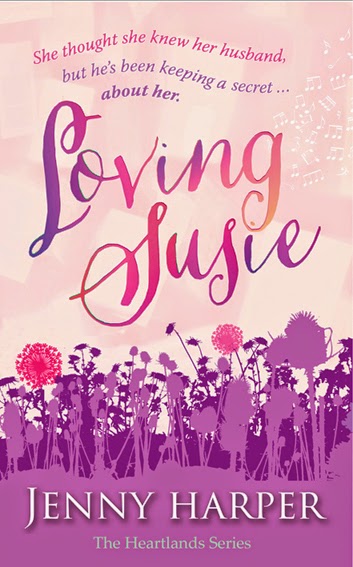
Loving Susie by Jenny Harper. First book I read on my newly acquired first Kindle. This is Jenny’s second novel following Face the Wind and Fly. Is the story of Susie Wallace MSP (member of the Scottish Parliament) and the devastating secret she discovers about her own background and the impact it has on herself and her family. Jenny is married to a former MSP so well-placed to set a heroine in this world. The story is told through her eyes and that of her husband and family and plays out Jenny’s tagline – she writes about ‘Strong women under pressure’.


 I am enjoying the Kindle – it is so easy (and usually cheaper) to acquire books in this way, and there are some titles that are only available in e-form. And, yes, it is terrific if you’re on the move. But it is frustrating to know that you can’t pass on a book to friends and family if you think they’ll like it too – you can recommend it of course but there’s no saying they’ll get round to buying it, and not everyone has an e-reader.


I fervently believe that books do ‘furnish a room’. The books on my shelves are part of my life in a way that words on an e-reader, however wonderful, can never be. There’s so much pleasure to be had in looking at other people's bookshelves and in spending time in a good (new or second-hand) bookshop.

And – you know who you are – if you keep nodding off and dropping your Kindle on the floor it is expensive to replace …

Friday, 3 January 2014

On the shelf ... and on the floor


I have a very nice notebook for the purpose of keeping a list of books I’ve read. Unfortunately I hardly ever remember to use it. So one of my New Year resolutions is to keep it in a more handy place and at the end of December to be able to look back over my reading year.

Even without such a record to refer to I know that there is no system to my reading/re-reading. Occasionally I arrange a pile of books beside my bed and vow to read them in the order in which they are stacked. But then, I’ll be scanning a bookshelf and something – new or oft read – catches my eye and that is what I want to read and no other book will do. Or that month’s book group title has to be put to the top of the pile. Or I like a particular book so much all I want to read is something else by the same author. Or I’ve finished a book and don’t want to start a brand new one late at night so reach for an old favourite. So the bedside pile gets scattered and re-formed any old how.

Now there are also e-books … I have a Kindle app on my laptop with, currently, fifty-six titles waiting for my attention. And of course there are all the books I’ve seen reviewed/have been recommended waiting to be bought/downloaded/borrowed from the library.

In a parallel universe I would have a year (or three) off and do nothing but catch up on all of these.

I can’t remember what I’ve read over the whole year but these, not in any order, are some from the last few months, fiction unless otherwise stated:

Gilead by Marilynne Robinson (a re-read)

The Greengage Summer by Rumer Godden (a re-read)

Bella’s Betrothal by Anne Stenhouse (Anne’s second Regency novel following Mariah’s Marriage)


The Complete Book of Aunts by Rupert Christiansen (non-fiction)

The London Train by Tessa Hadley

A Capital Union by Victoria Hendry (for book group)


Austerity Britain 1945-51 by David Kynaston (non-fiction, half finished)

 Penny Plain et al by O. Douglas (an O. Douglas (sister of John Buchan) is what I usually reach for as a late-night comfort blanket; her titles are mostly out-of-print but The Day of Small Things has been reissued by Greyladies Publishing. I know them all almost off by heart.) 


Princess Tina Annual 1969 (new addition to collection of girls’ annuals; approx 380 so far; planning to blog on this subject soon)

The Nightingale Girls / The Nightingale Sisters by Donna Douglas

The Home Corner / The Dance Settee and other stories by Ruth Thomas

Instructions for a Heatwave by Maggie O'Farrell (for book group)

The Unlikely Pilgrimage of Harold Fry by Rachel Joyce (for book group)


I am currently reading: on Kindle app Carnegie’s Call by Michael Malone, in anticipation of hearing Michael’s motivational talk to the Edinburgh Writers’ Club on 6 January; and in paperback Ruth Rendell’s last Inspector Wexford novel The Vault (I tend to go on a crime-reading spree every January); also enjoying a Christmas present, a huge book on quilts from the American Folk Art Museum.

Now I’m off to rearrange that to-be-read pile yet again and to place the Books Read notebook by its side.

Do you have a reading plan? I would love to know what it is (and if you stick to it).


Sunday, 22 December 2013

My Writing Process blog tour


Thank you to Jane Riddell for inviting me to My Writing Process blog tour. Jane took part in the tour on 16 December and her answers can be found on:  http://wwwbloggercom-janelilly.blogspot.co.uk/
My Writing Process
What am I working on?
I always have several projects on the go which could explain why I have not (yet) got past 37,000 words on anything; that was the length of my first People’s Friend serial The Family at Farrshore. I am currently writing another serial for them and have just submitted the second instalment for comment. I have several magazine stories at various stages of completion, a romantic novella almost finished, and about 20,000 words of what will be a full-length novel if I live long enough. Plus, from various writing classes, workshops and other prompts I have dozens of ideas – stories-in-waiting.
How does my work differ from others of its genre?
I don’t know if anyone reading my work blind (as it were) would know straight away that it was mine; that’s not for me to say. But I write in different genres and styles. If I’m writing a story that I plan to submit to Woman’s Weekly I would write it slightly differently from a People’s Friend story. A story aimed at New Writing Scotland or a national competition would be very different from both of those.
It’s odd what your sub-conscious throws up. A writing friend, who reads some of my work-in-progress, asked me the other week why twins figure frequently, and even a set of triplets. I have no idea! I do recognise, though, that some of my preoccupations appeared in my first PF serial so I’ve made a list of what not to include in the second one: archaeology, dogs, kittens, red-heads, Canadians, ceilidhs, kilts; and I will cut down on mentions of home-baking. As for multiple births … well, who knows?  What my characters get up to when I’m not looking is their business.
Why do I write what I do?
I mostly write women’s magazine short stories because I’ve been fortunate enough to have had around thirty published and hope to have more. I like the discipline of a word count because it focuses your mind on what is important in the story. I like knowing who my audience is before I start.
But I also like writing into the wind and going where it takes me; writing slightly obliquely – leaving gaps for readers to fill; writing poetically. I also love writing descriptions of scenery and there’s not much place for that when you’ve got a word limit.
How does your writing process work?
I wish I could but I don’t think I’ve ever started with a character in mind; it’s either a situation or a setting that I then have to put people in and get to know them. I’m usually a good way in before I realise what the story is about and who is important in it. So it can be a slow process.
I’m not a plotter; that’s why, I think, I work on more than one thing at a time. A solution for one plot development can occur to me when I’m thinking about another.
I start writing on the computer; if I get stuck I work on something else, as I’ve said, or else I write in longhand for a while, in pencil on unlined paper. That frees me up to proceed without the inner editor interfering and I think it allows the brain to make connections it wouldn’t otherwise. I would never send off a submission without first printing it out, reading it aloud and editing on paper.

Read about Regency novelist Anne Stenhouse’s Writing Process on http://annestenhousenovelist.wordpress.com/

On 6 January 2014 My Writing Process blog tour visits three terrific writers:

ANNE STORMONT

Anne is a writer and teacher and grandma. She lives in the Hebrides. She can be a subversive old bat but maintains a kind heart. She likes gardening, hiking and riding pillion on her husband’s motor-bike.
She believes – indeed she knows – that there is life after forty, and she writes thoughtful, grown-up, romantic fiction where the main characters are older but no wiser. She has published one novel Change of Life as an indie author and her second book Displacement will be out early in 2014. She blogs at http://annestormont.wordpress.com/ – where you can find out lots more about her.  


JENNIFER YOUNG

I’m a writer of many parts – I write travel as well as fiction – and even within the fictional world I’m always experimenting, trying my hand at a whole range of genres. Based in the beautiful city of Edinburgh, I find it impossible not to be influenced by the places I visit and the people I see around me.

To date my published work consists of short stories in The People’s Friend, Woman’s Weekly and The Lady. My first full-length novel, Thank You For The Music will be published as an ebook in February 2014 by Tirgearr Publishing http://tirgearrpublishing.com/authors/Young_Jennifer/index.htm

and website:

JENNY HARPER
I was born in Calcutta – hence my fascination with this buzzing city – but I now live in Edinburgh, Scotland. I’ve seen all sides of the publishing business, as a commissioning editor, journalist and novelist. My published books include a children’s novel and a romantic novel, as well as a number of books on Scotland and Scottish themes. My history of childbirth, With Child, Birth Through the Ages ­(written as Jenny Carter), is used as a reference by many historical novelists. It’s still available on Amazon!

Awards
Runner up in BBC Woman's Hour/Woman's Weekly 'Romantic Novelist of the Year' competition and winner of the Romantic Novelists Association's Elizabeth Goudge Award. Numerous awards for feature writing and magazine design.
 
RNA
Designed the RNA magazine Romance Matters 2006-2012, and Fabulous at Fifty, the RNA memoir
Oversaw the RNA rebranding

Novels
Face the wind and fly
Loving Susie
Twitter @harper_jenny or find me on Facebook